1. What Is A Rotary Airlock Valve?
A rotary airlock valve, widely known as a star type discharger, is a critical custom bulk material flow control component used for powder and granular material discharging in pneumatic conveying and dust collection systems. It also goes by multiple industry standard aliases according to regional usage and working scenarios:
-
Star Type Ash Discharger (star unloader)
-
Rotary Feeder
-
Air Lock Valve (Wind Lock Valve)
-
Electric Gas Lock Device
This heavy-duty industrial rotary feeder is universally applied in environmental protection, metallurgy, chemical, cement, food and power generation industries. It is mostly installed at the bottom of silos, dust collector hoppers and pneumatic conveying pipelines — the core installation position for standard dust collector rotary airlock valves. It completes stable conveying and controlled discharge of dusty powder and granular materials. Its dual core capability realizes continuous volumetric feeding and negative pressure air sealing, preventing internal and external gas cross-leakage in enclosed industrial processing systems.
2. Main Structure of Star Type Rotary Airlock Valve
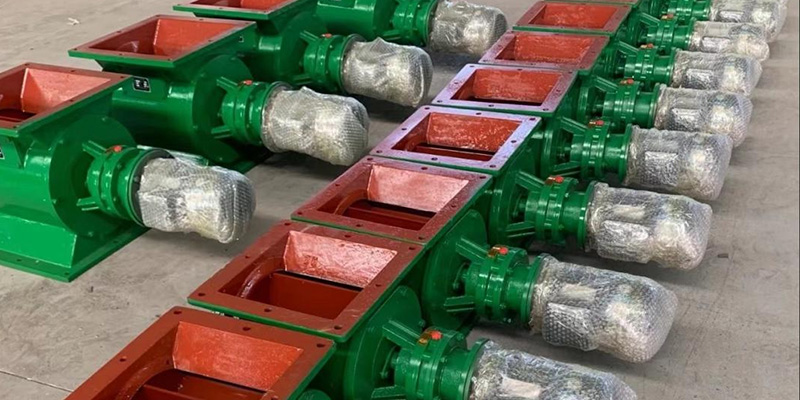
The whole star type rotary airlock valve adopts simple, compact modular assembly design, consisting of four indispensable core components with customizable square and round flange interface standards to fit most on-site industrial bulk material pipelines:
-
Valve Housing: Two mainstream interface types for option — square flange and round flange. Designed for direct installation on silo outlets, dust collector hoppers and material transfer bins; bears system pressure and seals the overall equipment cavity.
-
Star-shaped Impeller (Rotor): The core rotating feeding component with multi-blade star structure. It divides the inner cavity into independent material storage chambers to realize quantitative cyclic material feeding.
-
Premium Sealing Assembly: Including graphite packing, skeleton oil seal and flange gaskets. Controls air leakage at shaft ends and joint surfaces to guarantee system airtightness.
-
Geared Brake Motor Drive System: Integrated reduction motor provides stable constant low-speed rotation; supports frequency conversion speed regulation for on-site output adjustment.
3. Two Core Functions of Rotary Airlock Valves
All industrial-grade star dischargers are designed around two non-negotiable core working functions, which determine the operating efficiency of the entire downstream production system:
3.1 Uniform, Continuous and Volumetric Quantitative Discharging
Driven by a constant-speed reduction motor, the star rotor operates stably at a fixed rotation speed. It quantitatively scoops and discharges bulk materials chamber by chamber, avoiding material surge, blockage and sporadic discharging. This steady flow output supports automatic batching and continuous assembly-line production, completely replacing inefficient manual material unloading.
3.2 Airtight Gas Locking (Core Advantage for Dust & Pneumatic Systems)
The tiny reserved gap between the impeller and valve housing forms a reliable labyrinth sealing structure. It effectively isolates positive/negative pressure gas on both sides of the industrial airlock valve. Compared with traditional flap discharge valves, this star type ash discharger greatly suppresses air backflow and cross-system gas leakage — the most critical function to maintain normal operation of negative pressure dust removal and positive pressure pneumatic conveying systems.
4. Key Performance Advantages & Product Features
Industrial-grade pneumatic conveying rotary airlock valves stand out from other discharge valves for their high on-site working condition adaptability and low comprehensive operating cost. The full product advantages that attract most industrial buyers are summarized below:
-
Tight Air Locking, Ultra-Low Air Leakage Rate: Far lower air leakage rate than double flap valves. This key merit makes the valve ideal as a dust collector lock air valve; it will not damage negative pressure balance of baghouse dust collectors or cause pressure loss in pneumatic conveying pipelines, ensuring full-load system operation.
-
Stable Uniform Discharging: Constant rotor speed realizes fixed material flow; anti-bridging and anti-spraying design prevents flash flow and material overflow.
-
Wear Resistant & Long Service Lifespan: External isolated bearing structure avoids direct contact with high-abrasion powder; optional wear-resistant surfacing impeller makes this heavy duty rotary airlock valve perfectly adapt to high-dust, high-temperature harsh working conditions.
-
Compact & Flexible Installation: Small floor space, no complex auxiliary support. Supports both vertical and horizontal on-site installation to adapt to limited workshop layout space.
-
Easy On-site Maintenance: Integrated split structure for quick disassembly; supports online cavity cleaning without system shutdown. Fully compatible with modern factory automatic PLC control systems.
-
Multi-Material Customization for All Working Conditions: Multiple standard body materials for targeted scenario matching, one of the biggest advantages of customized rotary airlock valves
✔ Cast Iron: Standard model for ordinary non-corrosive industrial dust
✔ 304 Stainless Steel: Food grade, pharmaceutical anti-corrosion powder processing
✔ High-Temperature Resistant Alloy: Kiln and high-temperature flue gas dust working conditions
✔ Explosion-Proof Custom Model: Flammable and combustible powder environments (coal powder, chemical fine dust)
-
Clean Workshop Operation: Minimal dust leakage during whole-cycle operation; effectively reduces workshop airborne dust concentration to improve on-site environmental compliance.
5. Main Industrial Application Scenarios
Rotary airlock feeders (interchangeable with rotary airlock valves) are standard auxiliary equipment for solid-gas separation and bulk material conveying, widely deployed in the following global industrial fields for automatic powder discharging:
5.1 Dust Removal & Environmental Protection Industry
Mounted on the bottom hopper of baghouse dust collectors, cyclone dust collectors and electrostatic precipitators. This baghouse rotary airlock valve continuously discharges collected fine ash and granular sediment while locking negative pressure airflow. It is the necessary accessory to guarantee formal dust removal efficiency and environmental emission compliance.
5.2 Pneumatic Conveying Systems
Installed at inlet and outlet of powder conveying pipelines in cement plants, thermal power plants and chemical factories. This core air lock valve for pneumatic conveying completes metered feeding and pipeline pressure maintaining; prevents compressed air overflow. It is an essential core component for both positive pressure and negative pressure bulk pneumatic conveying lines.
5.3 Silo Quantitative Batching & Discharging
Equipped at the bottom of cement, lime, grain, plastic particle and feed storage silos. The volumetric star rotary feeder realizes automatic constant-speed blanking, supports multi-material automatic batching, and eliminates safety risks and low efficiency of manual discharge operation.
5.4 Covered Industrial Sectors
Cement building materials, thermal power & metallurgy, fine chemical engineering, grain food processing, pharmaceutical manufacturing, mineral processing, drying equipment production, asphalt mixing plants and other bulk material processing factories.

6.Most Common Rotary Airlock Valve Faults: Causes & One-Stop Solutions
Most on-site downtime of industrial rotary airlock valves is caused by improper operation, worn accessories and mismatched model selection. We sorted out the top 6 high-frequency faults reported by industrial end-users with targeted actionable troubleshooting solutions:
6.1 Impeller Jamming, Motor Tripping, Device Failure to Start
Root Causes: Hard foreign matter (welding slag, iron blocks) from silo block rotor cavity; sticky/high-humidity materials adhere to impeller blades and cause rotor locking; overload startup with full material cavity; rusted bearings; misaligned transmission coaxiality.
Professional Solutions: Cut off power supply and clean internal foreign matter; install inlet filter and magnetic iron remover for raw material lines; adopt non-stick coated impeller for high-humidity material working conditions; implement standard no-load startup procedure; calibrate transmission shaft position; replace aging bearings and fill with special high-temperature bearing grease.
6.2 Shaft & Flange Dust/Air Leakage, Complete Air Lock Failure
Root Causes: Aging and worn packing seals and skeleton oil seals; damaged flange gaskets and loose connection bolts; long-term impeller abrasion leading to excessive gap between rotor and housing.
Professional Solutions: Replace high-temperature graphite sealing kits and original oil seals; fasten all flange bolts and update anti-aging rubber gaskets; perform surfacing repair on slightly worn impellers; replace rotor assembly for severely abraded units; select double-sealing rotary airlock valves for high-negative-pressure dust collection systems.
6.3 Reducer Oil Seepage & Gearbox Continuous Oil Leakage
Root Causes: Excessive lubricant filling; damaged reducer oil seals; mixed use of non-standard incompatible lubricating oil; casting sand holes on valve housing causing osmotic leakage.
Professional Solutions: Adjust lubricant to factory-specified standard liquid level; install original manufacturer sealing accessories; use dedicated anti-high-temperature gear oil only; repair casting sand holes with industrial repair agent; prohibit mixed use of different brand lubricants.
6.4 Abnormal Operating Noise, Overheated Bearings & Device Vibration
Root Causes: Bearing lubricant deficiency; dust invasion into bearing chamber; impeller deformation scraping valve housing; unbalanced rotor operation; long-term overloaded production.
Professional Solutions: Replace full-grade new lubricant and install dust-proof retaining rings; calibrate deformed impellers and complete dynamic balance debugging; reduce instantaneous feeding load; match and replace high-torque motors according to on-site system parameters.
6.5 Insufficient Discharge Capacity, Material Bridging & Poor Blanking Flow
Root Causes: Thinned impeller blade reduces effective material cavity volume; bulk material arch bridging inside silo; pipeline air leakage causing airflow counteraction; mismatched motor/reducer speed for production output demand.
Professional Solutions: Repair or replace severely worn star impellers; install silo wall vibrators to eliminate material arch bridging; block all pipeline air leakage points; adjust motor frequency to optimize operating speed; replace matched speed reducer for target production capacity.
6.6 Motor Overheating, Frequent Overload Shutdown & Motor Burnout
Root Causes: Continuous jamming overload; factory line phase loss and unstable grid voltage; damaged motor heat dissipation structure; common non-explosion-proof model applied in flammable dust working conditions.
Professional Solutions: Eliminate material jamming faults to stabilize equipment operating load; inspect and rectify workshop power supply circuit; clean dust covered on motor heat dissipation fins; replace full explosion-proof rotary airlock valves for coal powder and flammable fine dust working conditions.
7. Pro Operation & Maintenance Tips: Cut Down 80% Equipment Failure Rate
Industrial data proves that standardized daily maintenance can extend heavy duty rotary airlock valve service life by 2-3 times and avoid most unplanned production shutdowns. Follow this fixed inspection cycle for your process equipment:
-
Daily Routine Inspection: Check equipment operating temperature, abnormal noise and surface dust leakage during daily production rounds.
-
Weekly Maintenance: Fasten all housing and transmission bolts; lubricate drive chain and transmission accessories.
-
Monthly Overhaul: Detect wear degree of sealing components, bearings and star impellers; replace slightly damaged consumable parts in advance.
-
Seasonal Deep Maintenance (High Dust/High-Temp Working Conditions): Replace reducer lubricating grease every 6 months; test system air tightness regularly for harsh working condition units.
8. Why Your Rotary Discharger Keeps Failing? The Core Reason Is Wrong Model Selection
Most recurring equipment faults are not caused by poor daily maintenance. After sorting mass after-sales cases, we confirm over 70% frequent breakdowns stem from mismatched low-grade equipment:
Many end-users choose low-cost ordinary cast iron standard models for harsh high-temperature, high-abrasion or high-negative-pressure working conditions. Ordinary thin-wall impellers cannot resist long-term particle scouring; basic single seals fail under high pressure and high temperature. Frequent replacement of accessories and repeated production shutdown make the later maintenance cost far exceed the procurement cost of industrial customized high-pressure rotary airlock valves.
Buyer’s Core Suggestion: Prioritize working condition parameters (medium characteristic, system pressure, temperature, explosion-proof grade) first instead of unit price. Customize housing material and sealing structure according to your on-site dust or granular material properties to let your rotary airlock feeder realize long-term zero-failure operation.
9. FAQ | Frequently Asked Questions About Rotary Airlock Valves
Q1: Rotary airlock valve vs flap valve: which one is better for dust collector discharge? A: The star type rotary airlock valve has 70% lower air leakage rate than double flap valves; it supports continuous discharging while flap valves only realize intermittent discharge. It is the better choice for high-efficiency industrial dust removal systems.
Q2: Can a 304 stainless steel rotary feeder be used for edible grain processing? A: Yes. Food-grade polished 304 stainless steel sanitary rotary airlock valve fully meet food and pharmaceutical corrosion-free and sanitary production standards.