



Industrial Dust Collector for Sale
What is an Industrial Dust Collector?
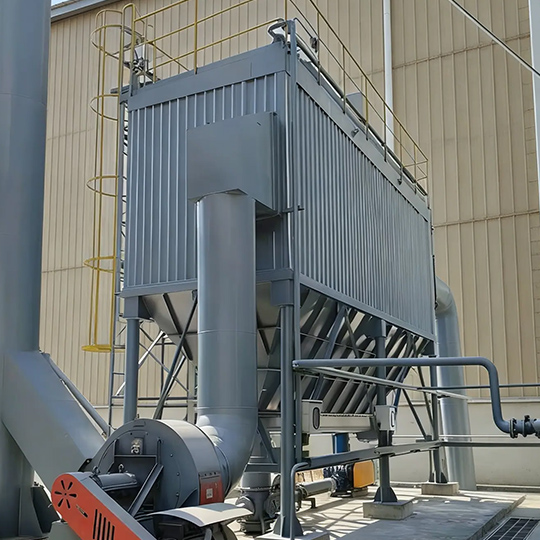
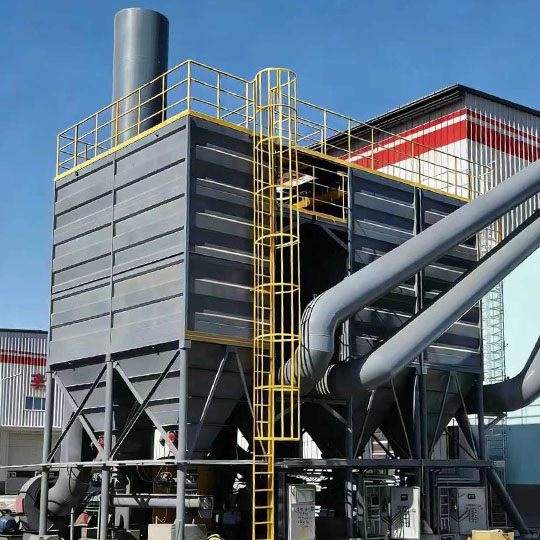
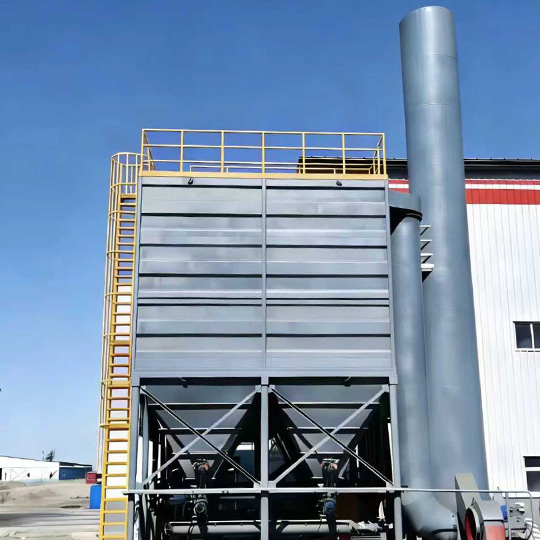
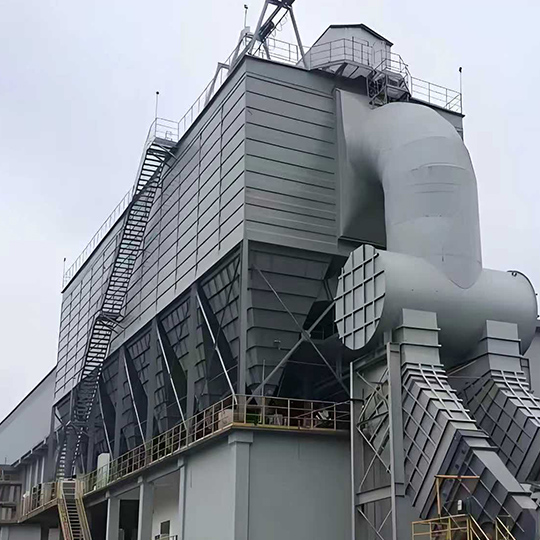
Industrial dust collectors are specialized environmental protection devices designed to capture industrial dust particles. They are capable of handling complex operating conditions such as high dust loads, high temperatures, high wear, and sticky dust. These units are specifically engineered for dust removal from exhaust gases generated by equipment in cement plants, including cement kilns, cement mills, rotary kiln dryers, and cement crushers. They are also used for dust control in industries such as concrete, power generation, sugar refining, pharmaceuticals, agriculture, papermaking, food processing, and fertilizer production. The core components of the equipment include filter bags, pulse valves, dust collection hoppers, and airlock discharge devices. Dust is separated from the gas through physical filtration, and some models can be equipped with additional purification methods such as electrostatic precipitation, achieving a comprehensive dust removal efficiency of over 99%.
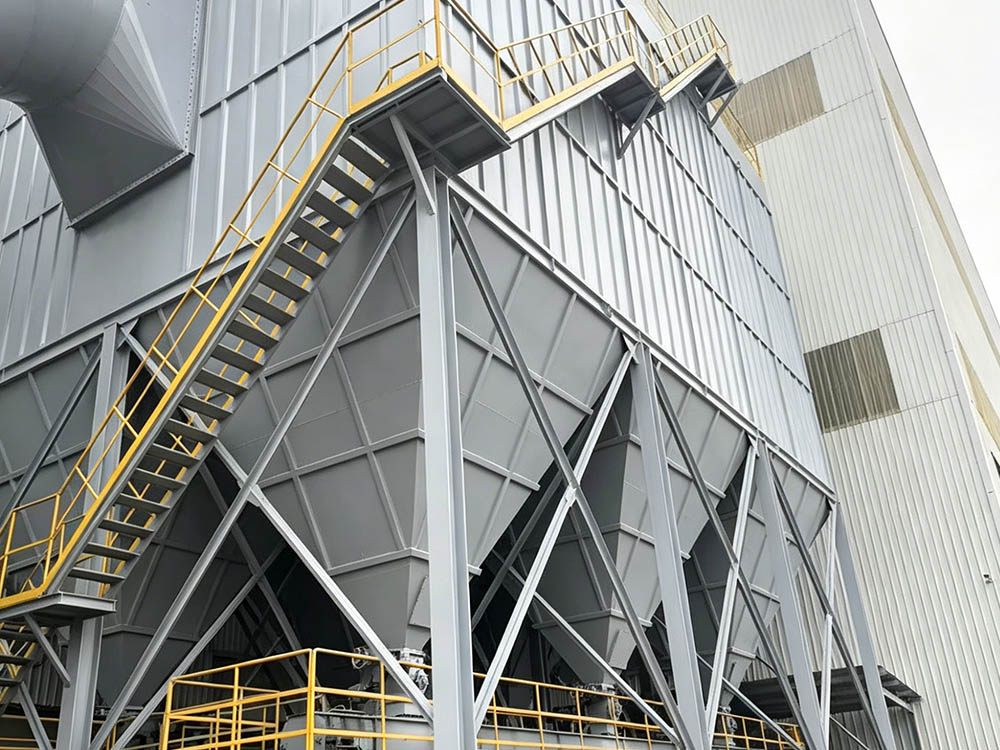
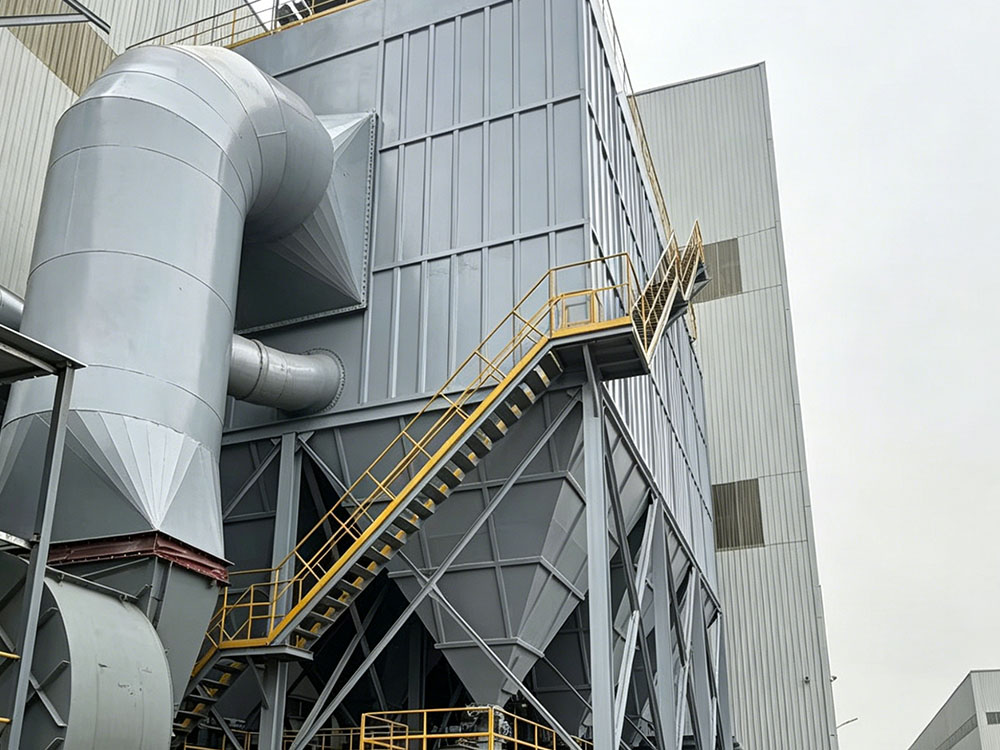
Advantages of Darko Industrial Dust Collectors
- Direct from the manufacturer: reliable quality, excellent value for money, and stable supply.
- High dust removal efficiency and consistent purification performance, meeting strict environmental emission standards.
- Capable of withstanding various harsh production environments and operating reliably for extended periods under heavy loads.
- Intelligent pulse-jet cleaning system minimizes clogging, simplifies maintenance, and reduces operating costs.
- Core components are made of robust, durable materials to ensure a long service life.
- Comprehensive range of models and specifications available, with customization options, suitable for both new installations and system upgrades.
How Do Industrial Dust Collectors Work?
-
Suction: Driven by a high-quality industrial dust collector fan, the dusty air generated in the workshop is sucked into the dust collector through the air inlet. The fan provides stable power, ensuring that the dusty air is quickly and completely collected, with low noise, energy-saving performance, and long service life.
-
Filtration: The dusty air enters the filtration chamber, where dust particles are captured and retained by the filter element—either filter bags or cartridge filters. The filter element is the core of the filtration system, with high efficiency to ensure the discharged air meets environmental standards. Our filter bags are made of high-quality materials, effectively capturing fine dust particles while resisting high temperature and corrosion.
-
Cleaning: As dust accumulates on the filter element, the resistance of the dust collector increases. At this time, the cleaning system (such as pulse jet cleaning) is activated to remove the dust. Our automatic cleaning dust collector can realize timed or on-demand cleaning, ensuring stable operation without manual intervention. The pulse valve is a key component of the cleaning system, controlling the spray of compressed air for efficient cleaning.
-
Ash Discharge: The cleaned dust falls into the ash hopper, and then is discharged out of the dust collector through the ash discharge device (such as a rotary valve). The rotary valve ensures sealed ash discharge, preventing secondary pollution caused by dust leakage.
Main Types of Industrial Dust Collectors
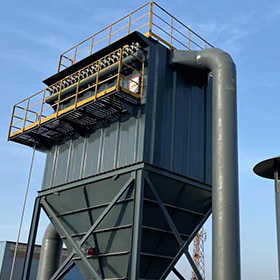
Baghouse dust collectors include pulse-jet and mechanical shaking designs. With large dust capacity, they reliably withstand high-temperature and high-humidity working conditions. Commonly applied in cement plants and mines, they are the preferred solution for industrial dust control.
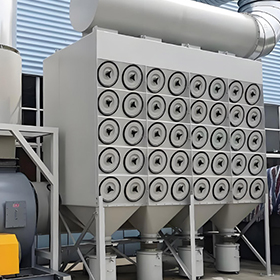
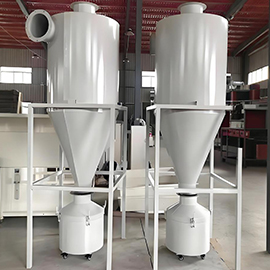
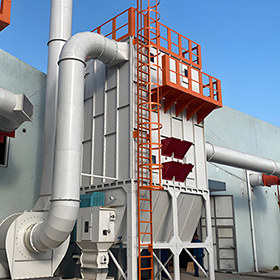
Explosion-proof dust collectors are equipped with anti-static filter elements and explosion-proof components. Some models meet CE and ATEX standards. They are specially designed for industries with dust explosion risks, ensuring safe and stable operation.
Dust Collector For Cement Industry
With years of experience in the cement industry, Darko’s core business focuses on designing custom dust collection systems for cement plants. We develop and tailor specialized dust collection solutions to address the unique dust characteristics of each production stage in cement plants. We specialize in ball mill dust collectors and various types of baghouse dust collectors. These systems are perfectly suited to the harsh operating conditions of cement plants—characterized by high dust levels, high temperatures, and high humidity—ensuring emissions comply with environmental standards while maintaining equipment stability, ease of operation, and maintainability.
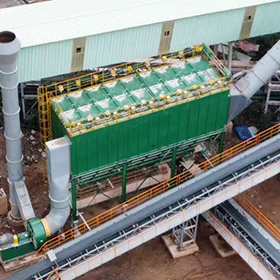
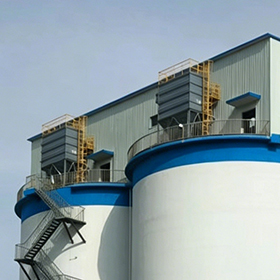

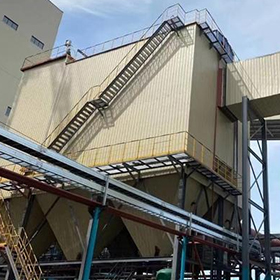
Equipped with high-temperature resistant filter media and anti-corrosion structure. Ideal for kiln head and kiln tail flue gas, ensuring stable emission compliance under harsh working conditions.
Material Classification of Industrial Dust Collectors
The materials used in industrial dust collectors directly affect their service life, corrosion resistance, and adaptability to the operating environment. We offer dust collectors made from a variety of materials to meet the needs of different industries:
-
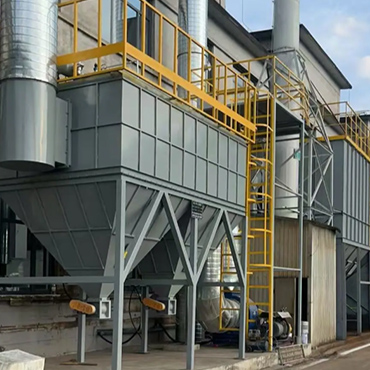
Darko’s carbon steel dust collectors are made from high-quality carbon steel, offering high strength, excellent wear resistance, and low cost. They are suitable for general industrial environments with non-corrosive dust, such as woodworking and metalworking. A rust-proof coating extends their service life.
-
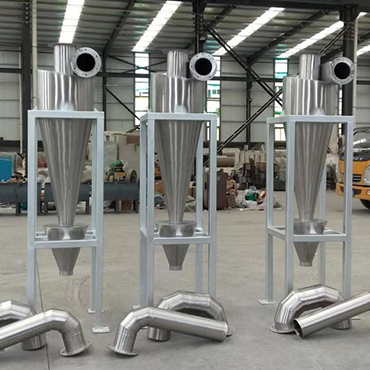
Darko stainless steel dust collectors adopt 304/316 materials with superior corrosion and high temperature resistance. Suitable for chemical, food and pharmaceutical industries, they feature smooth surfaces for easy cleaning and stable hygienic performance.
-
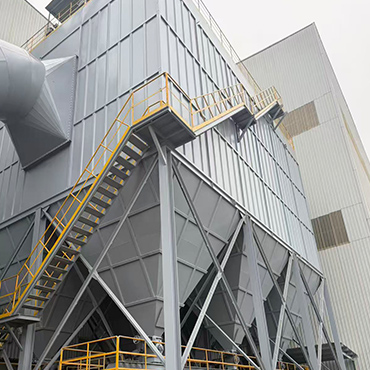
Designed specifically for industries handling highly corrosive dust, this unit utilizes corrosion-resistant materials and coatings to effectively withstand the corrosive effects of dust, thereby extending the equipment’s service life. It can be customized based on the type and concentration of the corrosive dust.
Industrial Dust Collector Advantages
Engineered for maximum dust capture, operational flexibility, and cost-efficient performance across industries.


Our Service Process
Our end-to-end service ensures high-efficiency dust collection systems with reliable performance and fast technical support.

We analyze your production requirements to provide customized equipment selection ensuring perfect system compatibility.

Our senior engineers create personalized solutions with optimized system configuration based on your specifications.

Detailed pricing covering equipment, installation, shipping and after-sales service with no hidden costs.

Strict quality control at our ISO-certified factory guarantees reliable equipment performance.

Dedicated logistics team ensures on-time delivery with complete installation guidance and training.

24/7 technical support with scheduled maintenance alerts and fast spare parts delivery.
Own Factory, High Quality Manufacturing Power
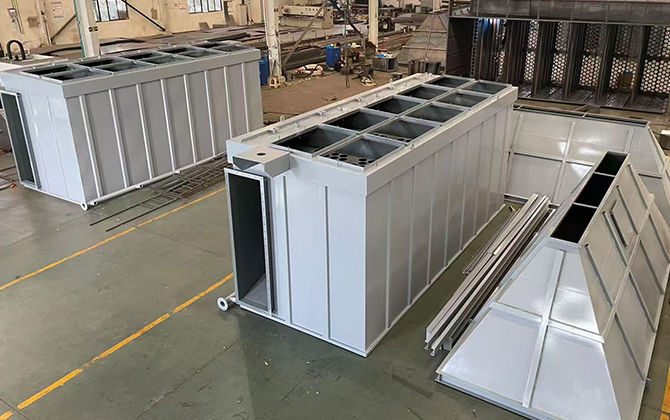
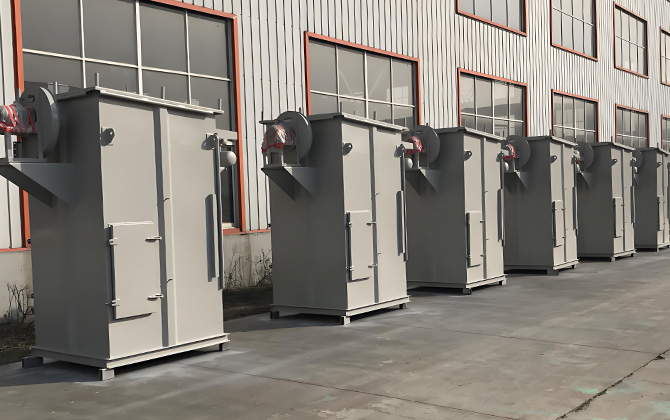
As a professional cement equipment manufacturer with 10 years of industry experience, Darko combines innovative engineering with reliable production capabilities. Our ISO-certified facility produces 400+ bag filter dust collection systems and 450+ conveying systems annually, serving 500+ global clients with complete solutions from cement silos to bag filter dust control systems.
Backed by patented technologies and an experienced R&D team, we specialize in customized, non-standard designs to meet diverse project requirements, including high-efficiency bag filter solutions for cement kiln and material handling. Equipped with advanced manufacturing facilities and strict quality control, we ensure every product, especially our core bag filter series, meets the highest international standards while delivering cost-effective, environmentally friendly solutions for cement plants and industrial applications worldwide.
Darko's Industrial Dust Collector Project Case Study
We have provided high-quality dust removal solutions for many customers around the world, covering various industries.

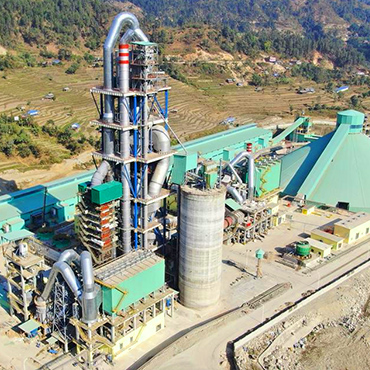
Overseas project in the cement industry, equipped with multi-specification dust collection systems. The air volume covers 4600m³/h, 2300m³/h, 6900m³/h, the flue gas temperature <120℃, with a total of 20 sets, suitable for all working conditions of large cement production lines.


Dust Collector Parts
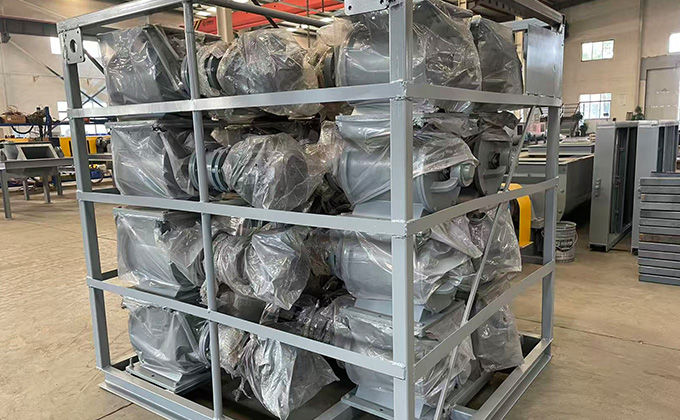
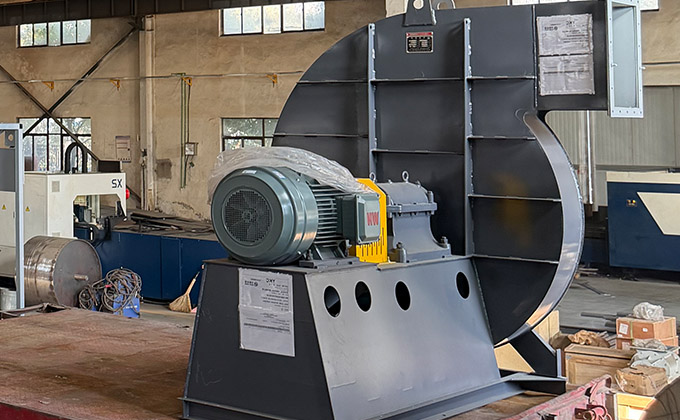
The fan serves as the core power component, responsible for generating suction to draw dust-laden air into the dust collector. Our fans feature a highly efficient, energy-saving design with stable airflow (supporting 5,000 cubic feet per minute, 10,000 cubic meters per hour, and high-volume applications), low noise levels, and exceptional durability. They are capable of adapting to various operating conditions to ensure stable system performance.
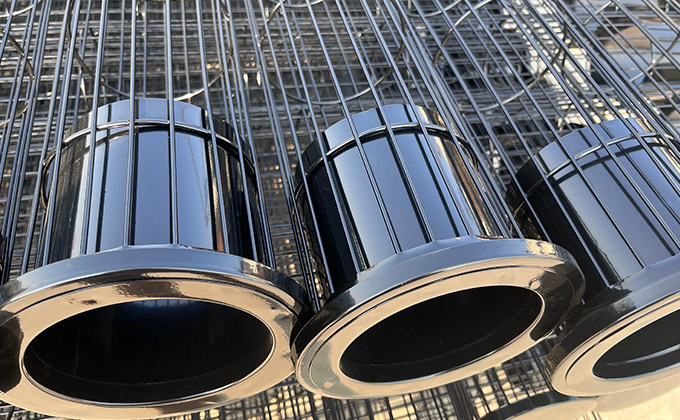
Filter cages are used to support filter bags, ensuring they maintain their shape during operation and do not collapse due to negative pressure. Our filter cages are made of high-quality steel wire, featuring a smooth surface, corrosion resistance, and high load-bearing capacity. They are perfectly matched to the filter bags, ensuring the proper operation of the filtration system.

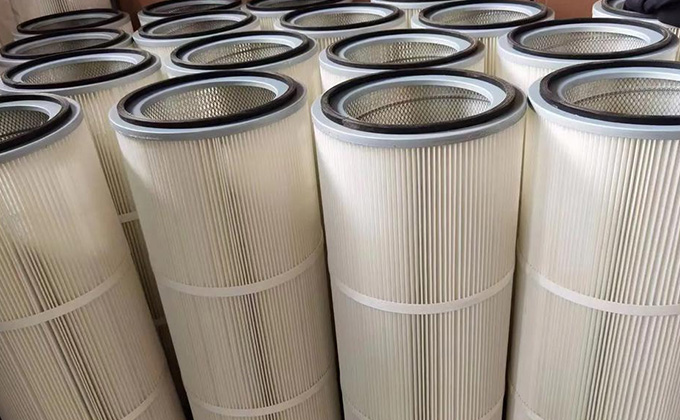
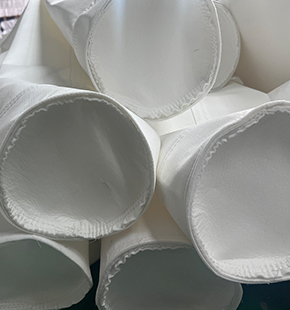
Our dust collectors feature filter media selected through rigorous standards and of superior quality, capable of efficiently capturing dust particles and ensuring high dust removal efficiency. Made from high-quality materials such as PPS and aramid, they are well-suited to various operating conditions and offer a long service life, ensuring the stable and compliant operation of the equipment.
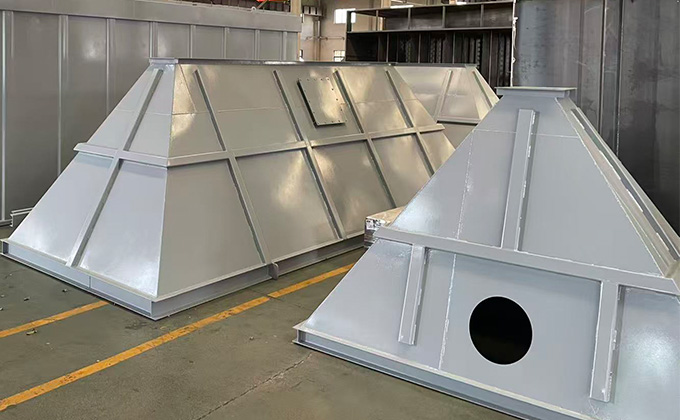
The dust collector hopper is the core component for collecting dust. Installed at the bottom of the dust collector, it temporarily stores dust that has been filtered and separated. Its optimal angle and streamlined design ensure smooth dust flow, preventing dust accumulation and blockages, and enabling stable conveyance to the ash discharge system. Darko’s hoppers are constructed from high-quality carbon steel as standard, though wear-resistant steel plates or stainless steel can be selected based on operating conditions. The hoppers are robust and resistant to pressure, erosion, corrosion, and wear, enabling them to withstand the harsh industrial environments of cement plants—including high temperatures, high humidity, and high abrasion—for extended periods, thereby ensuring a longer service life.
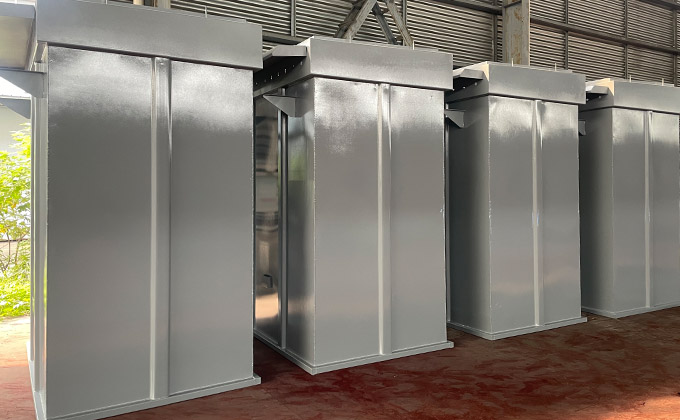
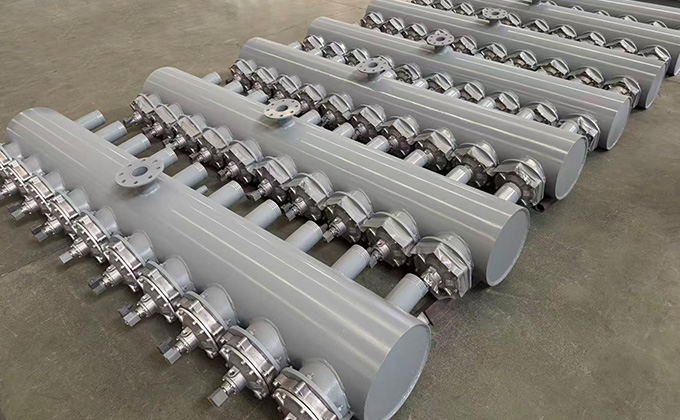
In addition to the components mentioned above, industrial dust collectors are equipped with an air inlet, air outlet, filter chamber, and control system. Featuring a PLC-based intelligent pulse control system, they enable automated operation, fault alarms, and remote monitoring, significantly improving operational efficiency and ease of maintenance. These components work together seamlessly to form a complete industrial dust collection system. All core components of the dust collector can be custom-manufactured to meet specific brand specifications.
More About Industrial Dust Collectors
By gaining a thorough understanding of the technical specifications and applications of industrial dust collectors, you will gain a clearer understanding of the industrial dust collector machine’s performance advantages and practical value.
- Industrial Dust Collector Technical Parameters
- Industrial Dust Collection System Benefits
- Application Industries & Fields
|
Air Volume
|
Customized
|
|
Filter Area
|
Multiple specifications available
|
|
Dust Removal Efficiency
|
≥99%
|
|
Max Temperature
|
Customizable according to requirements
|
|
Cleaning Method
|
Pulse jet cleaning
|
|
Applicable Dust Type
|
All types of dry industrial dust
|
|
Customization Service
|
Available for bag dust collector, cartridge dust collector, pulse dust collector, cyclone dust collector, with customizable size and structure
|
- Improves workplace air quality and protects workers’ health by effectively capturing harmful dust and fumes.
- Reduces fire and explosion risks by controlling combustible dust accumulation.
- Helps meet environmental emission standards and avoid regulatory penalties.
- Extends service life of production equipment and lowers maintenance costs.
- Enhances production efficiency and ensures stable, continuous operation.
- Reduces cleaning labor and maintains a clean, tidy workshop environment.
- Supports energy-saving operation and lowers long-term operating costs.
I. Core Application Industries
-
Building Materials & Cement Industry: Suitable for cement plants, lime plants, ceramic factories and stone processing plants, specifically handling high-temperature and high-concentration dust in ball milling, crushing, kiln tail and other links.
-
Metallurgy & Steel Industry: Applied in steel plants, non-ferrous metal smelters and casting forging workshops, purifying high-temperature flue dust and metal dust generated by sintering, blast furnaces and electric furnaces.
-
Mining & Stone Industry: Suitable for mining, stone crushing and sand and gravel yards, controlling dust pollution during crushing, screening and transportation processes.
-
Power & Energy Industry: Adaptable to coal-fired boilers, biomass power plants and waste incineration plants, realizing large-air-volume flue gas purification and ultra-low emission transformation.
-
Other Key Industries: Covering chemical industry, rubber and plastic, machinery manufacturing (welding, grinding), wood processing, light industry and grain, etc., adapting to various dust-producing scenarios.
II. Application Fields & Working Conditions
-
Applicable Processes: Covering various dust-producing processes in industrial production, such as crushing, grinding, calcination, smelting, transportation, welding and grinding.
-
Complex Working Conditions: Adaptable to various complex working conditions such as high temperature, high humidity, high-concentration dust, corrosive flue gas and flammability and explosion hazard.
-
Core Purposes: Workshop dust control, industrial flue gas purification, material recovery, compliant environmental emissions, balancing production safety and plant environment optimization.
- Baghouse: Uses filter bags for high-efficiency filtration (≥99.9%) of dry fine dust (e.g., cement, wood dust), ideal for large-scale, high-concentration dust scenarios (cement plants, steel mills).
- Other industrial dust collectors: Cartridge dust collectors (compact, easy maintenance, suitable for small workshops); wet scrubbers (best for sticky, high-temperature or explosive dust); cyclone dust collectors (cost-effective for coarse dust).
Choice rule: Pick baghouse for large-scale dry dust; select other types based on space, dust type and maintenance needs.
- Consumables: Filter bags, filter cartridges
- Core components: Rotary valves, fans, motors, explosion-proof devices
- Wear parts: Seals, gaskets, hopper liners
- Control parts: Pressure gauges, electrical controls
You can contact our after-sales team via phone/website contact form for inquiry and ordering. We also provide customized parts for special models, with stable inventory to ensure fast delivery and minimize downtime.
- Calculate total airflow (CFM): Sum airflow demands of all dust-generating points (higher velocity for fine/toxic dust).
- Analyze dust properties: Determine air-to-cloth ratio (e.g., 1.5 FPM for welding fumes, 5.0 FPM for light non-abrasive dust).
- Compute filter area: Total airflow ÷ air-to-cloth ratio; then calculate filter quantity (filter area ÷ single filter surface area).
- Add redundancy: Reserve 10%-20% airflow for future expansion; consider temperature, humidity and space constraints.
Industrial Dust Collector Bags





Industrial Dust Collector Manufacturers
Regardless of the specifications of the industrial dust collection equipment you require, Darko’s team of engineering experts can design a customized dust collection system tailored to your specific production conditions and dust characteristics. All equipment is meticulously designed and manufactured to meet on-site environmental requirements, ensuring stable and reliable operation in cement plants and other complex industrial environments.
- Daily (10-15 mins): Monitor filter differential pressure (sudden rise = clogging; drop = leak/torn filter); check fan/motor for abnormal noise/vibration; inspect hopper for dust accumulation.
- Weekly: Clean hopper and discharge device; check seals/gaskets for wear; verify air compressor pressure (if equipped).
- Monthly: Inspect filter elements for damage/clogging; test electrical controls; lubricate moving parts (fan bearings, rotary valve).
- Annual: Full system inspection; replace worn parts in batches; calibrate instruments; deep clean the system.
Note: For explosive/corrosive dust, add targeted checks (e.g., explosion-proof devices, corrosion parts).
When selecting a dust collector, it is necessary to comprehensively consider factors such as initial investment, operating costs, dust removal efficiency, pressure drop, footprint, and maintenance complexity, and to choose the appropriate model based on the physical and chemical properties of the flue gas and the production process.
1. Selection Based on Dust Removal Efficiency
The equipment must meet environmental emission standards. Dust removal efficiencies vary significantly among different types of dust collectors; baghouse dust collectors offer the best performance, can adapt to fluctuating operating conditions, and ensure consistent compliance with standards.
2. Selection Based on Flue Gas Characteristics
Select the model based on airflow volume, temperature, humidity, and composition: Different flue gas conditions—such as high temperature, high humidity, oil contamination, or flammable and explosive properties—require corresponding dust collectors such as baghouse, electrostatic, wet, or cyclone types.
3. Selecting Based on Dust Characteristics
Select based on dust particle size, density, stickiness, resistivity, and flammability/explosiveness. Different dust characteristics directly impact the equipment’s filtration method, cleaning mechanism, and operational stability.
4. Selecting Based on Pressure Drop and Energy Consumption
Different equipment models have varying pressure drops. Compare operating pressure drop and overall energy consumption to balance energy efficiency with treatment effectiveness.
5. Selection Based on Cost and Environmental Conditions
Balance equipment purchase price and operational maintenance costs; in water-scarce or extremely cold regions, avoid using wet dust collectors whenever possible.
6. Selection Based on Material Recovery Requirements
When there is a need to recover dust or exhaust gases, prioritize dry dust collection methods; for the recovery of high-value dust, high-efficiency baghouse dust collectors are recommended.