Introduction: Why Conveyor Belt Lifespan Matters for Cost Reduction
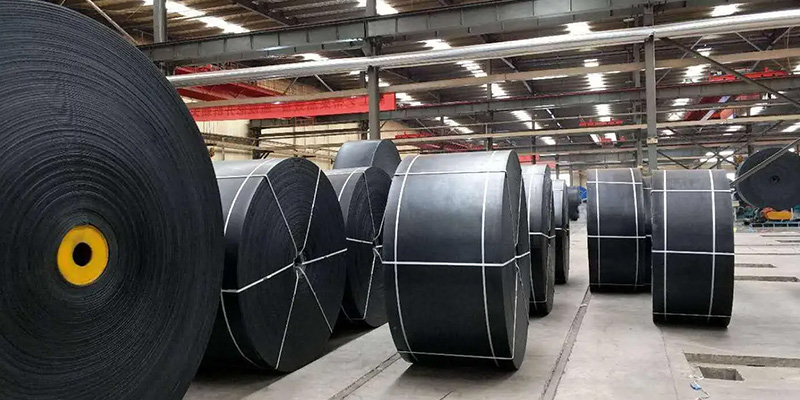
In a complete belt conveyor system, the conveyor belt serves as the core component for material carrying and transportation. It is also the highest-cost and fastest-wearing consumable part in daily equipment maintenance. Industry statistics show that the procurement, replacement, and maintenance costs of conveyor belts account for 40% to 50% of the total conveyor system investment, and the proportion can be even higher under harsh working conditions.
Unlike durable components such as conveyor frames, idlers, and drums, conveyor belts are vulnerable consumables. Their service life directly determines the production line’s operating costs, downtime frequency, and overall operational efficiency. A longer conveyor belt service life effectively reduces replacement frequency, downtime losses, and labor maintenance costs. In contrast, frequent belt wear, tearing, and breakage will increase material waste and parts procurement expenses, causing unexpected production shutdowns and severely hindering production progress.
Therefore, extending conveyor belt service life and reducing abnormal belt wear is a core strategy for cost reduction and efficiency improvement in industries including mining, building materials, chemical processing, food production, and logistics. Most premature conveyor belt failures are not caused by poor product quality, but by incorrect model selection, non-standard operation, and inadequate daily maintenance.
Based on on-site industrial maintenance experience, this article summarizes 12 key factors affecting conveyor belt lifespan and targeted solutions. These practical and easy-to-implement tips help enterprises eliminate belt wear from the source and maximize the service life of conveyor belts.

1. Select the Right Conveyor Belt Based on Working Conditions
Improper conveyor belt selection is the primary cause of premature wear and early scrapping. Conveyor belts with different materials and manufacturing processes adapt to distinct material characteristics and working environments. Blind universal selection will lead to accelerated aging, damage, and cracking, even if high-quality belts are used.
Enterprises must select conveyor belts strictly according to material properties, on-site temperature, humidity, and corrosive conditions:
-
High-temperature material conveying (ore, clinker, high-temperature particles): Adopt high-temperature resistant conveyor belts instead of ordinary rubber belts to avoid surface burning and accelerated rubber aging and cracking.
-
High-moisture and wet material conveying: Use waterproof and moisture-proof conveyor belts to prevent core layer deformation, delamination, and glue peeling caused by water absorption.
-
Corrosive material conveying (acid and alkali materials): Equip with acid and alkali resistant conveyor belts to resist chemical erosion and prevent surface corrosion damage.
-
Food material conveying: Apply food-grade eco-friendly conveyor belts to meet hygiene standards and avoid material contamination and belt mildew.
-
High-abrasion and sharp material conveying (crushed stone, raw coal): Choose heavy-duty wear-resistant conveyor belts to enhance impact resistance and abrasion resistance.
Proper belt selection is the first step of conveyor belt protection. It avoids invalid wear caused by mismatched working conditions and greatly improves the basic service life of conveyor belts.
2. Correct Belt Deviation to Prevent Edge Wear and Tearing
Conveyor belt deviation is one of the most common conveyor faults and a major cause of excessive belt wear. When a belt runs off-track, it continuously rubs against the conveyor frame, idler brackets, and side baffles, resulting in uneven edge wear and rubber peeling. Severe deviation will directly cause belt tearing, scrapping, and unplanned equipment downtime.
To avoid severe belt deviation, optimize equipment configuration and conduct regular debugging in advance. Install forward-tilting idlers, self-aligning idlers, and tapered idlers on the conveyor for automatic track correction. Regularly inspect the belt running track, adjust the frame levelness and idler installation position, and ensure the belt runs centrally and stably to eliminate deviation-related wear fundamentally.
3. Prevent Belt Slippage to Avoid Thermal Aging and Breakage
Conveyor belt slippage is mainly caused by insufficient tension, uneven load, and insufficient drum friction. Slipping belts generate continuous high-speed dry friction with drums and idlers, leading to partial thinning and severe surface wear. Long-term friction produces massive heat, damaging the rubber and core structure of the belt and causing aging, hardening, cracking, and even complete belt breakage.
Check belt tension and drum lagging wear regularly during daily operation. Adjust the tension device and repair worn drum lagging timely to ensure tight fitting and smooth transmission between the belt and drum. This effectively eliminates slipping under no-load and heavy-load conditions and reduces irreversible damage caused by friction and high temperature.
4. Standardize Load Operation and Avoid Forced Start/Stop with Load
Overload operation, unstable material supply, and start/stop with material are key human factors that accelerate conveyor belt fatigue damage. Each conveyor belt is designed with a rated load capacity. Long-term overload operation and fluctuating material feeding cause continuous overstretching of the belt core, resulting in core fatigue, elastic attenuation, and shortened service life.
In addition, starting or stopping the conveyor with full load exerts huge instantaneous impact tension on the belt, easily causing delamination, cracking, and joint peeling. It is essential to operate within the designed load range, feed materials evenly, and clean up residual materials before shutdown to realize no-load start and stop, minimizing instantaneous tension wear on the belt.
5. Clean Wrapped Residual Materials to Avoid Inner Belt Wear
Material spillage and residue wrapping between the drum and conveyor belt are easily overlooked wear hazards. Fine materials falling on the return belt will be involved in drum gaps during operation, causing continuous extrusion and friction on the non-carrying surface of the belt. This leads to local deviation, operation jitter, inner rubber wear, belt deformation, and even cracking in severe cases.
Clean accumulated materials on drums, frames, and return belts regularly to keep the equipment clean, prevent material wrapping, and protect the inner structure of the conveyor belt.
6. Block Sharp Foreign Objects to Prevent Belt Scratches and Punctures
In mining, coal, and construction material conveying scenarios, sharp foreign objects such as iron pieces, steel bars, and hard gravel mixed in materials will directly scratch and tear conveyor belts, causing surface damage, deep cracking, and hole punctures. These irreversible damages shorten belt service life and trigger secondary faults such as material leakage and belt deviation.
Install magnetic separators and screening devices at the feeding end to intercept sharp hard impurities in advance. Arrange on-site inspections regularly to remove foreign objects in the material flow and fully protect the integrity of the conveyor belt.
7. Unblock Hoppers and Chutes to Prevent Belt Blockage and Overpressure
Hopper blockage, undersized chute outlets, and unsmooth blanking cause continuous material accumulation at the feeding end, which crushes and locks the conveyor belt. Operating with a locked belt leads to extreme pressure and friction, resulting in severe wear, tensile deformation, and even complete belt scrapping.
Monitor the blanking status of hoppers and chutes in real time, clear blockages regularly, and optimize the outlet size to ensure smooth and uniform feeding. Avoid bulk material accumulation and prevent overpressure damage to the conveyor belt.
8. Optimize Falling Structure to Buffer High-Drop Material Impact
High-drop material conveying causes high-speed impact on the belt’s feeding point. Long-term frequent impact leads to rubber peeling, local depression, and core layer damage, which is the main reason for premature failure at the belt falling point. Most local belt lifespan problems stem from unbuffered high-drop conveying.
Install material buffer hoppers and buffer chutes for high-drop working conditions to reduce material falling speed and impact force, disperse local belt pressure, avoid concentrated impact wear, and effectively protect the vulnerable falling point area.
9. Adjust Belt Tension Appropriately to Avoid Slippage and Fatigue
Accurate tension adjustment is a critical detail of conveyor belt maintenance. Improper tension causes dual damage: insufficient tension leads to insufficient transmission friction, resulting in belt slippage, deviation, and unstable feeding, while excessive tension causes long-term overstretching of the belt core, accelerating core fatigue, elastic failure, deformation, cracking, and joint breakage.
Maintenance personnel shall adjust the tension device accurately according to belt specifications and actual working conditions to maintain optimal tension, ensuring stable operation and reducing stretching and friction wear.
10. Keep Idlers Flexible and Intact to Reduce Passive Belt Wear
Idlers are key supporting components for conveyor belt operation, and their operating status directly determines belt wear degree. Stuck, non-rotating, damaged, or leaked idlers cause rigid dry friction with the running belt, continuously wearing the rubber surface and even scratching the belt body.
Establish a regular inspection and replacement mechanism for idlers. Clean blocking impurities and replace failed idlers timely to ensure flexible rotation and minimize passive friction wear on the conveyor belt.
11. Control Baffle Gap to Standard Size to Avoid Deviation and Wear
The gap between the guide chute baffle and the conveyor belt is a easily neglected maintenance detail, with the industry’s optimal standard gap being 1-3mm. An overly narrow gap causes direct friction between the baffle and the belt, increasing operating resistance and triggering belt deviation and jitter. An overly wide gap leads to material spillage and dust leakage, and falling impurities will indirectly aggravate belt wear.
Adjust the baffle gap strictly to 1-3mm during daily debugging to ensure effective material blocking and dust prevention while maximizing conveyor belt protection and avoiding secondary wear faults.
12. Install Buffer Idlers to Strengthen Protection at Material Falling Points
The material falling point is the most severely worn and shortest-lived area of the entire conveyor belt. Ordinary steel idlers lack buffering performance and cannot offset material impact force, causing premature aging and damage at the falling point.
Install rubber buffer idlers at belt falling points. The elastic rubber structure effectively absorbs material impact energy, reduces extrusion and damage to the belt, strengthens protection for vulnerable areas, balances overall belt wear, and comprehensively extends conveyor belt service life.
Conclusion: Refined Maintenance Maximizes Conveyor Belt Lifespan
In short, the service life of a conveyor belt is not fixed. Proper condition matching is the foundation, standardized operation is the core, and refined maintenance is the key. Most premature scrapping and frequent failure of conveyor belts result from neglected maintenance details.
Enterprises can avoid more than 90% of abnormal belt wear by implementing accurate condition-based selection, eliminating deviation and slippage, standardizing load start-stop, optimizing equipment details, and conducting daily inspections. This significantly extends conveyor belt service life, reduces replacement costs and downtime losses, and realizes long-term stable and low-cost operation of conveyor systems.