
Introduction
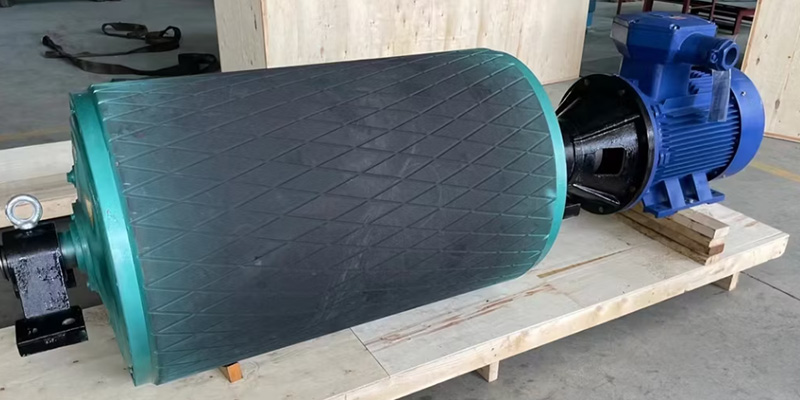
What Is a Heavy-Duty Mine Conveyor Pulley? A heavy-duty mine conveyor pulley acts as the core drive, redirecting and load-bearing component of mining belt conveyors, responsible for transporting coal, ore, stone and other bulk mining materials. The pulley’s model selection directly affects conveyor load capacity, running efficiency, service life and overall maintenance costs.
Improper pulley matching is a leading cause of belt deviation, premature belt wear, unexpected shutdowns and increased mining operation costs. For mining engineers, equipment purchasers and on-site maintenance staff, mastering standardized heavy-duty conveyor pulley selection rules is critical to stable continuous production.
This all-around guide elaborates every vital selection factor for mine conveyor pulleys, including pulley diameter selection logic, effective length standards, bearing and bearing housing matching principles, standardized installation specifications and daily maintenance methods. Combined with a practical coal mine engineering case, it provides actionable reference solutions for all underground and open-pit mining working conditions.
1. How to Determine the Right Conveyor Pulley Diameter
Pulley diameter is the primary parameter that determines load performance and service life. A mismatched diameter will boost belt bending stress, accelerate belt aging and abrasion, and even trigger material spillage and conveyor shutdown failures. Five core factors must be comprehensively evaluated during diameter selection:
1.1 Contact Specific Pressure Between Belt and Pulley
Contact specific pressure represents the instantaneous extrusion force borne by pulleys and conveyor belts. Higher specific pressure brings greater wear to both parts. For heavy-load mining conveying conditions, pulleys with larger diameters expand the contact area between the belt and pulley to evenly disperse pressure and eliminate local overload risks.
1.2 Conveyor Belt Bending Stress
When the conveyor belt wraps around the pulley, cyclic bending stress occurs. Small-diameter pulleys amplify belt bending deformation, resulting in excessive local stress, belt cracking, delamination and early scrapping. On the premise of sufficient installation space and acceptable budget, large-diameter pulleys should be prioritized to reduce bending stress and extend the service life of the conveyor belt.
1.3 Belt Bending Frequency
Belt bending frequency is affected by conveyor winding layout, pulley quantity, pulley spacing and operating speed. Repeated cyclic bending leads to severe fatigue wear of the belt. Larger pulleys reduce the belt’s deformation times and deformation degree per unit running time, slowing fatigue loss and suiting long-term uninterrupted mining production.
1.4 Belt Strength Utilization Ratio
The strength utilization ratio refers to the ratio of the belt’s actual operating tension to its maximum rated tension. In high-tension, heavy-duty conveying scenarios, large-diameter pulleys optimize the belt’s stress distribution, give full play to the belt’s rated load capacity and prevent equipment overload breakdowns.
1.5 Conveyor Installation Location & Working Environment
Underground mines, open-pit mines, inclined conveying lines and horizontal conveying lines all bring different load characteristics to pulleys. Humid, dusty and corrosive mining environments put forward stricter requirements on pulley load resistance and stability. The optimal pulley diameter shall be selected according to actual on-site working conditions.
1.6 Standard Diameter Specifications for Mine Conveyor Pulleys
The mainstream standard pulley diameters (mm) available on the market: Φ63.5, Φ76, Φ89, Φ102, Φ108, Φ114, Φ127, Φ133, Φ140, Φ152, Φ159, Φ165, Φ177.8, Φ190, Φ194, Φ219, Φ273. Users can select corresponding specifications based on conveyor bandwidth, hourly conveying capacity, load weight and site environment.
2. Standards for Selecting Conveyor Pulley Effective Length
The effective length of a pulley determines its matching degree with the conveyor belt width, which is a key index to prevent belt slippage, deviation and material scattering. Three core principles shall be followed when choosing pulley length:
2.1 Stable Operation & Anti-Deviation Guarantee
To ensure the conveyor belt fully fits the pulley and operates smoothly, the pulley’s effective length must be at least 1.2 times the width of the supporting belt. This standard avoids suspended belt edges and unbalanced unilateral stress, fundamentally cutting down belt deviation and slipping faults that frequently appear in mining production.
2.2 Adapt to High-Volume Conveying Demands
For mining sites with large material throughput and fast operating speed, appropriately extending the pulley length enlarges the effective bearing area of the belt, balances material distribution and avoids material accumulation and spillage, significantly improving overall conveying efficiency.
2.3 Boost Heavy-Load Bearing Performance
Longer pulleys possess stronger integral rigidity and more uniform stress dispersion, which can absorb impact loads generated by bulk coal and ore. They are more suitable for high-intensity heavy-duty mining conveying and reduce the probability of pulley deformation and damage.
Multiple standard specifications are available for mine conveyor pulley lengths. In actual selection, the matched pulley length shall be confirmed based on conveyor bandwidth, designed conveying capacity and on-site load conditions.
3. Key Rules for Bearing Selection of Mine Conveyor Pulleys
Bearings are the core rotating parts of conveyor pulleys, directly deciding pulley rotation flexibility, running noise, equipment stability and service life. Bearing model selection requires comprehensive consideration of load capacity, rotating speed, working environment and service life demands:
3.1 Rated Load Capacity
Mine conveyor pulleys bear heavy radial loads and occasional axial impact loads during operation. Bearings shall be selected according to the maximum operating load of pulleys, ensuring the bearing’s rated load exceeds the actual working load to avoid bearing abrasion, jamming and failure caused by overload.
3.2 Rated Operating Speed
Different conveyor models have different rotating speed ranges. For high-speed conveyor equipment, high-precision bearings adapted to high rotating speeds are required to withstand long-term continuous rotation, lower frictional heat and friction loss, and guarantee stable pulley operation.
3.3 Adaptability to On-Site Working Conditions
Mining working conditions are harsh, featuring heavy dust, high humidity and partial corrosive gas. Bearings with dust-proof, waterproof and anti-corrosion performance must be chosen, and sealed bearings are preferred to stop dust, muddy water and impurities from entering the bearing interior and damaging rotating structures.
3.4 Service Life Matching of the Whole Equipment
To reduce maintenance frequency and part replacement costs, the service life of bearings should match the overall design life of conveyor pulleys. High-quality standard bearings have low friction coefficients and excellent anti-fatigue performance, effectively prolonging the whole service cycle of pulleys.
4. Complete Bearing Housing Selection Guide for Conveyor Pulleys
The bearing housing serves as the supporting base for bearings and pulleys, bearing all operating loads of pulleys. Its stability, wear resistance and installation mode determine the running safety of the entire pulley set. Three key points should be focused on during selection:
4.1 Matching with Installation Methods
Different bearing housing types are matched according to conveyor installation structures and working conditions:
- Welded bearing housings: Suitable for fixed installation scenarios, featuring high stability and strong shock resistance, the mainstream choice for heavy-duty mining conveyors.
- Rubber buffer bearing housings: Applicable to working conditions with frequent vibration and impact, which can effectively absorb vibration and reduce equipment running noise.
4.2 Matching of Load-Bearing Capacity
The rated load capacity of bearing housings must be consistent with the load parameters of pulleys and bearings. Overloaded bearing housings will deform, shift or crack, leading to pulley jamming and abnormal belt operation, so load matching must be strictly guaranteed.
4.3 Wear and Corrosion Resistance
Facing severe mining environments, bearing housings must have outstanding wear resistance, oxidation resistance and corrosion resistance. Bearing housings made of high-quality alloy with anti-rust treatment can adapt to long-term complex working conditions, lower failure rates and cut later maintenance costs.
5. Standard Installation & Scientific Maintenance of Mine Conveyor Pulleys
Accurate pulley selection must be matched with standardized installation and daily maintenance to maximize pulley performance, lower failure rates and extend equipment service life. Scientific installation and maintenance are core links to ensure long-term stable operation of conveyors.
5.1 Standard Installation Specifications
During pulley installation, the installation position, horizontal angle and fastening torque must strictly comply with equipment design standards. Ensure the pulley is installed horizontally and symmetrically with uniform stress on both sides. Avoid installation offset and loose fasteners, which can effectively prevent belt deviation, abnormal vibration and uneven pulley wear.
5.2 Daily Inspection and Lubrication Maintenance
Carry out regular daily inspection on pulley operating status, focusing on checking bearing lubrication, pulley surface abrasion, rotation flexibility and abnormal noise. Keep pulleys and bearing components clean, and timely remove accumulated dust, ore residues and sundries. Regularly supplement and replace special lubricating oil to reduce internal bearing friction and slow down part abrasion.
5.3 Timely Replacement of Damaged Components
If faults such as pulley jamming, severe abrasion, bearing abnormal noise and sluggish rotation are found during daily operation, shut down the equipment immediately and replace faulty parts. Prevent minor faults from evolving into major equipment failures, avoid production shutdown losses caused by conveyor paralysis, and ensure continuous and safe mining production.
6. Practical Engineering Case of Mine Conveyor Pulley Selection
A large coal mine enterprise is equipped with special coal transportation belt conveyors for long-term continuous delivery of bulk coal materials, with heavy loads and high operation frequency. During equipment upgrading and transformation, the enterprise strictly followed pulley selection standards to complete scientific model matching.
Combined with the conveyor bandwidth, designed conveying capacity and humid, dusty underground working conditions, the enterprise finally selected heavy-duty mine conveyor pulleys with Φ159mm diameter and 2000mm effective length, equipped with 6214 deep groove ball bearings and high-stability welded bearing housings, fully meeting the demands of heavy load, high speed and dust-proof operation.
During installation, the construction team strictly implemented standardized installation specifications to ensure accurate installation position and firm fixation. Meanwhile, a complete daily maintenance system was formulated, including regular lubrication, wear inspection and dust cleaning. After being put into operation, the conveyor runs smoothly without belt deviation, slipping and other faults. The service life of pulleys is greatly extended, equipment failure rate is reduced by more than 30%, and the material conveying efficiency of the mine is significantly improved.
7. Conclusion
The selection of heavy-duty mine conveyor pulleys is systematic and highly professional work. Multiple core factors should be comprehensively considered, including working condition environment, conveying load, equipment parameters, pulley size specifications, bearing and bearing housing models. Scientific and reasonable selection is the prerequisite to ensure efficient, stable and long-term operation of mining conveyor equipment.
On the basis of precise model selection, standardized installation and regular scientific maintenance can effectively reduce equipment abrasion and failure probability, cut mining operation and maintenance costs, and build a stable and efficient material conveying system for mine production.
Customized pulley selection schemes tailored to different mining working conditions can effectively avoid equipment waste and operation failure risks, which is an indispensable key link in mine equipment operation and management.