Introduction
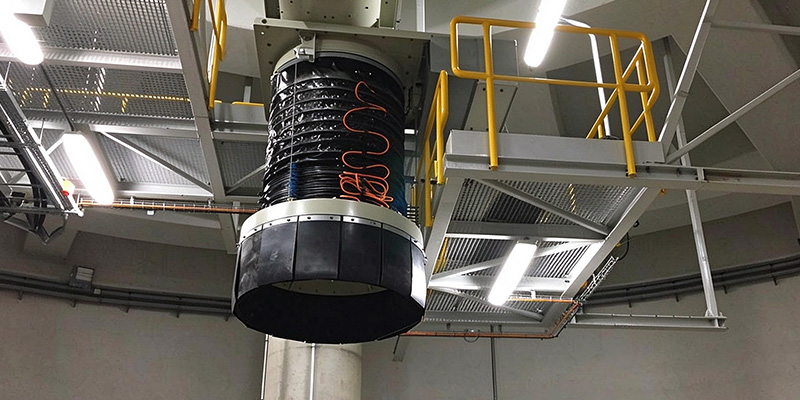
A telescopic loading spout looks simple — a retractable chute that drops dust-free cement into a truck. But choosing the wrong one is expensive: a spout sized for the wrong material wears out in months, a spout with insufficient dust control fails environmental inspection, and a spout with the wrong retraction system jams in daily service. In cement terminals, fly ash stations, and mineral plants, the loading spout runs every day, and its failures stop production at the single most visible point in the plant.
This selection guide walks through the six evaluation criteria that matter — material characteristics, loading rate and vessel type, dust control requirements, automation level, wear life and maintenance cost, and supplier capability. Use it as your checklist when evaluating telescopic loading spout suppliers.
1. Evaluate Material Characteristics: Match the Spout to Your Product
The material you load determines the spout’s construction. Get this wrong and nothing else matters.
| Material property | What it decides | Selection rule |
| Particle size and shape | Inner cone type and clearance | Fine powder (cement, fly ash): standard cones. Lump/abrasive (clinker, aggregates): reinforced cones, larger clearances |
| Abrasiveness | Liner and cone material | Abrasive duty: hardened steel or ceramic-lined inner cones, wear-resistant skirt |
| Temperature | Materials of construction | Below 80°C: standard. 80-150°C: heat-resistant cones and skirt. Above 150°C: consult factory |
| Moisture / stickiness | Skirt and discharge design | Sticky materials: anti-caking skirt, wider outlet, possible vibrator |
| Bulk density | Spout diameter and drive power | Higher density = stronger winch/actuation system |
2. Evaluate Loading Rate and Vessel Type: Size the Spout Correctly
The spout must match the flow you need and the vessel you fill.
2.1 Loading rate
Typical telescopic loading spout capacities by application:
| Application | Typical loading rate | Typical spout size |
| Truck loading (cement, fly ash) | 50-150 t/h | DN 250-350 (10-14 in) |
| Railcar loading | 100-300 t/h | DN 300-450 (12-18 in) |
| Ship / barge loading | 300-800 t/h | DN 400-600 (16-24 in) |
| Container / tanker loading | 30-80 t/h | DN 200-300 (8-12 in) |
Rule: size the spout for your peak rate, not the average. An undersized spout becomes the bottleneck of the whole loading line.
2.2 Vessel type and opening
- Truck:spout must reach standard truck hatch positions; check the retracted height fits your gantry.
- Railcar:longer telescopic travel needed (up to 5-8 m) to reach the bottom of tall railcars. See our railcar loading spout for the dedicated design.
- Ship:long travel (up to 10-25 m) plus boom or luffing mount. The spout is usually part of a larger ship loader or loading system.
- Tanker/container:smaller, often with a swivel or positioning arm.
Key question to ask any supplier: What is the maximum telescopic travel you can build, and at what duty cycle?
3. Evaluate Dust Control Requirements: Compliance Is Non-Negotiable
This is where most loading points fail — and where a good spout earns its keep.
- Outer dust extraction sleevewith annular connection for a dust collector. No sleeve = no dust control.
- Bottom sealing skirt— flexible, replaceable, seats against the hatch.
- Automatic retraction by level sensor— keeps drop height at 300-500 mm, the single biggest dust variable.
- Compatibility with a dust collector— the spout must be sized to accept 3,000-5,000 m³/h (truck) or 5,000-8,000 m³/h (railcar) extraction airflow.
4. Evaluate Automation Level: Match Controls to Your Operation
Loading spouts range from manual winch to fully automatic systems.
| Automation level | Features | Best for |
| Manual | Hand winch retraction | Low-volume, occasional loading |
| Semi-automatic | Electric winch + level sensor retraction | Most cement and fly ash terminals |
| Fully automatic | Level sensor + integrated PLC, remote operation, connection to plant DCS, auto-dust collector start/stop | High-throughput railcar and ship loading |
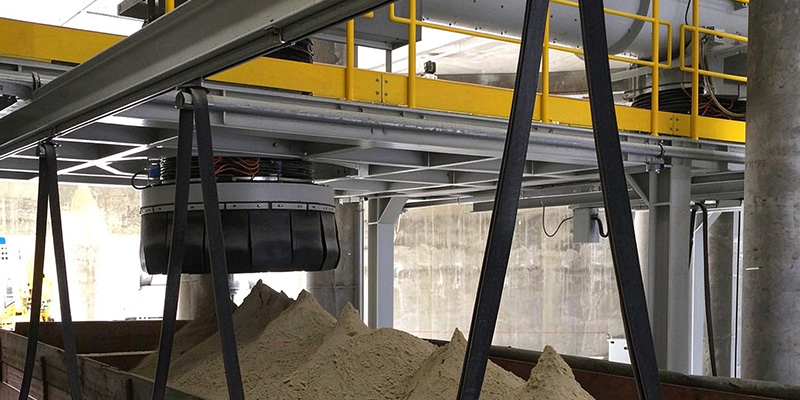
For cement terminals doing daily truck loading, semi-automatic with level sensor retraction is the standard choice — it removes the operator error that causes most dust problems without adding PLC complexity.
5. Evaluate Wear Life and Maintenance Cost: The 10-Year Cost
The purchase price is a fraction of the 10-year cost. Ask for these numbers before comparing prices:
- Inner cone life:abrasive cement duty — expect 2-4 years with hardened cones; confirm the wear liner is replaceable.
- Skirt life:6-12 months for cement duty; skirt must be a standard spare, cheap and quick to change.
- Winch/actuation life:the winch and cables are the most stressed parts. Ask about cable life and replacement procedure.
- Spare parts availability:critical spares (cones, skirts, sensors, winch parts) should be stocked or short-lead.
6. Evaluate the Supplier: Beyond the Machine
The machine is only half the purchase. In cement and fly ash loading, the supplier’s engineering and service decide whether your loading point runs for years or becomes a recurring problem.
| Supplier capability | What to check |
| Application engineering | Can they size from your material + rate + vessel data, or only sell catalog models? |
| Manufacturing quality | Factory, welding standards, ISO 9001 certification, test certificates |
| Project references | Ask for 3-5 installed telescopic loading spout references in your industry, ideally with site photos |
| Custom design | Can they build non-standard travel, diameters, flanges, and control integration? |
| Delivery and lead time | Confirm lead time in writing; check their production load |
| After-sales | Response time for spares, on-site service availability, warranty terms |
| One-supplier responsibility | Do they supply the matched dust collector too, or will you coordinate two vendors? |
7. Telescopic Loading Spout Selection Quick Table
| Decision point | Your answer | Spout requirement |
| Material | Cement / fly ash | Standard powder duty, semi-automatic |
| Clinker / aggregates | Reinforced cones, abrasive-duty liners | |
| Loading vessel | Truck | DN 250-350, 3-5 m travel |
| Railcar | DN 300-450, 5-8 m travel | |
| Ship | DN 400-600, 10-25 m travel, boom mount | |
| Loading rate | 50-150 t/h | Truck-class spout |
| 100-300 t/h | Railcar-class spout | |
| Dust control | Emission limit applies | Extraction sleeve + skirt + level sensor + matched collector |
| Automation | Daily operator use | Semi-automatic (level sensor retraction) |
| High throughput | Fully automatic PLC system |
8. FAQ
Q1: What is the difference between a loading spout and a telescopic loading spout?
A basic loading spout is a fixed or simple chute; a telescopic loading spout extends and retracts to keep the discharge tip close to the material surface, which is what makes dust-free loading possible. For bulk cement and fly ash, the telescopic type is standard.
Q2: How much does a telescopic loading spout cost?
For a truck-class telescopic loading spout (DN 300, semi-automatic), budget typically ranges from a few thousand to tens of thousands of USD depending on automation, materials, and the dust control package. Always compare the 10-year cost including wear parts, not just the purchase price.
Q3: How long does a telescopic loading spout last?
With proper maintenance, 10-15 years is realistic for the structure. Wear parts (inner cones, skirt, cables) are replaced periodically — skirt every 6-12 months in cement duty, cones every 2-4 years.
Q4: Can one loading spout handle both trucks and railcars?
A single spout can fill both, but the telescopic travel and spout size differ. A spout with 5-8 m travel serves both truck and railcar; short-travel truck spouts cannot reach railcar bottoms. Confirm the travel range covers all your vessel types.
Q5: Do I need a dust collector with a telescopic loading spout?
Yes, for cement and fly ash. The spout contains the dust; the collector removes the captured air and dust. Without it, dust builds in the annulus and escapes within hours. Plan 3,000-5,000 m³/h for truck loading, 5,000-8,000 m³/h for railcar.
Q6: How do I know if a loading spout supplier is reliable?
Check application engineering capability, factory and certifications, 3-5 industry references, custom design ability, written lead times, and after-sales response. A supplier that can size from your actual data and backs the dust control performance in the warranty is a specialist; one that only sells catalog models is a reseller.
Q7: What is the right drop height during loading?
300-500 mm from the spout tip to the material surface, maintained automatically by a level sensor. Larger drops increase free-fall dust; smaller drops restrict material spreading and can cause backflow.
Q8: Can a telescopic loading spout handle hot materials?
Yes, within limits. Standard spouts handle up to 80°C; heat-resistant cones and skirts extend this to 150°C. Above that, discuss with the factory — refractory or water-cooled designs may be needed.
9. Summary
Selecting a telescopic loading spout is a six-step evaluation, not a price comparison:
- Materialdetermines construction (cones, liners, skirt)
- Loading rate and vesseldetermine size and telescopic travel
- Dust control requirementsdetermine sleeve, skirt, and collector matching
- Automation leveldetermines retraction and control system
- Wear life and maintenancedetermine the 10-year cost
- Supplier capabilitydetermines whether it all works in the end
Answer these six in order and the right spout — and the right supplier — becomes clear.
If you are evaluating a telescopic loading spout for cement, fly ash, or mineral loading, contact Darko Cement with your material, loading rate, and vessel type. We supply telescopic loading spouts from truck to ship class with matched dust collection packages, and we will give you the application data, references, and warranty terms you need to compare us properly.