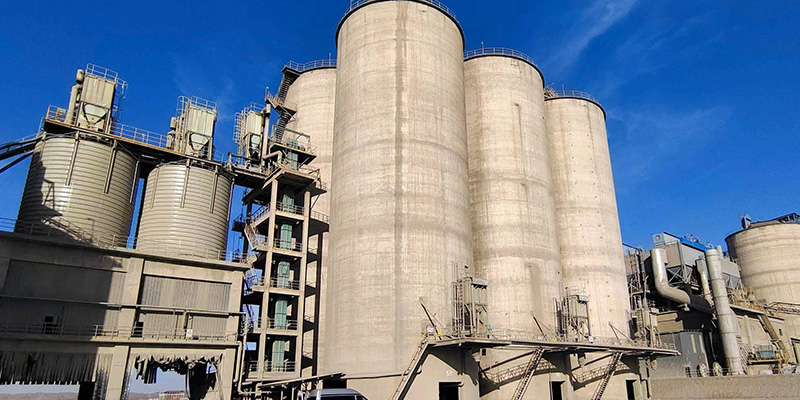
Cement silo caking and silo wall crusting are one of the most common and troublesome problems in modern cement production and storage. Uncontrolled cement agglomeration inside silos often causes unstable cement quality, blocked discharge outlets, interrupted delivery operations, and reduced overall production efficiency. If left untreated, long-term silo wall buildup will increase manual silo cleaning frequency, raise maintenance costs, and create serious high-risk safety hazards for cement plant operation.
Many cement factories rely on traditional periodic silo cleaning to handle caking issues, which is costly, inefficient, and unsafe. To achieve stable cement quality, continuous discharging performance, and safer factory operation, it is essential to understand the root causes of cement silo caking and implement systematic full-process anti-caking optimization solutions. This article elaborates on why cement cakes in silos and provides practical industrial solutions for cement storage, grinding, conveying, and silo management.
1. Root Causes of Cement Silo Caking and Wall Crusting
Cement is a hydraulic cementitious material that reacts and hardens when exposed to moisture. All cement silo caking problems are fundamentally caused by uncontrolled moisture intrusion throughout the production and storage system. Even minor moisture accumulation can cause fine cement powder to gradually agglomerate, adhere to silo walls, and form hardened crust layers. The main causes can be categorized into four key factors.
1.1 Excessive Moisture in Raw Materials and Admixtures
Slag, pozzolana, gypsum, and other cement admixtures are highly susceptible to moisture absorption. When incoming materials carry excessive water and lack sufficient drying time, the overall moisture of mill feed materials exceeds the standard range. In conventional roller press and ball mill grinding systems without auxiliary drying equipment, residual moisture cannot be fully removed during production, resulting in high finished cement moisture and gradual caking during long-term silo storage.
1.2 Air Leakage and Moisture Infiltration in Conveying Systems
Poorly sealed conveyor galleries, dust collectors, air slide systems, and compressed air pipelines allow humid outside air, rainwater, and condensation to continuously enter the production flow. Dry finished cement absorbs moisture again during transportation and silo feeding, forming sticky layers on silo walls that eventually harden into thick cement crusts and large blocks.
1.3 Improper Grinding and Temperature Control Processes
Many cement plants use in-mill water spraying or shell water spraying to control high cement temperature. Although these methods lower discharge temperature, they significantly increase cement moisture content. In addition, dust system air leakage and sub-dew-point operating temperatures cause internal condensation, further accelerating cement agglomeration and silo caking.
1.4 Unscientific Cement Silo Storage Management
Damaged silo roof waterproofing, unreasonable negative pressure control, excessive cement storage time, internal dead material zones, and unprotected silo walls all contribute to trapped moisture inside silos. Static cement deposits continuously absorb water vapor, forming persistent hard caking and wall crusting that severely affects discharging stability.
2. Full-Process Optimization Solutions for Cement Silo Caking
To completely resolve cement silo caking and wall buildup issues, cement manufacturers must implement systematic optimization covering raw material storage, batching conveying, grinding operation, finished product transportation, silo top management, internal storage environment, silo bottom discharging, and terminal delivery control.
2.1 Raw Material Storage: Strict Source Moisture Control
Control raw material moisture at the source by storing all admixtures and gypsum in fully enclosed sheds instead of open-air stacking. Maintain sufficient inventory cycles to allow natural air drying and reduce internal material moisture. During rainy seasons and high-humidity periods, extend material resting time to ensure stable incoming material quality.
Adopt zone stacking and first-in-first-out feeding rules to avoid long-term bottom material dampness. Strictly inspect all incoming materials and reject high-moisture unqualified raw materials to prevent unstable cement quality and large-area silo caking.
2.2 Batching and Conveying System: Block Humid Air Infiltration
Fully seal conveyor corridors, rain covers, and dust collector enclosures to prevent rain penetration and humid air backflow. Regularly inspect and maintain sealing strips, access doors, duct expansion joints, and pressure detection points to eliminate air and water leakage.
Clean compressed air system oil-water filters and drainage devices periodically to ensure dry conveying air. Eliminating moisture in the conveying system effectively prevents secondary moisture absorption of cement powder.
2.3 Grinding System Optimization: Avoid Artificial Moisture Increase
Install rain shields for outdoor cold air valves to prevent rainwater from entering the grinding system. Dynamically adjust admixture ratios according to seasonal humidity changes to stabilize mill feed moisture and ensure finished cement moisture remains below 0.5%.
Eliminate dust system air leakage and maintain operating temperatures above the dew point to avoid internal condensation. Cancel all water-spray cooling methods and optimize ball grading, ventilation efficiency, and over-grinding control to achieve natural temperature reduction without increasing cement moisture.
2.4 Finished Cement Conveying: Sealing and Insulation Upgrade
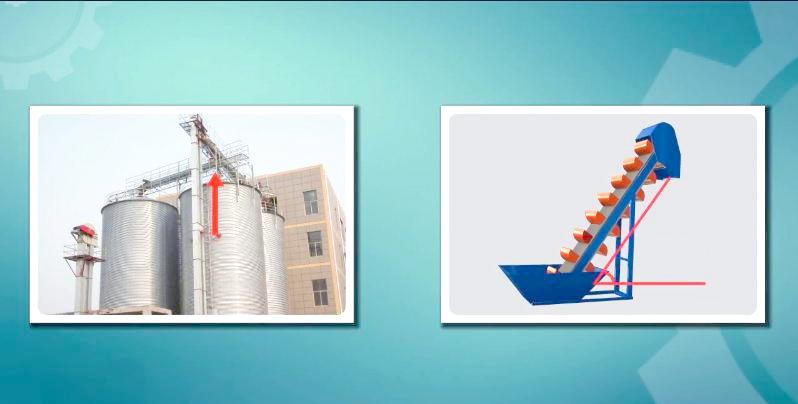
Fully seal air slide conveying systems and install rainproof and thermal insulation structures for outdoor transportation pipelines. Prevent low-temperature condensation and humid air ingress during finished cement delivery. Regularly inspect bucket elevators and transfer-point dust systems to maintain stable and dry conveying conditions.
2.5 Silo Top Management: Waterproofing and Negative Pressure Stabilization
Repair silo roof waterproof layers, inspection hatches, and edge sealing structures to completely stop rainwater infiltration. Install rain guards on dust exhaust pipelines and maintain tight sealing for all silo top dust removal equipment.
Optimize silo negative pressure control by installing regulating valves and pressure gauges on dust extraction pipelines. Maintain stable micro-negative pressure inside the silo to discharge internal moisture efficiently while preventing external humid air from entering, greatly reducing cement wall adhesion and caking.
2.6 Internal Silo Optimization: Anti-Adhesion Materials and Scientific Storage
Control reasonable cement storage cycles and avoid long-term static material accumulation. Use mechanical silo turning methods during off-seasons to activate stagnant cement and prevent hardening. Ensure normal operation of silo bottom homogenization devices to eliminate dead material zones.
Apply nano-ceramic anti-corrosion liners and low surface energy anti-stick coatings on silo walls. These advanced materials form ultra-low-tension protective layers that effectively prevent cement powder adhesion and wall crusting. Equip silo tops with acoustic wave ash cleaners for regular wall cleaning to maintain long-term silo cleanliness and extend silo maintenance cycles.
2.7 Silo Bottom Discharging: Eliminate Dead Zones and Blockages
Regularly maintain zoned electric ball valves to ensure uniform segmented discharging. Inspect internal air slide canvas and pipelines frequently, replace damaged components, and eliminate air leakage and material blockage. Stable fluidization and uniform discharging effectively prevent local material accumulation and bottom caking.
2.8 Terminal Discharging: Intelligent Lump Removal and Anti-Blocking
Install cement crushing valves at discharge outlets to break occasional hardened lumps into fine particles suitable for normal conveying. Equip air slide pipelines with gasification sediment slag removers to automatically filter residual cement blocks and ensure smooth delivery. Regularly clean and recycle accumulated qualified blocks to reduce production waste.
3. Conclusion
Cement silo caking and wall crusting are caused by uncontrolled moisture penetration across raw material processing, grinding, conveying, and silo storage links. Solving silo caking problems cannot rely solely on post-cleaning maintenance. Cement plants must establish full-process moisture control and system optimization mechanisms.
By stabilizing raw material moisture, upgrading system sealing, optimizing grinding technology, precisely adjusting silo negative pressure, applying new anti-adhesion materials, and improving terminal discharging equipment, enterprises can effectively minimize cement silo caking, stabilize finished cement quality, improve delivery efficiency, and greatly reduce safety risks and maintenance costs caused by frequent silo cleaning.