Gold mining professionals and investors frequently encounter terms like raw oxidized gold ore, oxide gold ore, and oxidized gold sulfide ore. While these labels are often used interchangeably, they represent distinct geological materials with unique processing requirements, recovery potential, and economic value. Understanding these differences is critical for selecting the right extraction method, maximizing gold recovery, and optimizing operational costs—key priorities for modern gold mining operations worldwide.
What Is Oxidized Gold Ore? Core Definition & Formation
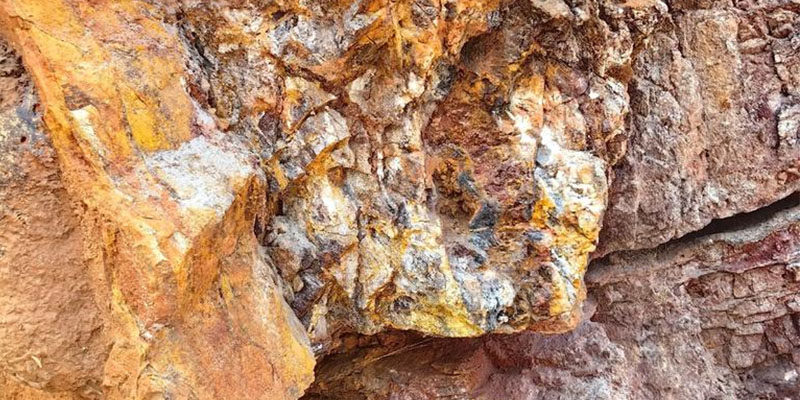
Oxidized gold ore (also commonly referred to as oxide gold ore) forms when primary sulfide gold ore undergoes long-term weathering and oxidation near the Earth’s surface. Over millennia, exposure to oxygen, water, and microorganisms breaks down sulfide minerals—such as pyrite and arsenopyrite—into iron oxides (hematite, limonite), hydroxides, and clays.
Unlike refractory sulfide ores where gold is tightly locked within a mineral matrix, gold in oxidized ore is typically “liberated” or loosely bound within porous, weathered materials. Visually, these ores range from yellow-brown to rusty red. Their “free-milling” nature makes them some of the most accessible and profitable resources in the industry.
Key Sub-Categories: Raw, Oxide, and Transitional Ores
1. Raw Oxidized Gold Ore: The Unprocessed Feedstock
Raw oxidized gold ore refers to the Run-of-Mine (ROM) material directly extracted from the pit. It has not undergone crushing, grinding, or pre-treatment. It retains the natural heterogeneity of the deposit, featuring variable clay content, gold particle sizes, and impurities like manganese oxides or quartz.
2. Oxidized Gold Sulfide Ore: The Transitional Zone
Often found at the boundary between surface oxide zones and deeper primary deposits, this is a mixed ore type. It contains both liberated gold in oxide zones and gold still locked in unoxidized sulfide minerals. Processing this transitional material is more complex, usually requiring a hybrid approach of both sulfide and oxide recovery techniques.
Comparison: Oxide vs. Oxidized Sulfide Gold Ore
| Feature | Oxide Gold Ore / Oxidized Gold Ore | Raw Oxidized Gold Ore (ROM) | Oxidized Gold Sulfide Ore |
| Primary Composition | Iron oxides (hematite, limonite), clays, free gold | Untreated ore with variable clay/gold distribution | Mixed oxides + unoxidized sulfides (pyrite) |
| Texture & Hardness | Soft, porous, crumbly | Heterogeneous, uncrushed, variable | Semi-hard, partially porous |
| Gold Liberation | 80–100% (Free-milling) | Partially liberated (depends on weathering) | 30–70% liberated; some locked in sulfides |
| Clay Content | 10–40% (Highly variable) | 20–50% (Highest in raw state) | 5–20% (Lower than pure oxide) |
| Recovery Potential | 85–95% (CIL/CIP); 50–80% (Heap) | 70–90% (After proper sizing) | 60–85% (Requires pre-treatment) |
| Processing Complexity | Low (No roasting required) | Moderate (Requires washing/crushing) | High (Flotation + Oxidation needed) |
Proven Extraction Processes for Oxidized Gold Ore
Efficiently extracting gold from oxidized deposits is a top priority for global operators. The choice of method depends on ore grade, mineralogy, and environmental standards.
1. Heap Leaching: Cost-Effective for Low-Grade Ore
Heap leaching is the most economical solution for large-volume, low-grade oxidized gold ore (0.5–1.5 g/t).
- The Process: Raw ore is crushed to 10–25 mm, stacked on liners, and sprayed with a dilute cyanide solution.
- Optimization Tip: High clay content (>20%) can cause “blinding.” Agglomeration is necessary to maintain permeability. During the crushing and stacking phase, utilizing a high-efficiency dust collector is essential to ensure environmental compliance and worker safety.
- Verdict: Low CAPEX/OPEX, but recovery is sensitive to ore permeability.
2. CIL/CIP (Carbon-in-Leach/Pulp): The Gold Standard for High Recovery
For medium-to-high grade ore (1.5–5 g/t) or fine-grained gold, CIL/CIP achieves superior results (90–95% recovery).
- The Process: ROM ore is ground to 70–90% passing 200 mesh (75 μm). Gold is dissolved in agitated tanks and adsorbed onto activated carbon.
- Optimization Tip: Consistent throughput is key. A reliable conveyor system equipped with specialized telescopic chutes can prevent material bottlenecks and minimize dust during the feed process to the grinding circuit.
- Verdict: High, stable recovery; requires higher initial investment and rigorous operational management.
3. Gravity Separation: Recovering Coarse Free Gold
Many oxidized deposits contain coarse “nugget” gold (>30 μm). Using shaking tables or centrifugal concentrators before leaching can recover 40–60% of gold at a very low cost.
- Verdict: Chemical-free and cost-effective, but cannot capture ultra-fine particles effectively.
Critical Challenges & Optimization Tips
Overcoming High Clay Content
Clay is the “recovery killer” in oxidized ores. It absorbs leachate and coats gold particles.
- Solution: Use trommel scrubbers to wash raw ore before crushing. For transport, ensure your screw conveyors and transfer points are designed for sticky materials to prevent buildup.
Environmental & Leak Management
Modern mines must prioritize sustainability.
- Solution: Ensure all leaching tanks and pipelines are secured with high-performance valves to prevent hazardous leaks. Implementing closed-loop water systems and advanced bag filter systems for dust control significantly reduces the environmental footprint.
Frequently Asked Questions (FAQ)
1. What is the simplest method for extracting gold from oxide ore?
For small-to-mid scale mines with low-grade ore, Heap Leaching is the most straightforward and cost-effective method due to its minimal equipment requirements.
2. Which process yields the highest recovery rates?
CIL (Carbon-in-Leach) is the industry benchmark for maximizing recovery, typically reaching 90% to 95% for oxidized ores.
3. How do you handle “sticky” raw oxidized ore?
Pre-washing (scrubbing) and using specialized bulk material handling equipment designed for high-moisture/clay content are the best ways to prevent processing delays.
Final Thoughts
Oxidized gold ore remains one of the most profitable targets in the global mining industry due to its free-milling nature and lower processing costs compared to sulfide ores. By distinguishing between raw ROM ore and transitional sulfide-oxide mixes, and by optimizing the handling of clay and dust, operators can significantly boost their bottom line.
As environmental regulations tighten in 2026, integrating sustainable dust collection and efficient material handling into your flow sheet is no longer optional—it is the key to long-term operational success.