
1. Conveyor Belt Basics
1.1 What is a Belt Conveyor?
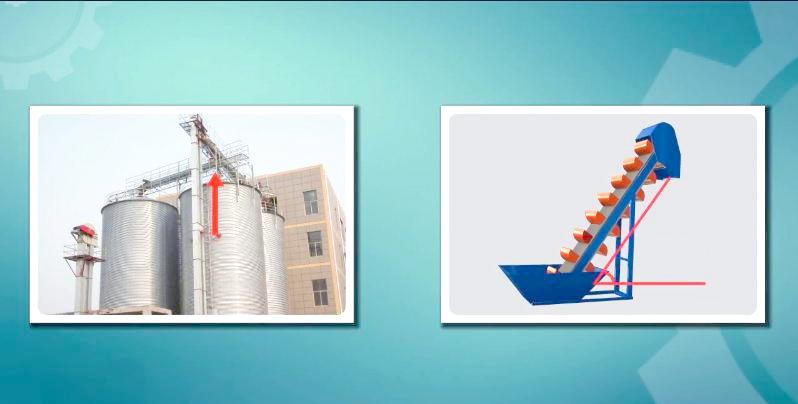
A belt conveyor consists of a belt, pulleys, idlers, a drive system, and a supporting frame. It is the most widely used continuous material handling equipment in industrial production. Featuring simple structure, stable operation, low energy consumption, and high adaptability, belt conveyors can handle horizontal, inclined, or combined material transport. They are commonly used in mining, food processing, chemical, construction, port logistics, and manufacturing industries.
1.2 Primary Applications of Belt Conveyors
Belt conveyors are core components of automated production lines, with key functions including:
Replacing manual handling to significantly improve production efficiency
Standardizing, streamlining, and automating material transfer on assembly lines
Reducing labor costs and mitigating operational safety risks
1.3 Common Conveyor Belt Issues
During long-term operation, belt conveyors may encounter several issues, including:
Conveyor belt misalignment (belt drift)
Belt slippage
Abnormal wear and tear
Material spillage
Equipment vibration and abnormal noise
Key Insight: Conveyor belt misalignment is the most frequent issue, accounting for over 60% of unplanned industrial downtime, posing a major risk to production stability.
2. Core Risks of Conveyor Belt Misalignment
Also known as belt drift or belt tracking deviation, misalignment is one of the most common and costly conveyor system faults. Temporary fixes alone cannot solve the problem, leading to repeated issues and multiple negative impacts:
Accelerated edge wear, cracking, or tearing of the belt, significantly shortening its lifespan
Continuous friction damages pulleys, idlers, and frame structures, increasing maintenance costs
Uneven material transport and spillage reduce production efficiency and waste materials
Frequent unplanned downtime disrupts production schedules
Severe misalignment may trigger equipment failure, posing safety hazards
Pro Tip: Proper belt alignment, tension adjustment, and systematic maintenance are crucial for preventing misalignment and ensuring long-term stable operation.
3. Early Warning Signs of Belt Misalignment (Inspection Guide)
Misalignment rarely occurs suddenly; early-stage signs can be detected during routine inspections, allowing preventive measures to reduce maintenance costs and avoid sudden downtime.
| Warning Sign | Observation | Risk Level |
|---|---|---|
| Abnormal friction | Belt constantly rubs the frame, showing edge wear, cracking, or tearing | High |
| Unusual noise | Continuous scraping or grinding noises | Medium |
| Visible drift | Belt visibly shifts left or right, failing to stay centered | High |
| Frequent safety trips | Excessive misalignment triggers safety stops | High |
| Material spillage | Uneven belt movement causes leakage or spillage | Medium |
4. 10 Root Causes of Conveyor Belt Misalignment & Solutions
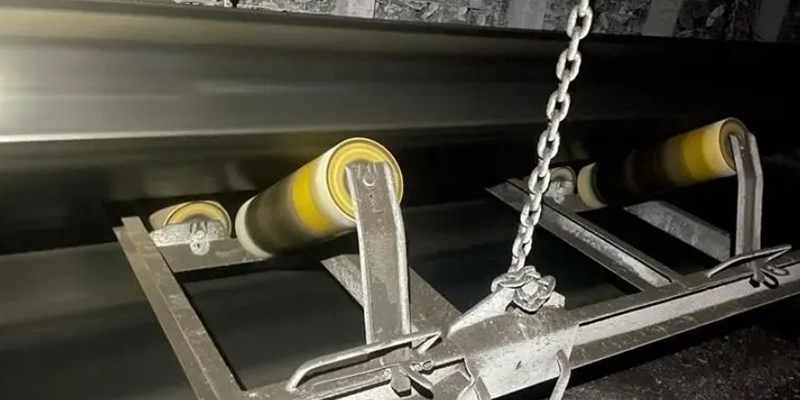
Misalignment is rarely caused by a single factor; it typically results from a combination of installation errors, component wear, structural deformation, operational conditions, and environmental interference. Below are the 10 most common root causes with symptoms, solutions, and recommended tools for effective maintenance.
| # | Cause | Symptoms | Solution | Recommended Tools |
|---|---|---|---|---|
| 1 | Improper installation & tension | Belt vibration, edge wear, early misalignment | Follow manufacturer installation guidelines, adjust tension accurately, ensure initial alignment | Tension meter, alignment ruler |
| 2 | Belt splice defects | Periodic lateral movement, localized wear | Re-splice belt, ensure flat, symmetric, gap-free joints | Belt splice tools |
| 3 | Pulley/Idler misalignment | Continuous unidirectional drift, recurring misalignment | Use high-precision devices to align pulleys & idlers | Laser alignment system |
| 4 | Uneven belt tension | Belt shifts toward tighter side, severe edge wear | Fine-tune tension balance, add stabilizer | Tension meter, belt stabilizer |
| 5 | Belt curl / incorrect width-to-length ratio | Edge warping, unstable operation, worsens with aging | Match belt dimensions to application, inspect for wear & curl | Engineering verification tools |
| 6 | Idler seizure / wear | Belt shifts toward stuck idler, increased friction and noise | Inspect idlers regularly, replace worn/damaged units | High-quality sealed idlers |
| 7 | Material buildup / residue | Material accumulates on belt or idlers, causing misalignment | Clean equipment regularly, install cleaning & guide devices | Scraper, guide rollers |
| 8 | Eccentric feeding | Material accumulates on one side, irreversible edge wear | Optimize chute structure, balance feed distribution, add guide rollers | Belt stabilizer, heavy-duty guide rollers |
| 9 | Incorrect idler spacing | Belt sags, unstable contact, higher misalignment risk under heavy load | Adjust idler spacing, add support structures | Idler support brackets |
| 10 | Frame deformation / environmental impact | Persistent misalignment, vibration, wind/rain exposure | Inspect & correct frame, install guards or retaining rings | Protective covers, alignment tools |
5. Two Core Belt Alignment Methods
Accurate pulley alignment is critical to eliminating conveyor belt misalignment and preventing recurring issues. The industry uses two primary methods: traditional mechanical alignment and high-precision laser alignment, with significant differences in accuracy and effectiveness.
5.1 Traditional Mechanical Alignment
Uses rulers, tape measures, wires, feeler gauges, and levels for manual alignment.
Advantages: simple, low-cost, easy to learn
Limitations: low precision; millimeter-level errors accumulate, unsuitable for high-speed, high-precision conveyors, and may lead to recurring misalignment
5.2 High-Precision Laser Alignment (Recommended)
Laser alignment devices provide micron-level precision and real-time feedback, widely recommended by conveyor manufacturers.
Compatible with belts of different thicknesses and brands
Slot calibration precision surpasses traditional methods
Meets industry tolerance standards of 0.25°–0.5°
Tip: Using laser alignment for new installations or component replacements eliminates pulley misalignment, significantly extends belt, pulley, and bearing life, and reduces unplanned downtime.
6. Long-Term Conveyor Belt Misalignment Prevention
Preventing recurring belt misalignment requires standardized, systematic maintenance rather than reactive repair:
Standardized Initial Installation: Ensure accurate alignment and tension during installation or component replacement.
Routine Systematic Inspections: Regularly check belt, idlers, pulleys, and frame alignment to detect early issues.
Keep Equipment Clean: Remove material buildup from belts, idlers, and frames to prevent uneven friction.
Optimize Even Feeding: Redesign chutes to stabilize material flow and prevent eccentric feeding.
Use Specialized Correction Equipment: Install automatic centering idlers, belt correction devices, and stabilizers for real-time adjustment.
7. Summary & Recommended Actions
Conveyor belt misalignment is a frequent, high-impact industrial issue affecting productivity, equipment lifespan, and operational safety. Most recurring misalignment results from temporary fixes and unresolved root causes.
Recommended Approach:
Identify the 10 key causes of belt misalignment
Replace ad hoc maintenance with standardized installation, high-precision laser alignment, systematic inspection, and professional correction devices
Outcome: effectively eliminate belt drift, reduce maintenance costs, minimize unplanned downtime, and ensure long-term, efficient, and stable material handling