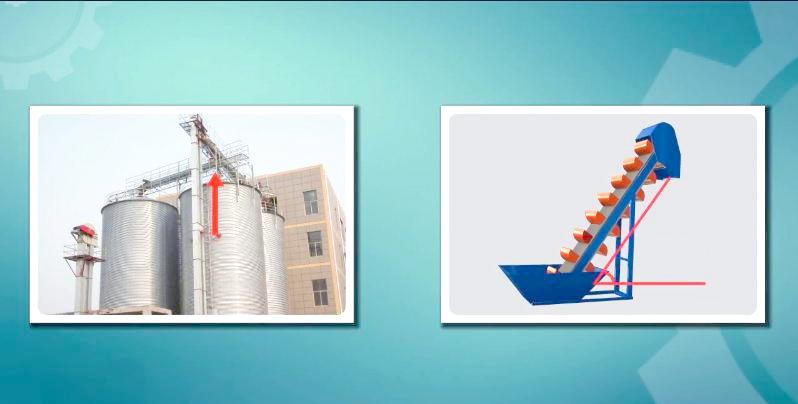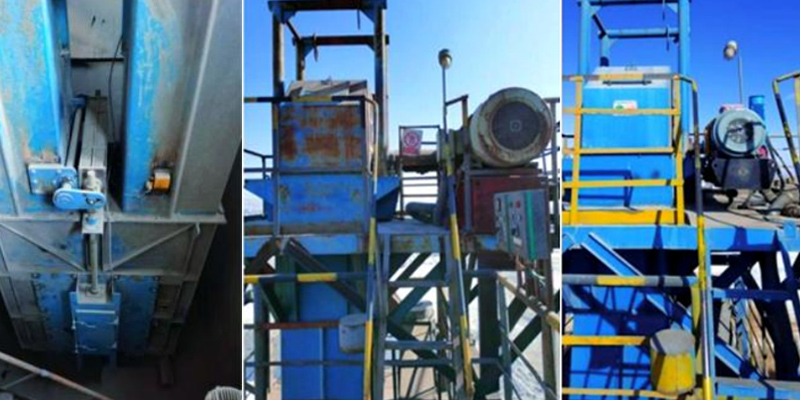

A bucket elevator is a core vertical conveying equipment in industrial production. It features high efficiency, stable operation, energy saving and environmental protection. It widely serves industries such as mining, building materials, powder processing and grain processing. It continuously conveys powdery, fine granular and coarse bulk materials vertically. It is an essential device for material handling in production lines. To keep the bucket elevator running stably and reduce downtime caused by faults, this article explains the basic definition and working principle of the bucket elevator. It also sorts out ten common operational faults, analyzes core causes and provides practical fixing and preventive solutions.
1. What Is a Bucket Elevator
A bucket elevator is a special mechanical device that vertically conveys materials. It uses traction components including belts and chains to drive regularly arranged buckets. It completes material conveying through three basic steps: scooping, lifting and discharging. The bucket elevator has a compact structure, large conveying capacity and high lifting height. Its fully enclosed design effectively reduces material dust and loss. It adapts to dry, granular and bulk material handling scenarios. It supports automatic operation and greatly improves the material conveying efficiency of production lines.
2. Working Principle of Bucket Elevator
A complete bucket elevator consists of core parts: head section, middle casing, tail section, material buckets, traction components, driving devices and tensioning devices. Its working process includes three key stages: material scooping, vertical lifting and material discharging. After startup, the drive motor transmits power through the reducer and fluid coupling. It drives the head drive drum to rotate and makes the belt or chain run cyclically. The material buckets fixed on traction components operate synchronously.
When buckets run to the feeding area at the bottom of the tail section, they scoop materials evenly. Then the buckets carry materials upward vertically inside the closed casing to avoid material spilling and dust leakage. When full buckets reach the top head section, centrifugal force and gravity work together to throw materials out along a fixed trajectory. Materials discharge completely through the outlet. Empty buckets move downward after discharging and return to the tail section to scoop materials again. This cyclic operation realizes continuous vertical material conveying.
3. Common Faults, Causes and Solutions of Bucket Elevators
3.1 Severe Material Return at the Head Section
Material return at the head is a frequent fault of bucket elevators. Unloaded materials fail to discharge completely and fall back to the casing and tail section. This causes repeated material conveying, increases equipment load and reduces overall conveying efficiency.
Fault Causes:
① Unreasonable bucket structure with improper radian and volume leads to residual materials and incomplete discharging;
② Low rotating speed of the head drum provides insufficient centrifugal force to throw out materials fully;
③ Unmatched head discharging height makes the material throwing trajectory deviate from the outlet;
④ Excessive gap between the outlet lip plate and bucket edge causes material backflow.
Solutions: Optimize bucket structural parameters such as radian and depth according to material particle size and specific gravity to ensure complete discharging; properly increase the head rotating speed within the rated range to enhance centrifugal force for smooth material throwing; fine-tune the head installation height to align the material throwing trajectory with the outlet; accurately adjust the gap between the lip plate and bucket edge to block material backflow and guide all materials into the outlet.
3.2 Drive Motor Overheating and Burning Failure
The drive motor provides power for the entire bucket elevator. Overheating is the most common motor fault, which may burn coils and cause equipment shutdown. Equipment overload and component jamming are the main triggers of this fault.
Fault Causes:
① Undersized motor rated power cannot match the actual operational load, resulting in continuous heat accumulation during long-term full or overload operation;
② Stuck components cause motor stalling. The motor load rises sharply while the speed drops, leading to rapid heat buildup and failure to dissipate heat in time.
Solutions: Calculate operational load accurately during equipment selection and match a motor with appropriate rated power; conduct full inspection during installation, commissioning and daily operation. Cut off the power immediately once stalling occurs, remove jamming faults and restart the equipment only after full troubleshooting; install a fluid coupling for bucket elevators above 30kW. The fluid coupling provides overload protection and soft start functions to avoid instantaneous overload impact and prevent motor burning.
3.3 Head Core Shaft Fracture
The head core shaft is the key load-bearing part of the head drum. It bears the total weight of traction components, buckets and conveyed materials. Long-term heavy load operation easily causes shaft fracture and complete equipment shutdown.
Fault Causes:
① Substandard shaft material lacks sufficient strength and toughness for load bearing;
② Unqualified or missing heat treatment reduces shaft hardness and bearing capacity;
③ Unreasonable structural design with sharp transition steps causes stress concentration and crack formation under long-term force;
④ Long-term overload operation accumulates fatigue damage and finally leads to shaft fracture.
Solutions: Adopt high-strength steel such as 45# steel and 40Cr for core shaft manufacturing; standardize heat treatment processes to keep the shaft hardness between HB220 and HB260; optimize shaft structure by rounding transition steps to eliminate stress concentration; strictly control operational load to avoid long-term overload; regularly inspect the shaft for wear and cracks and replace aging parts in advance.
3.4 Fluid Coupling Failure
The fluid coupling installs between the motor and reducer. It undertakes soft start, torque transmission and overload protection functions. It is a core protective part of the bucket elevator power system, and its failure directly affects power transmission stability.
Fault Causes:
① Insufficient or excessive oil filling fails to meet operational standards;
② Aging or damaged seals cause oil leakage;
③ Long-term operation leads to hydraulic oil oxidation and performance degradation;
④ Frequent equipment overload raises coupling oil temperature sharply, melts the fusible plug, causes hydraulic oil leakage and cuts off power transmission.
Solutions: Fill hydraulic oil strictly according to equipment manual standards, check oil level regularly and replenish or replace oil in time; inspect coupling seals daily and replace damaged seals to eliminate leakage; replace aging hydraulic oil regularly to maintain stable transmission performance; standardize operation and avoid overload to prevent high-temperature pressure relief and power disconnection of the fluid coupling.
3.5 Reducer Damage
The reducer reduces speed and increases torque to adapt to heavy-load operation of bucket elevators. Long-term operation easily causes faults including high-speed shaft fracture, gear tooth breakage, bearing damage and insufficient lubrication.
Fault Causes:
① Rigid connection without soft start protection generates huge instantaneous impact during startup and overload, damaging shafts and gears;
② Poor daily lubrication maintenance leads to insufficient oil, deteriorated oil quality and dry friction wear of parts;
③ Long-term overload operation exceeds the bearing limit of gears and bearings.
Solutions: Equip a fluid coupling between the motor and reducer to buffer rigid impact through soft start and avoid shaft and gear damage; establish a regular maintenance mechanism to check reducer oil level and oil quality daily, replenish oil timely and replace deteriorated oil; strictly control operational load to reduce wear of transmission parts.
3.6 Head Drive Drum Bearing Damage
The head drive drum bearing bears large radial load and belongs to vulnerable parts. Bearing damage causes equipment stalling, abnormal noise and unstable operation.
Fault Causes:
① Undersized bearing model provides insufficient bearing capacity to resist instantaneous overload impact;
② Inadequate lubrication maintenance and deteriorated lubricating oil cause bearing dry friction and accelerated wear;
③ Fake or refurbished bearings have unqualified material and precision, leading to shortened service life.
Solutions: Select bearing models 1 to 2 levels higher than the theoretical calculation value after fully calculating the overload coefficient to ensure sufficient bearing redundancy; strictly implement maintenance plans to clean bearings and replace lubricating oil regularly and maintain good lubrication; purchase genuine brand bearings and reject counterfeit products to ensure stable bearing operation.
3.7 Bucket Falling Off
Material buckets fix on belts or chains through bolts. Bucket falling off causes operation stalling, material conveying interruption, vibration and abnormal noise.
Fault Causes:
① Ordinary fixing bolts lack strength and break due to long-term fatigue force;
② Loose bolts without welding reinforcement gradually loosen during operation;
③ Bucket collision with the casing or materials generates pulling force and causes falling off.
Solutions: Replace ordinary bolts with high-strength special fixing bolts to improve connection stability; weld bolt joints after tightening to prevent loosening and desoldering; establish daily inspection mechanisms to eliminate bucket offset and collision risks, and repair or replace loose and damaged buckets timely.
3.8 Severe Bucket Wear
Buckets keep contacting and colliding with materials during scooping, lifting and discharging. Severe wear especially occurs when conveying high-hardness and large-particle materials. Bucket wear reduces conveying efficiency and shortens equipment service life.
Fault Causes:
① Unmatched bucket material has poor wear resistance for conveyed materials;
② Large-particle and high-hardness materials intensify friction and impact wear during operation;
③ Excessive operating speed increases relative friction between buckets and materials.
Solutions: Select bucket materials based on material characteristics. Use wear-resistant steel for highly abrasive industrial materials and lightweight nylon for grain materials; replace with larger-specification bucket elevators or inclined belt conveyors for large-particle material conveying; adjust operating speed reasonably to reduce friction loss while ensuring normal conveying efficiency.
3.9 Severe Tail Material Accumulation
Tail material accumulation and blockage are common bucket elevator faults. Severe blockage causes stalling, reduces conveying efficiency and accelerates component wear.
Fault Causes:
① Unstable feeding from upstream equipment leads to instantaneous excessive feeding beyond instantaneous conveying capacity;
② Undersized equipment model has insufficient rated conveying capacity for actual production load;
③ Unreasonable operating speed and discharging structure cause incomplete discharging, and residual materials fall back and accumulate at the tail.
Solutions: Cooperate with upstream equipment to stabilize feeding speed and avoid instantaneous material impact; upgrade to 1 or 2 levels larger bucket elevators if the original equipment cannot meet production demands; optimize operating speed and outlet structure according to material characteristics to ensure complete discharging and eliminate tail material accumulation fundamentally.
3.10 Excessive Vibration and Operating Noise
Bucket elevators with more than 5 years of service generally produce excessive vibration and noise. These problems affect equipment service life and cause workshop noise pollution, mainly caused by installation errors, component damage and operational deviation.
Fault Causes:
① Low installation accuracy with excessive deviation of verticality and head-tail wheel parallelism causes uneven stress and overall vibration;
② Falling or offset buckets collide with the casing and generate vibration and noise;
③ Loose bucket bolts cause bucket deflection and unbalanced load, producing lateral force and vibration;
④ Loose or deformed traction belts and chains swing left and right during operation and aggravate vibration and noise.
Solutions: Calibrate equipment verticality and head-tail wheel parallelism with professional instruments during installation and maintenance to meet standard requirements; inspect bucket operation status daily, fasten loose bolts and replace damaged and offset buckets timely; adjust the tension of chains and belts regularly, shorten or replace loose chains, and re-joint deformed belts to ensure stable operation of traction components and eliminate vibration and noise.
4. Conclusion
The stable operation of bucket elevators determines the overall efficiency and safety of production lines. Most bucket elevator faults stem from improper model selection, non-standard installation, insufficient maintenance and irregular operation. Equipment managers must master the working principle and fault mechanisms of bucket elevators. Establish a complete management system including daily inspection, regular maintenance and standardized operation to eliminate potential faults in advance. For frequent faults, optimize equipment parameters, upgrade accessories and standardize operation processes according to actual working conditions. These measures effectively reduce fault rate and downtime loss, extend equipment service life and ensure continuous, efficient and safe operation of production lines.