Introduction
Every cement plant engineer faces this question when designing a new material handling line: screw conveyor or belt conveyor? Both move bulk material, but they are fundamentally different machines with different strengths, different costs, and different failure modes.
Choosing wrong is expensive. A belt conveyor installed where a screw conveyor was needed will spill material and require constant cleanup. A screw conveyor installed where a belt was needed will wear out in months and choke the production line.
This guide compares screw conveyors and belt conveyors across the criteria that actually matter in cement plants: material type, conveying length, angle, dust control, energy, maintenance, and total cost of ownership. By the end, you will be able to make the selection in under five minutes.
1. The Short Answer
| Decision | Choose |
| Short distance (under 30 m), fine powder, need dust-tight enclosure | Screw conveyor |
| Long distance (over 50 m), high tonnage, coarse or lumpy material | Belt conveyor |
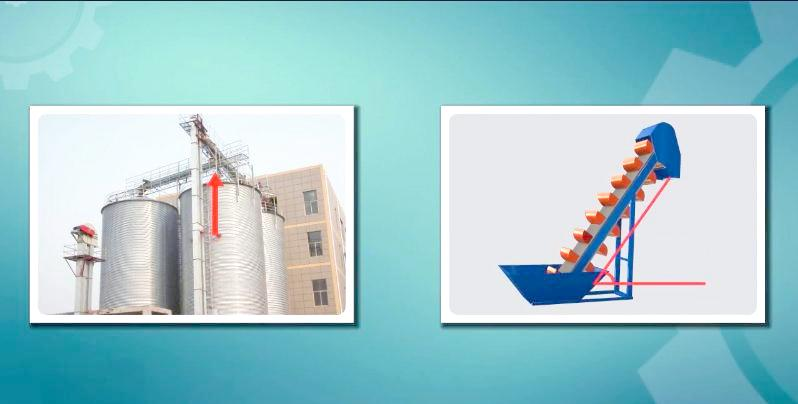
| Inclined or vertical conveying | Screw conveyor (up to 45°) or bucket elevator (vertical) |
| Abrasive, hot, or corrosive material | Belt conveyor (screw wears fast) |
| Existing retrofit inside an enclosed building | Screw conveyor (compact footprint) |
| Outdoor long run between silos and kiln | Belt conveyor |
2. How Each Machine Works
Screw conveyor
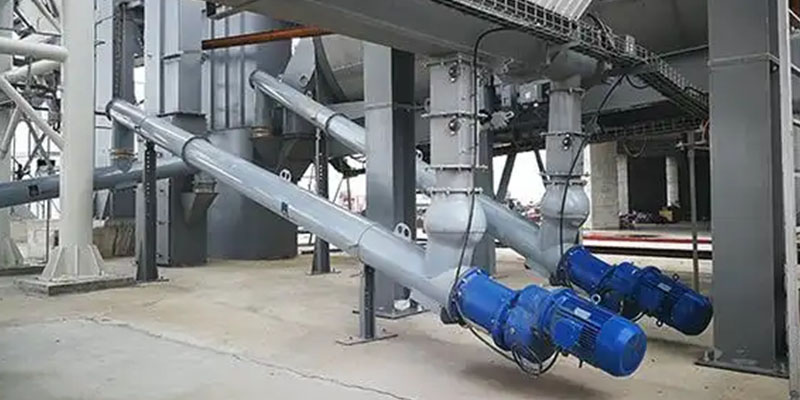
A screw conveyor moves material along a trough or tube using a rotating helical screw (auger). Material is pushed forward by the screw flights, and the rotating shaft is supported by end bearings and intermediate hanger bearings.
Key features: fully enclosed, compact, can convey at an angle up to 45°, and provides excellent dust control because the material never leaves the enclosure.
Cement plant applications: feeding raw meal to the kiln, transporting cement from the mill to the silo, metering additives, and feeding dust collectors and baghouses.
Belt conveyor
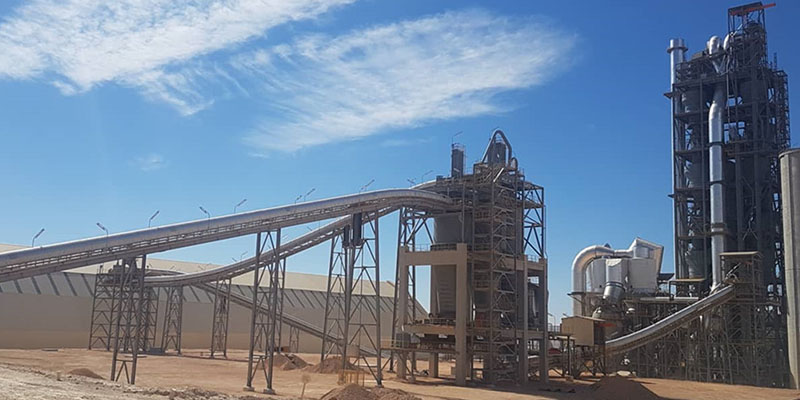
A belt conveyor moves material on an endless rubber belt supported by idler rollers, driven by a pulley at the head end and tensioned by a take-up pulley at the tail.
Key features: long-distance capability (hundreds of meters), high tonnage (thousands of tons per hour), low energy per ton, and handles coarse, lumpy, hot, and abrasive materials well.
Cement plant applications: clinker transport from the cooler to the storage hall, limestone from the quarry crusher to the raw mill, and gypsum or slag feed lines.
3. Side-by-Side Comparison
| Criterion | Screw Conveyor | Belt Conveyor |
| Max conveying length | 30-40 m (single unit) | 500 m+ (multi-section) |
| Max capacity | Up to 300 t/h (typical) | Up to 5,000 t/h |
| Conveying angle | Up to 45° | 15-20° max (standard belt) |
| Dust control | Excellent (fully enclosed) | Moderate (needs covers, skirts, dust collectors) |
| Material types | Dry free-flowing powder, granules | Almost anything: lumpy, hot, abrasive, sticky |
| Moist or sticky material | Poor (wraps on screw) | Good |
| Abrasive material (clinker) | Poor (screw wears fast) | Good |
| Energy per ton | Higher | Lower |
| Footprint | Compact (fits tight spaces) | Long linear layout required |
| Maintenance | Bearings, screw wear; wear parts frequent | Belt splicing, idler and pulley maintenance |
| Spillage | None (enclosed) | Possible at transfer points |
| Noise | Moderate | Low |
| Initial cost (per meter) | Higher for short runs | Higher for long runs |
| Safety hazard | Rotating shaft, pinch points | Moving belt, in-running nips |
4. Decision Framework: Step by Step
Answer these questions in order:
Step 1: What are you conveying?
- Dry powder (cement, raw meal, fly ash, lime, kiln dust) → screw conveyor is the natural choice
- Clinker, limestone, gypsum, slag, coal, aggregates → belt conveyor
- Wet or sticky material (filter cake, moist additives) → belt conveyor
Step 2: How far does it need to go?
- Under 30 m → both work; screw wins on footprint and dust control
- 30-50 m → evaluate both carefully; a single screw starts to get long and power-hungry
- Over 50 m → belt conveyor, almost always
Step 3: Does it need to climb?
- Up to 45° → screw conveyor (or bucket elevator for vertical)
- Flat or slight slope → either; belt is cheaper per ton over long runs
Step 4: How important is dust control?
- Inside an enclosed building, near people, or feeding a baghouse → screw conveyor (enclosed by design)
- Outdoor run with space for covers and extraction → belt conveyor is acceptable
Step 5: What is the total cost of ownership over 10 years?
- Screw conveyor: lower initial cost for short runs, but screw flights and trough liners wear and need replacement — budget for wear parts every 2-3 years with abrasive material
- Belt conveyor: higher initial cost for the full system (idlers, pulleys, belt, tensioning), but low energy per ton and long belt life (5-10 years) if maintained
5. Cement Plant Application Examples
Raw meal to kiln feed: screw conveyor
Raw meal is a fine, dry powder that must be fed at a controlled rate in an enclosed environment. A screw conveyor with a variable frequency drive provides the metering function and dust-tight operation. Belt conveyor would need full enclosure plus a separate feeder — over-engineered.
Clinker from cooler to storage: belt conveyor
Clinker is hot (100-200°C at the cooler discharge), abrasive, and lumpy. A screw conveyor would wear out quickly and consume excessive power. A belt conveyor handles the tonnage and temperature with idlers and a heat-resistant belt (EPDM or steel cord).
Cement mill to silo: screw conveyor or air slide
If the distance is under 30 m, a screw conveyor or air slide both work. Above 30 m, an air slide (with aeration) is often preferred for pure powder; see our air slide guide.
Additive feeding (gypsum, slag): screw conveyor
Small, controlled doses of additives into the mill inlet are best handled by a screw conveyor, which acts as both conveyor and feeder. Belt conveyor cannot dose accurately without an external weigh feeder.
6. Common Mistakes to Avoid
- Using a screw conveyor for long distances.A 60 m screw conveyor is a maintenance nightmare: intermediate hanger bearings fail, the shaft deflects, and power consumption doubles. Use a belt for anything over 40-50 m.
- Using a screw conveyor for clinker or limestone.Abrasive lumpy material grinds the flights and trough. Expect to replace wear parts every 6-12 months. Belt is the correct answer.
- Using a belt conveyor for fine powder without full enclosure.Cement dust escapes at every transfer point, coating the plant and creating a dust hazard. If you must use a belt for powder, budget for total enclosure and dust extraction.
- Sizing the conveyor by volume instead of by material characteristics.A screw conveyor sized for cement will flood with gypsum or choke with moist material. Always size by bulk density, moisture, and flowability of the actual material.
- Ignoring the incline.A standard belt conveyor cannot climb 30°. If you need 30°+, you need a screw conveyor, bucket elevator, or a steep-angle belt. Don’t force a standard belt up a steep incline.
7. Quick Selection Table for Cement Plant Engineers
| Application | Typical distance | Recommended |
| Raw meal to kiln feed | 10-30 m | Screw conveyor or air slide |
| Cement mill discharge to silo | 15-40 m | Screw conveyor or air slide |
| Clinker cooler to storage | 50-200 m | Belt conveyor |
| Limestone from crusher to raw mill | 100-500 m | Belt conveyor |
| Gypsum / slag / additive feeding | 5-20 m | Screw conveyor |
| Fly ash / kiln dust collection | 10-40 m | Screw conveyor |
| Coal to coal mill | 50-300 m | Belt conveyor |
| Baghouse discharge to reuse | 5-20 m | Screw conveyor |
8. FAQ
Q1: Which is cheaper, a screw conveyor or a belt conveyor?
For a short run (under 30 m), the screw conveyor is cheaper to buy and install. For anything over 50 m, the belt conveyor wins on total cost because its cost per meter is far lower and energy per ton is better.
Q2: Can a screw conveyor be used for clinker?
Technically yes, but practically no. Clinker is abrasive and hot, so the screw flights, trough, and bearings wear rapidly. A belt conveyor (or bucket elevator) is the standard solution for clinker.
Q3: What is the maximum angle for a screw conveyor?
Standard screw conveyors work well up to 20-30°. With special flight design, up to 45°. Above that, use a bucket elevator.
Q4: What is the maximum angle for a belt conveyor?
A standard flat belt conveyor handles 15-20° with smooth materials. Steep-angle belts (with cleats or sidewalls) reach 60-90° but cost more. For vertical conveying, a bucket elevator is usually the right answer.
Q5: Which conveyor is better for dust control?
The screw conveyor, because the material is fully enclosed by design. A belt conveyor needs covers, transfer point enclosures, and dust extraction to achieve similar containment.
Q6: How long do screw conveyor flights last in cement service?
Depends on material. With cement powder (moderate abrasion), 3-5 years. With clinker or raw meal (high abrasion), 6-18 months. Use hardened or coated flights for abrasive duty.
Q7: How long does a conveyor belt last?
With proper alignment and maintenance, a rubber belt lasts 5-10 years. Premature failure is almost always caused by misalignment, spillage at transfer points, or damaged idlers — see our belt conveyor misalignment guide.
Q8: Can I use one conveyor for multiple materials?
Yes, but you must size it for the worst case (highest bulk density and lowest flowability). A conveyor sized for cement may be oversized and power-hungry for fly ash. Consider a separate line or a flexible design if materials differ greatly.
9. Summary
Screw conveyors and belt conveyors are not competitors — they are complementary tools for different jobs.
- Screw conveyor: short distances, fine powder, enclosed dust control, inclined conveying, precise dosing. Choose it for raw meal, cement, fly ash, kiln dust, and additives inside the plant.
- Belt conveyor: long distances, high tonnage, coarse and abrasive materials, low energy per ton. Choose it for clinker, limestone, gypsum, slag, and coal.
Ask the five questions in Section 4 before you buy, and you will avoid the most expensive mistakes in cement plant material handling.
If you are designing a new conveying line, contact Darko Cement with your material, distance, tonnage, and layout. We supply both screw conveyors and belt conveyors and will recommend the right machine — not the one we happen to sell more of.