Introduction
A vertical roller mill (VRM) is one of the most expensive and wear-intensive assets in a cement plant. Whether you grind raw meal, cement, or slag, the mill’s availability directly dictates line output. A VRM that vibrates, leaks, or loses product fineness over a long shutdown window costs more in lost production than in replacement wear parts.
This guide covers the vertical roller mill maintenance tasks that actually matter, the VRM wear parts with predictable replacement windows, and the early warning signs you should watch on every shift. It is written for plant operators, maintenance supervisors, and procurement engineers who need to plan spare parts and avoid unplanned stops.
1. Short Answer
- Inspect wear parts every 4,000–6,000 running hours and plan replacements before they compromise grinding efficiency.
- The highest-wear components are the grinding rollers, table liners, and nozzle ring — these three drive most unplanned stops.
- Most VRM problems start as vibration, high differential pressure, or off-spec fineness — catching these early prevents catastrophic damage.
- Keep a minimum 30-day buffer of rollers, table liners, and seals on site; long-lead castings can take 12–20 weeks.
2. Key Wear Parts in a Vertical Roller Mill
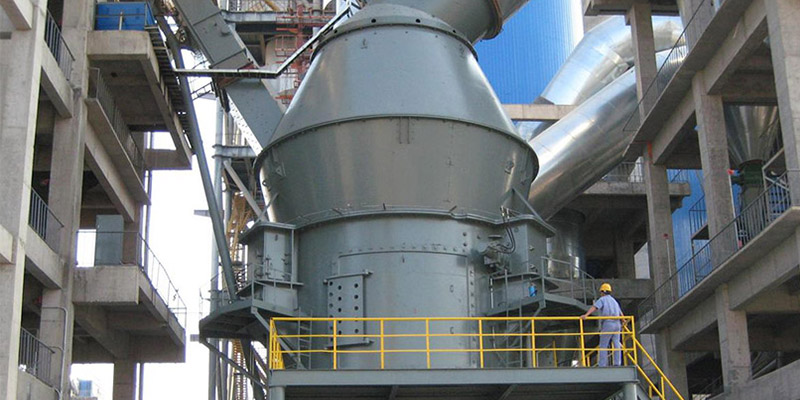
A vertical roller mill grinds material by pressure between stationary table liners and pivoting grinding rollers. Everything in the grinding chamber is subject to abrasion, but these parts wear fastest:
| Component | Function | Typical Wear Life |
|---|---|---|
| Grinding rollers (tires) | Apply grinding pressure against the table | 8,000–12,000 hours (can be hard-faced/rebuilt) |
| Table liners (bowl segments) | Stationary grinding surface | 10,000–15,000 hours |
| Nozzle ring / air ring | Distributes process gas evenly around the table | 12,000–18,000 hours |
| Dam ring | Controls material bed depth on the table | 6,000–10,000 hours |
| Scraper / discharge knives | Push ground material out of the grinding table | 3,000–6,000 hours |
| Roller bearings | Support pivoting roller assembly | 40,000+ hours (if sealed and lubricated) |
| Pressure frame / rocker arm bearings | Transmit grinding pressure | 20,000–40,000 hours |
| Expansion joints / bellows | Seal between stationary and moving sections | 2–4 years |
| Seal air fan filters | Keep dust out of roller bearings | Every 6 months |
2.1 Grinding Rollers
The grinding rollers are the heart of the mill. They ride on a pressurized oil/gas accumulator system and press against the material bed. Roller tires are usually made of high-chrome cast iron or nickel-hard iron.
- Inspect every 4,000 hours for cracks, uneven wear, and hard-facing loss.
- Rebuild by hard-facing when wear reaches 30–40% of original wall thickness; most tires can be rebuilt 2–3 times before replacement.
- Replace when cracks appear in the tire or when the wear band reaches the minimum residual wall specified by the OEM.
2.2 Table Liners
Table liners are bolted segments that form the stationary grinding surface. They wear in a characteristic pattern — the outer edge wears faster because material moves outward under centrifugal force.
- Rotate liner segments at mid-life to even out wear.
- Replace when the working surface is grooved or the profile is lost; a worn table reduces grinding efficiency even if the rollers are new.
2.3 Nozzle Ring
The nozzle ring (air ring) sits around the table and distributes process gas evenly upward. Eroded or missing nozzles cause uneven airflow, which triggers vibration and coarse product carryover.
- Inspect during every major shutdown.
- Replace severely eroded nozzles; even airflow is critical to stable operation.
2.4 Dam Ring
The dam ring controls the depth of the material bed on the table. If it is too low, the bed is too thin and the mill vibrates. If it is too high, power draw rises and output drops.
- Adjust dam ring height as liners wear (worn liners effectively lower the bed).
- Replace when the edge is worn down by more than 20%.
3. Routine Maintenance Checklist
Every Shift
- Vibration levels (mill housing, separator, gearbox)
- Mill differential pressure (inlet vs outlet)
- Product fineness (residue on sieve)
- Grinding pressure (hydraulic/gas accumulator pressure)
- Gearbox oil temperature and pressure
- Seal air pressure and flow
- Any abnormal noises or leaks
Every Month
- Inspect sampling chute and feed belt for metal/scrap
- Check water injection system (if installed) for blockage
- Inspect expansion joints and ductwork for air leakage
- Review trend data: power draw, pressure, vibration over 30 days
Every 4,000–6,000 Hours
- Enter the mill; inspect roller tires and table liners
- Measure residual wear on wear parts
- Inspect nozzle ring and dam ring
- Check scraper blades
- Lubricate rocker arm bearings and pinions
- Inspect separator blades for wear
Every 24,000 Hours (Major Shutdown)
- Remove and inspect all grinding rollers
- Replace or rebuild roller tires
- Replace table liners as needed
- Inspect gearbox oil and change filters
- Inspect main drive coupling
- Calibrate pressure transducers and level probes
4. Common VRM Problems and What They Mean
Most vertical roller mill problems announce themselves early — through vibration, pressure, or product quality changes. Here is a troubleshooting table for the symptoms operators see most:
| Symptom | Likely Cause | Action |
|---|---|---|
| High vibration | Thin material bed, worn dam ring, metal scrap in feed, uneven nozzle ring | Check feed rate, dam ring height, magnet separator |
| High differential pressure | Coating on filter, worn nozzle ring, excess feed, reduced gas flow | Check filter, fan speed, feed rate |
| Product too coarse | Separator speed too low, worn separator blades, insufficient grinding pressure | Adjust RPM, inspect blades, check pressure |
| High power draw | Thick material bed, worn liners (too much gap), accumulator pressure too high | Check dam ring, liner condition, hydraulic pressure |
| Mill leaks dust at seals | Worn expansion joints, loose housing bolts, negative pressure loss | Inspect and replace joints, tighten bolts |
| Roller bearing temperature high | Lubrication failure, seal air loss, bearing damage | Stop mill immediately; check lube system and seal air |
| Repeated metal in mill | Failed magnet, incoming clinker with metal debris | Clean magnet, check upstream crusher |
5. Lubrication and Seal Air
Two systems keep a VRM alive:
- Lubrication system — supplies oil to the main gearbox, roller bearings, and rocker arms. Monitor oil temperature, pressure, and particle count. Changing oil on schedule is far cheaper than a gearbox failure.
- Seal air system — blows clean, filtered air into the roller bearing seals to prevent dust ingress. A clogged filter or dropped seal air pressure will kill a roller bearing in days.
6. Safety: Before You Enter the Mill
A vertical roller mill is a confined space with stored energy. Before any internal inspection:
- Lock out main drive, separator drive, and feed system
- Bleed hydraulic/gas accumulator pressure to zero
- Ventilate and confirm safe atmosphere (temperature, gas, oxygen)
- Secure rollers against rotation (locking pins or supports)
- Work with a spotter; never enter alone
7. FAQ
Q1: How often should I inspect VRM wear parts?
Plan an internal inspection every 4,000–6,000 running hours. For high-throughput clinker lines, lean toward the shorter interval.
Q2: Can I rebuild grinding rollers instead of buying new ones?
Yes. Most roller tires can be hard-faced and machined 2–3 times. Rebuilding costs roughly 30–50% of a new tire and returns the original profile.
Q3: What is the most common cause of VRM vibration?
An unstable material bed — usually from wrong dam ring height, uneven feed, metal in the mill, or worn nozzle ring. Always check these before blaming the rollers.
Q4: How long do table liners last?
Typically 10,000–15,000 hours for cement raw meal. Clinker and slag grind faster due to abrasiveness.
Q5: When is it time to replace the whole mill instead of rebuilding?
If the gearbox, main bearings, and pressure frame all show wear and replacement parts exceed 60–70% of a new mill price, a full replacement or major overhaul is usually justified.
8. Summary
VRM reliability comes down to three things: inspect wear parts on schedule, catch vibration and pressure trends early, and keep lubrication and seal air healthy. The rollers, table liners, and nozzle ring are the components that will stop you if neglected — plan replacements around them, not after a surprise shutdown.
Need help with VRM wear parts or spare components? Contact Darko Cement. We supply grinding rollers, table liners, nozzle rings, and wear-resistant castings for vertical roller mills, and our engineers can review your wear patterns against your operating hours. Looking at a new mill instead? Start with our Vertical Roller Mill Selection Guide.