Introduction
A butterfly damper is one of the simplest and most widely used flow control devices in a cement plant — a circular disc rotating on a shaft inside a duct, opening or closing the flow path. It handles everything from raw mill ventilation to kiln hot gas, from dust collector inlet to exhaust stack. Its advantages are well known: low flow resistance (typical coefficient below 0.2), compact installation, fast operation, and low cost.
But “butterfly damper” covers a very wide range of products — from a light manual unit in a room-ventilation duct to a high-temperature, hard-seal damper in a kiln bypass line running at 600°C. Specifying the wrong one fails quickly and expensively: a standard damper in a hot gas line warps and jams; a soft-seal damper in an abrasive dust stream wears through in months. This guide walks through the four selection steps — temperature, seal class, actuation, and service conditions — so the damper you specify matches the duty it will actually see.
1. How Does a Butterfly Damper Work?
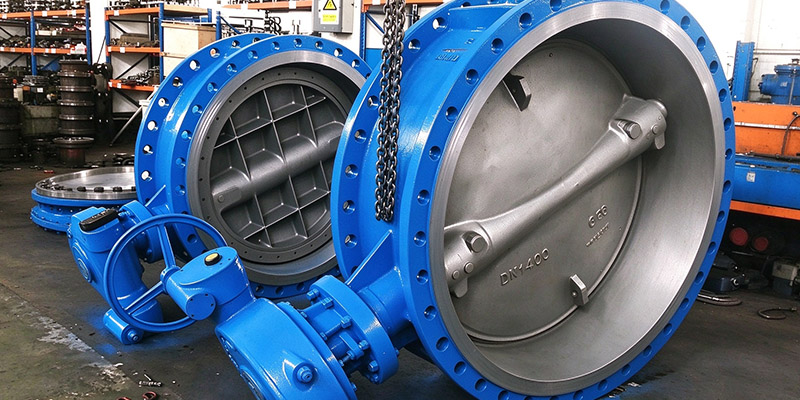
A butterfly damper is a circular disc mounted on a shaft in the middle of a duct. It works exactly like a butterfly valve in piping: the disc rotates on the shaft from 0° (fully open) to 90° (fully closed), and any angle in between throttles the flow.
In the fully open position, the disc is parallel to the gas flow — which is why a butterfly damper has such low flow resistance (typical coefficient below 0.2). In the fully closed position, the disc is perpendicular to the flow and seals against the seat around the duct wall. Between 0° and 90°, the partial opening creates a restriction that regulates the flow rate.
Three parts make up the damper:
- The body— a short duct section that mounts into the line
- The disc and shaft— the rotating element that controls flow
- The actuator— manual handle, gearbox, electric motor, or pneumatic cylinder that rotates the shaft
The practical control range for throttling is roughly 30-70° of disc rotation: below 30° the flow is too small to control accurately, above 70° the damper is nearly wide open and further rotation barely changes the flow. If the working principle is new to you, our butterfly damper page explains the design and construction in detail.
2. Select by Temperature — the First Decision
Temperature decides the materials and structure of the damper. Get this wrong and nothing else matters.
| Duty | Temperature range | Damper build |
| Common temperature | ≤ 200°C | Carbon steel, standard clearances |
| Medium temperature | 200-400°C | Heat-resistant steel, increased clearance for thermal expansion |
| High temperature | 400-600°C | Alloy steel, high-temperature shaft seals, heat-shielded actuator mount |
| Ultra-high temperature | 600-900°C+ | Refractory-lined or high-alloy build, water-cooled options in extreme cases |
Key point: as temperature rises, the damper needs larger clearances (the disc expands), different seal materials (elastomer seals fail above ~120°C), and protected actuation (the actuator must be isolated from heat). A damper selected for the wrong temperature class warps, jams, or loses its seal within weeks.
Our butterfly damper range is built in common, medium, high, and ultra-high temperature versions — match your gas temperature to the class.
3. Select the Seal Class — Leakage Matters
How much leakage can your process tolerate? This decides hard seal vs soft seal and the damper structure.
2.1 Hard-seal butterfly dampers
Metal-to-metal seal. Suitable for dusty and hot media where a soft seal cannot survive. Typical leakage is low but not zero (for large dampers, roughly 1-3% of full flow depending on class). This is the standard choice for cement plant dust and gas lines.
2.2 Soft-seal butterfly dampers
Elastomer or PTFE seal around the disc edge. Near-zero leakage at low temperature. Best for clean gas, low temperature, and where sealing is critical (e.g., isolating a line that must not leak). Not for abrasive dust or high temperature — the seal wears or melts.
2.3 Exocentric (offset) structure
An offset disc design that seats more tightly on closure and unseats with less friction on opening. Improves sealing and reduces wear. Recommended for applications needing better tightness at moderate cost.
| Requirement | Recommendation |
| Dusty media, hot gas | Hard-seal, exocentric structure |
| Clean gas, ≤ 120°C, near-zero leakage required | Soft-seal |
| Abrasive dust | Hard-seal with wear-resistant disc/seat |
4. Select the Actuation — Manual, Electric, Pneumatic, or Hydraulic
The actuator decides how the damper is operated — and how fast it responds.
| Actuation | Best for | Notes |
| Manual (hand lever / gearbox) | Rare adjustment, low cost, no power available | Use gearbox for large dampers and high torque |
| Electric | Remote/automatic control, moderate speed, simple wiring | Standard for DCS-integrated plants; position feedback available |
| Pneumatic | Fast response, fail-safe (spring return), hazardous areas | Requires compressed air; ideal for safety shut-off |
| Hydraulic | Very high torque, large dampers, heavy duty | Higher cost; used where pneumatic/electric are insufficient |
Selection logic: if the damper is operated once a week → manual. If it is part of automatic process control → electric or pneumatic. If safety requires the damper to close on power failure → spring-return pneumatic or fail-safe electric.
For a cement plant tied into a DCS, electric actuation with position feedback is the standard; pneumatic is chosen where fast fail-safe closing matters (e.g., emergency isolation).
5. Match the Service Conditions — Media, Abrasion, Corrosion
Beyond temperature, the media decides materials and details:
- Abrasive dust(raw meal, clinker dust): hard-seal structure, wear-resistant disc and seat, inspect regularly. Standard soft-seal dampers fail fast here.
- Corrosive gas(e.g., desulfurization systems): stainless steel or coated construction. See our stainless steel butterfly damper.
- High-temperature + dust(kiln gas): high-temperature build with hardened surfaces.
- Clean gas, normal temperature(ventilation): standard carbon steel, lowest cost.
| Service condition | Material / build |
| Normal temp, clean gas | Carbon steel |
| Abrasive dust | Hard-seal, wear-resistant disc |
| Corrosive | Stainless steel / coated |
| High temperature | Alloy steel, expanded clearances |
| High temp + abrasive | Alloy steel + hardened surfaces |
6. Sizing: Match the Damper to the Duct and Flow
- Duct size match: the damper bore should match the duct diameter (or standard nearest size). An oversized damper in a small duct creates turbulence and pressure loss.
- Flow resistance: butterfly dampers have a low flow resistance coefficient (typically below 0.2) — one reason they are preferred over slide gates and louver dampers for continuous throttling duty.
- Pressure drop: for a given flow, the pressure drop across the damper should be checked at full open — usually a small fraction of the line pressure drop. If the damper is used for throttling, choose the operating angle carefully (30-70° is the practical control range for a butterfly damper).
- Speed of operation: if the process needs fast response (seconds), pneumatic actuation with proper sizing; slow adjustment → electric.
7. Butterfly Damper Selection Quick Table
| Decision point | Your answer | Damper requirement |
| Gas temperature | ≤ 200°C | Common temperature, carbon steel |
| 200-400°C | Medium temperature | |
| 400-600°C | High temperature, alloy | |
| > 600°C | Ultra-high temperature, consult factory | |
| Sealing need | Dusty/hot gas | Hard-seal exocentric |
| Near-zero leakage, clean gas | Soft-seal | |
| Operation | Rare, manual | Manual/gearbox |
| Automatic control | Electric with feedback | |
| Fail-safe / fast | Spring-return pneumatic | |
| Media | Abrasive | Wear-resistant disc/seat |
| Corrosive | Stainless/coated |
8. Common Selection Mistakes
| Mistake | Result | Fix |
| Standard damper in a hot gas line | Warping, jamming, seal failure | Select temperature class first |
| Soft seal in abrasive dust | Seal destroyed in months | Hard-seal build |
| Manual damper where automatic control is needed | Process cannot be controlled remotely | Electric/pneumatic actuation |
| Oversized damper | Turbulence, pressure loss, poor control | Match duct size |
| Ignoring fail-safe requirement | Damper stays open on power loss | Spring-return pneumatic or fail-safe electric |
| No position feedback in DCS plant | No remote status, blind operation | Specify position feedback |
9. FAQ
Q1: What is the difference between a butterfly damper and a slide gate valve?
A butterfly damper is a rotating disc for flow control and throttling, with low flow resistance; a slide gate opens/closes by sliding a plate, better for positive shut-off and large particulate flows. For throttling and duct control, butterfly; for full isolation with coarse material, slide gate.
Q2: What temperature can a butterfly damper handle?
From common temperature (≤200°C) through medium (200-400°C) and high (400-600°C) to ultra-high (600-900°C+) versions. Select the temperature class to match your gas temperature — using a standard damper in a hot line causes warping and jamming.
Q3: What is a hard-seal butterfly damper?
A metal-to-metal sealing damper, suitable for dusty and hot media. Leakage is low but not zero. The exocentric (offset) structure improves sealing and reduces wear, and is recommended for most cement plant duties.
Q4: How do I choose between electric and pneumatic actuation?
Electric for automatic control with simple wiring and position feedback; pneumatic when you need fast response and fail-safe (spring return) closing, and compressed air is available. If the damper must close on power loss, use spring-return pneumatic or fail-safe electric.
Q5: Can a butterfly damper be used for throttling?
Yes — its low flow resistance makes it one of the best damper types for throttling. The practical control range is roughly 30-70° of disc rotation; outside this range, control becomes poor.
Q6: Why is my butterfly damper jamming?
Three common causes: temperature class too low (disc expanded and seized), seal material not matched to the media (swollen or melted), or debris/foreign objects caught in the seat. Check temperature rating, seal material, and the duct upstream.
Q7: What materials are butterfly dampers made of?
Carbon steel for normal duty, stainless steel for corrosive service, heat-resistant alloy for high temperature, with hardened/wear-resistant disc and seat for abrasive duty.
Q8: What is the flow resistance of a butterfly damper?
Typically a flow resistance coefficient below 0.2 at full open — significantly lower than slide gates and comparable to louver dampers. This is why butterfly dampers are preferred for continuous throttling in large ducts.
10. Summary
Butterfly damper selection is four steps, in order:
- Temperature— common/medium/high/ultra-high; match materials and clearances
- Seal class— hard-seal exocentric for dusty/hot media, soft-seal for near-zero leakage clean gas
- Actuation— manual for rare use, electric for DCS control, pneumatic for fast fail-safe
- Service conditions— abrasion, corrosion, and duty cycle decide materials and details
Select in this order and the damper will match the duty — and last. Select by price and the damper will fail at the worst moment.
Need a butterfly damper for your line? Contact Darko Cement with your gas temperature, media, duct size, and operation mode. We manufacture butterfly dampers in common, medium, high, and ultra-high temperature versions with manual, electric, and pneumatic actuation. New to damper selection generally? Our damper valve selection guide compares the full damper family.