Introduction
A pulse jet dust collector loses 20-40% of its collection efficiency within 12 months if nobody maintains it. In a cement plant, where kiln exhaust, clinker grinding, and raw meal transfer points generate abrasive, high-temperature, high-humidity dust, the difference between a well-maintained baghouse and a neglected one is not just emission compliance — it is energy cost, fan life, and whether the plant passes its next environmental inspection.
This guide covers the complete pulse jet dust collector maintenance program for cement plant engineers: inspection schedule, filter bag replacement procedure, pulse valve troubleshooting, and how to extend bag life beyond the typical 18-24 months.
What Is a Pulse Jet Dust Collector?
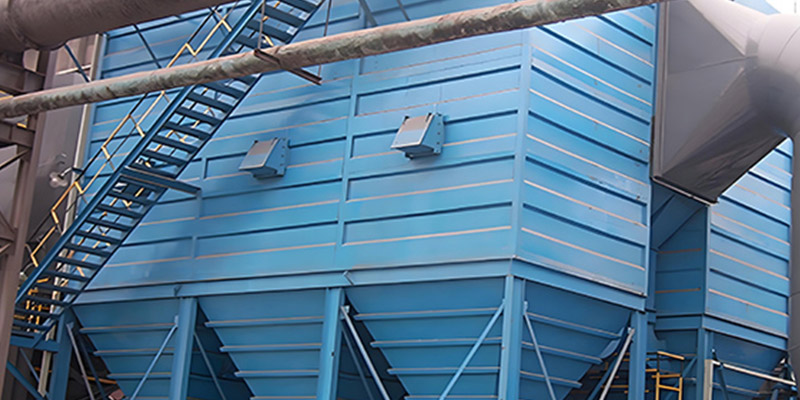
A pulse jet dust collector is a type of baghouse that cleans filter bags by firing short, high-pressure blasts of compressed air through them — like pulsing air from a can of compressed air. The pulse dislodges the dust cake that has built up on the outside of the bag, and the dust falls into the hopper below.
How a Pulse-Jet Dust Collector Works?
Raw dusty gas enters the collector, flows through the outside of the filter bags, and clean gas exits through the top. A row of electromagnetic pulse valves periodically fires compressed air (typically 0.4-0.6 MPa) down a venturi into each bag, shaking off the dust layer. Unlike reverse-air or shaking baghouses, pulse jet collectors clean bags online while the collector keeps running, which is why they dominate cement and mineral processing applications.
Key components: filter bags, bag cages, pulse valves, compressed air manifold, hopper, fan, and differential pressure sensor.
1. Maintenance Schedule: What to Check, How Often
| Frequency | Inspection | What to look for |
| Every shift | Differential pressure | ΔP stable at 1,200-1,800 Pa; rising ΔP means bags are blinding |
| Weekly | Compressed air system | Drain water filters; check pressure gauge; listen for leaking pulse valves |
| Monthly | Hopper discharge | Confirm rotary airlock or double flap valve discharges freely; no bridging |
| Quarterly | Pulse valve operation | Trigger each valve manually; listen for sharp “pop”; check diaphragm wear |
| Every 6 months | Filter bag condition | Inspect 10% of bags for holes, abrasion, or hardening |
| Every 12-24 months | Full bag replacement | Replace all bags (not just the damaged ones) and inspect cages |
1.1 Differential pressure is your #1 indicator
The single most important maintenance metric is the differential pressure (ΔP) across the baghouse. A healthy pulse jet collector runs at 1,200-1,800 Pa (5-7 inches w.g.).
- ΔP below 800 Pa:You likely have a broken bag or a leak — dust is bypassing the filter entirely.
- ΔP above 2,000 Pa:Bags are blinding (dust won’t release), fan energy consumption rises sharply, and filter life drops.
- ΔP slowly climbing week over week:Dust cake is not releasing properly; check compressed air pressure and pulse valve timing.
2. When to Replace Filter Bags
Do not replace bags on a fixed schedule. Replace when any of these conditions appear:
- Emission visible.If you can see dust from the stack, at least one bag is broken. Inspect immediately.
- ΔP will not come down.Even after increasing pulse frequency and compressed air pressure, ΔP stays above 2,200 Pa.
- Bag material hardened or embrittled.Touch a removed bag — it should feel flexible. Rigid, cracked bags have reached end of life.
- Visible holes or abrasion.Especially at the bag bottom (where dust load is highest) or near the venturi (pulse erosion).
- Dust in the clean gas plenum.Open the inspection door; if clean-side plenums are dusty, bags are leaking.
For cement plant dust (clinker, raw meal, fly ash), expect 18-30 months on PPS or aramid bags at inlet temperatures 130-180°C. Higher temperatures or abrasive dust reduce life. See our filter bag selection guide for material choice.
3. Step-by-Step Filter Bag Replacement Procedure
3.1 Before you start
- Lock out the fan, damper, and compressed air supply.
- Purge hopper of accumulated dust.
- Wear PPE: respirator, gloves, safety glasses, hard hat.
- Have new bags, new cages, and spare pulse valve diaphragms on hand.
- Mark each row with a label so bags go back to the same position.
3.2 Remove old bags
- Open the clean-air plenum top access doors.
- Loosen and remove the bag hold-down ring at the top of each bag.
- Pull the bag upward and out through the tube sheet.
- Pull the bag cage out from the top.
- Inspect each cage: bent wires, collapsed tops, or corrosion mean replace it. A damaged cage damages new bags in weeks.
3.3 Inspect and clean
- Clean the tube sheet holes with a vacuum; any residual cement cake causes leaks at the new bag seal.
- Inspect the pulse valves: trigger each one manually. If a valve sputters, leaks, or does not produce a sharp pulse, replace the diaphragm kit now — do not wait.
- Check the venturi nozzles: cracks or blockages reduce pulse efficiency.
- Drain all water traps in the compressed air manifold.
3.4 Install new bags
- Slide a new bag cage into the clean plenum opening, cage side down.
- Lower the new filter bag over the cage from the clean side.
- Seat the top of the bag firmly into the tube sheet hole. The seal must be airtight.
- Reinstall the hold-down ring or snap band.
- Repeat row by row. Do not mix old and new bags in the same collector unless absolutely necessary — old bags pulse at different rates and unbalance the system.
3.5 Start-up after replacement
- Restore compressed air. Set pressure to 0.4-0.5 MPa.
- Do notrun at full load immediately. Start the fan with the damper closed, then open gradually over 30 minutes.
- Watch ΔP. It will start high (1,800-2,000 Pa) as the dust cake builds, then stabilize at 1,200-1,500 Pa within a few hours.
- Check stack emissions after 24 hours.
4. Troubleshooting Common Pulse Jet Problems
| Problem | Likely cause | Fix |
| High ΔP that won’t drop | Insufficient pulse air; worn diaphragm; blinding bags | Raise air pressure to 0.6 MPa; replace valve diaphragms; inspect bags |
| Visible dust from stack | Broken bag; loose bag seal | Inspect clean plenum; reseat or replace bags |
| Pulse valve makes a “hissing” sound continuously | Diaphragm cracked | Replace diaphragm kit |
| Pulse valve does not fire | Solenoid coil burned; no power | Check 24V supply; replace solenoid coil |
| Bags fail in 3-6 months | Inlet temperature too high; dust abrasive; pulse pressure wrong | Verify bag material rating; check pulse pressure 0.4-0.6 MPa |
| Hopper bridges | Moisture in dust; no vibrator | Insulate hopper; install air blaster or vibrator; drain compressed air dryer |
| Fan energy creeping up | ΔP rising; bags blinding | Increase pulse frequency; check dust cake release |
For cement plants, our LMC series pulse jet dust collectors are engineered for clinker grinding and raw meal duty; larger installations use our HMC series or PPCS series for high gas volumes.
5. Extending Filter Bag Life Beyond 24 Months
In cement plant operations, 24 months is good, 36 months is achievable. The levers:
- Keep inlet temperature below bag rating.PPS bags are rated to 160°C continuous; aramid to 200°C. Even 20°C above rating cuts bag life by half.
- Dry the compressed air.Moist air carries water into the baghouse; condensation causes cement dust to harden on bags. Drain the air dryer daily.
- Do not over-pulse.Pulse pressure above 0.7 MPa erodes bag bottoms. Set to manufacturer’s spec (usually 0.4-0.6 MPa).
- Repair leaks immediately.A single broken bag lets abrasive dust cut adjacent new bags within weeks.
- Use the right bag material.For cement: PPS (Ryton) for 130-160°C; aramid (Nomex) for 160-200°C; PTFE membrane for extremely fine or sticky dust. See our PPS filter bag page and filter bag cage selection guide.
- Replace pulse valve diaphragms every 2 yearseven if they look fine. A worn diaphragm slowly loses pulse pressure, blinding bags.
6. FAQ
Q1: How often should a pulse jet dust collector be inspected?
In a cement plant, check differential pressure every shift, drain compressed air filters weekly, and inspect pulse valves quarterly. Full bag inspection every 6 months.
Q2: How long do filter bags last in a cement plant?
Typical life is 18-30 months for PPS or aramid bags handling clinker or raw meal at 130-180°C. With good maintenance (proper air drying, correct pulse pressure, prompt leak repair), 36 months is achievable.
Q3: Can I replace just the broken bags instead of all of them?
Technically yes, but not recommended. Old and new bags pulse differently, causing uneven cleaning and premature failure of the new bags. If budget forces partial replacement, replace entire rows at once.
Q4: What differential pressure should a pulse jet dust collector run at?
Target 1,200-1,800 Pa (5-7 inches w.g.). Below 800 Pa indicates a leak; above 2,200 Pa indicates blinding bags.
Q5: How do I know if a pulse valve diaphragm needs replacing?
Symptoms: continuous hissing sound, weak pulse, ΔP rising despite new bags, or a valve that does not fire. Replace the diaphragm kit every 2 years preventively.
Q6: Can I reuse filter bag cages?
Yes, if they are straight, corrosion-free, and wire mesh is intact. Replace cages with bent or collapsed sections — a damaged cage will hole a new bag in weeks.
Q7: What size compressed air receiver do I need?
Size the receiver for at least 3 times the total pulse air consumption per cycle. A common mistake is undersizing the receiver, which causes pressure drop during firing and weak cleaning.
Summary
A pulse jet dust collector in a cement plant is a maintenance-sensitive piece of equipment. Track differential pressure every shift, inspect pulse valves quarterly, replace bags as a full set every 18-30 months, and keep compressed air dry and at 0.4-0.6 MPa. These simple habits extend bag life by 50% and keep emissions compliant.
If you are specifying a new pulse jet dust collector for a cement grinding, raw meal, or clinker cooling application, contact Darko Cement with your gas volume, inlet temperature, and dust type. We will recommend the right series — LMC, HMC, or PPCS — with matching filter bags and cages.