



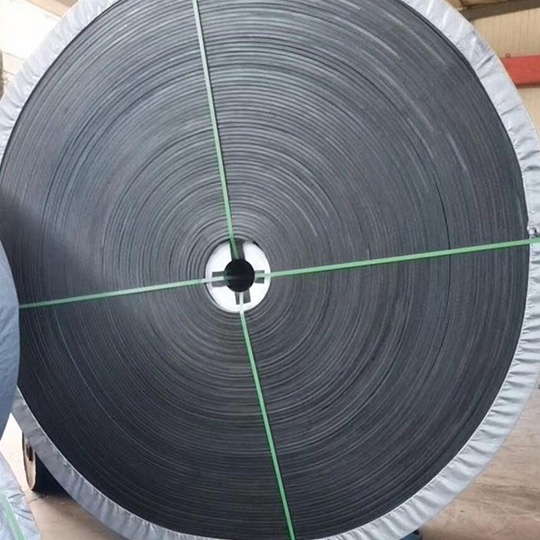
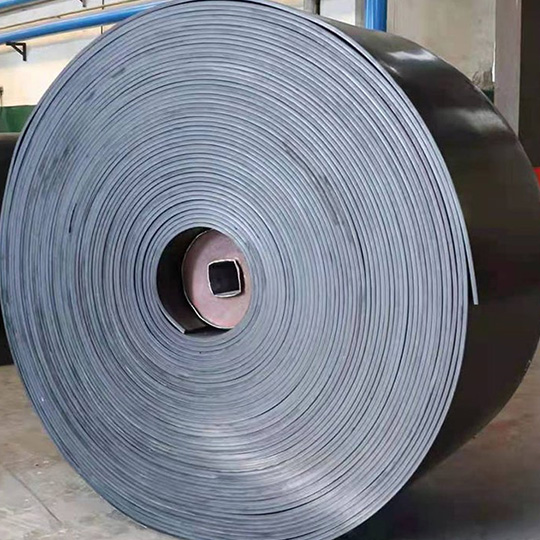
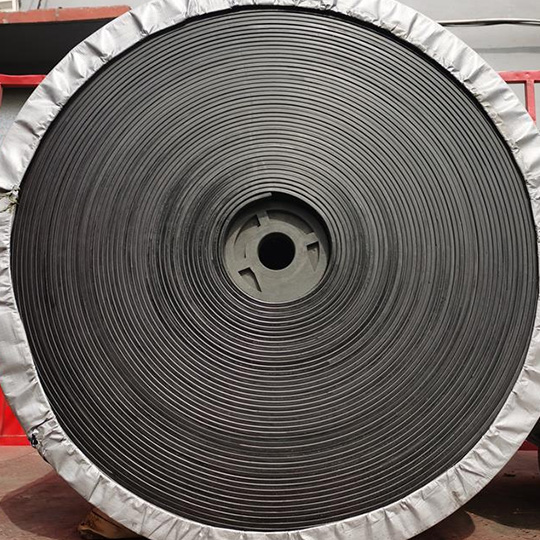
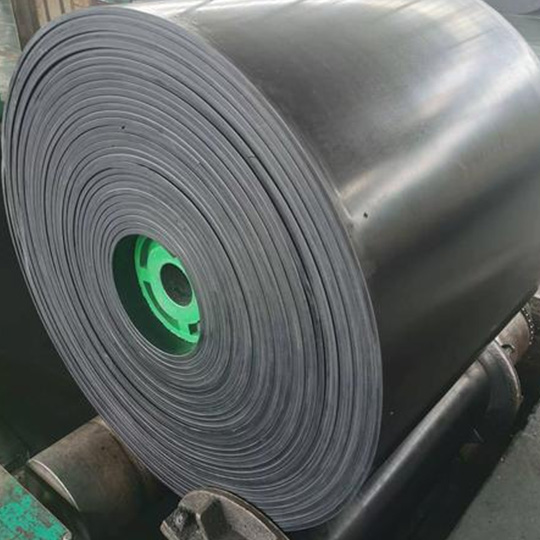
Nylon Conveyor Belt
- High elasticity and strong energy absorption and buffering capacity. The elongation after fracture ranges from 15% to 25%.
- Highly resistant to puncture and tear. Nylon conveyor belt can effectively absorb the instantaneous stress of materials falling from a height of over 10 meters.
- The nylon conveyor belt can maintain over 70% of its tensile strength in a high-humidity underground environment with a moisture content exceeding 20%.
- The normal operation lifespan can reach 8,000 to 15,000 hours.
- Works stably in an environment ranging from -30℃ to 80℃.
What material are Nylon Conveyor Belts made of?
The skeleton core layer is the core load-bearing structure that directly determines the overall nylon conveyor belt’s tensile strength:
- Main skeleton material: Industrial Nylon 66 (Polyamide 66) canvas is the mainstream choice, while Nylon 6 is used for economy-grade products. It is woven into a grid structure on a biaxial loom, with the weft strength designed to be 85%~90% of the warp strength to ensure transverse tear resistance.
- Interlayer bonding material: High-permeability natural rubber cement is fully infiltrated into the fiber gaps of the nylon canvas, with an interlayer bonding strength of ≥4.5N/mm, preventing delamination during operation.
- Optional reinforcing material: Transverse fine steel wire mesh can be embedded in heavy-duty tear-resistant models to greatly improve puncture resistance and avoid longitudinal tears caused by large material impacts.
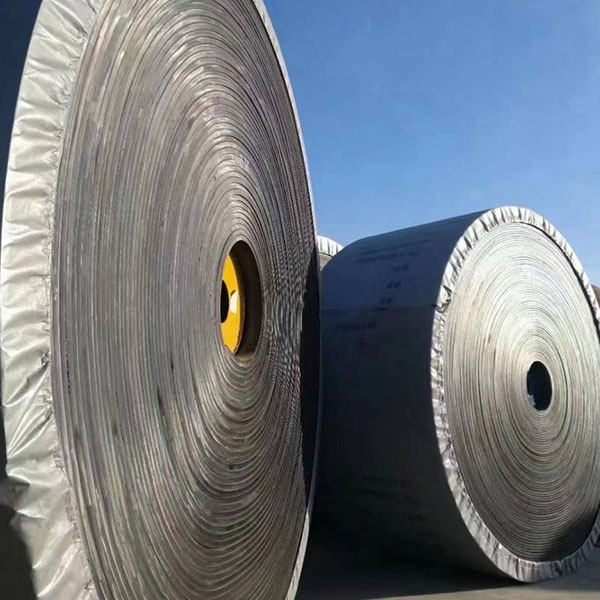
- Nylon Conveyor Belt Fabric & Tensile Parameters
- Nylon Conveyor Belt Finished Dimensions
| Version | Fabricmaterial | Type | Thickness | Tensilestrength N/mm | |||||
| warp | weft | mm/layer | 2l ayers | 3 layers | 4 layers | 5 layers | 6 layers | ||
|
NN |
nylon |
nylon |
NN100 | 0.9 | 200 | 300 | 400 | 500 | 600 |
| NN125 | 0.9 | 250 | 375 | 500 | 625 | 750 | |||
| NN150 | 1.0 | 300 | 450 | 600 | 750 | 900 | |||
| NN200 | 1.1 | 400 | 600 | 800 | 1000 | 1200 | |||
| NN250 | 1.3 | 500 | 750 | 1000 | 1250 | 1500 | |||
| NN300 | 1.4 | 600 | 900 | 1200 | 1500 | 1800 | |||
| NN350 | 1.6 | — | 1050 | 1400 | 1750 | 2100 | |||
| NN400 | 1.8 | — | — | 1600 | 2000 | 2400 | |||
| NN500 | 2.0 | — | — | 2000 | 2500 | 3000 | |||
| Version | Fabricmaterial | Type | Cover thickness | Width
mm |
Length
m |
Roll diameter
m |
||
| warp | weft | upper | lower | |||||
|
NN |
nylon |
nylon |
NN100 | 0-20 | 0-10 | 300-3000 | ≤ 500 | ≤ 2.8 |
| NN125 | 0-20 | 0-10 | 300-3000 | ≤ 500 | ≤ 2.8 | |||
| NN150 | 0-20 | 0-10 | 300-3000 | ≤ 500 | ≤ 2.8 | |||
| NN200 | 0-20 | 0-10 | 500-3000 | ≤ 500 | ≤ 2.8 | |||
| NN250 | 2-30 | 1.5-15 | 500-3000 | ≤ 500 | ≤ 2.8 | |||
| NN300 | 2-30 | 1.5-15 | 500-3000 | ≤ 500 | ≤ 2.8 | |||
| NN350 | 2-30 | 1.5-15 | 500-3000 | ≤ 500 | ≤ 2.8 | |||
| NN400 | 4.5-30 | 1.5-15 | 800-3000 | ≤ 500 | ≤ 2.8 | |||
| NN500 | 4.5-30 | 2.0-15 | 800-3000 | ≤ 500 | ≤ 2.8 | |||
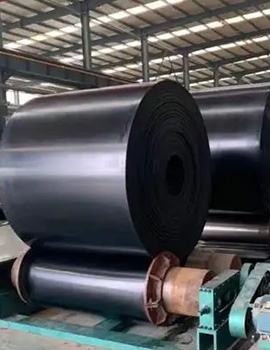
How long is the service life of Nylon Conveyor Belt?
Light-load low-wear scenarios: scenarios such as grain processing and light industrial bulk material transportation with low impact and low wear, under the premise of following regular maintenance procedures, the Nylon Conveyor Belt’s service life can reach 3 to 5 years.
Conventional industrial scenarios: scenarios such as building materials and ordinary sand and gravel transportation with medium load, with belt speed ≤ 3m/s and material hardness below Mohs 5 grade, the normal service life of Nylon Conveyor Belts is 1 to 3 years.
Heavy-load high-wear scenarios: scenarios such as coal mines, metallurgy, and mines with large block minerals and high drop impact, if the selection is inappropriate and long-term overloading operation is carried out, the lifespan of ordinary nylon conveyor belts may only be 3 to 6 months, or even shorter.
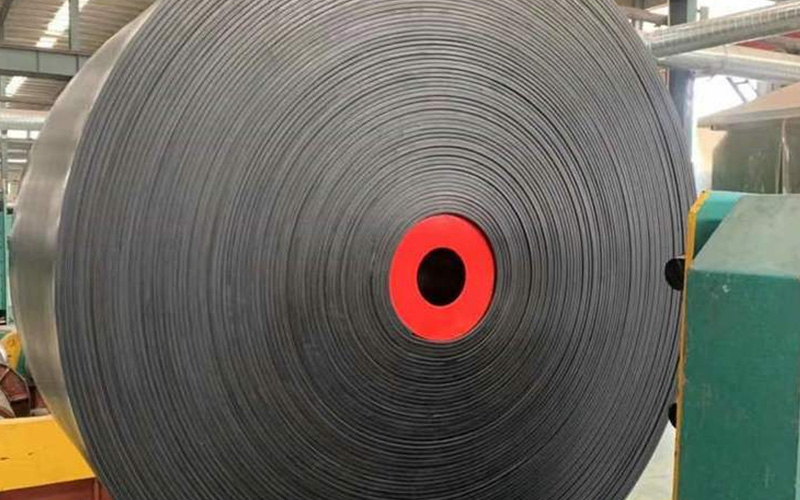
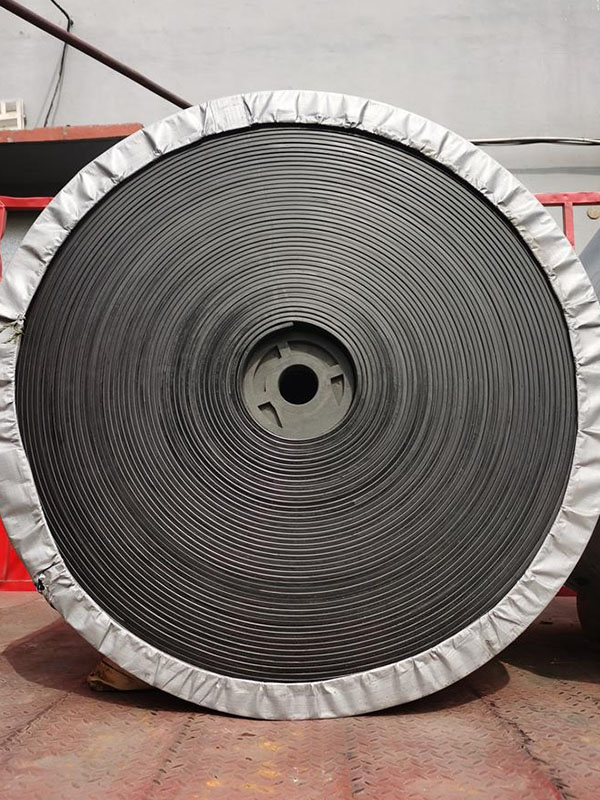
The difference between Nylon Conveyor Belt and Aramid Conveyor Belt
| Item | Nylon Conveyor Belt | Aramid Conveyor Belt |
| Core Skeleton Material | Nylon 66 (Polyamide 66) | Aramid |
| Single-layer Tensile Strength | Max. ~400N/mm | Over 2000N/mm |
| Elongation at Break | 15%~25% | 2.5%~4.5% |
| Tear & Fatigue Resistance | ~60% after 10⁶ bending cycles | ≥85% after 10⁶ bending cycles |
| Weight Feature | Heavier belt body under the same strength, larger overall thickness | 30%~40% lighter than nylon under the same strength, thin belt body with outstanding lightweight performance |
| Maximum Long-term Temperature Resistance | ~80℃ | ~120℃ |
| Flame Retardant Performance | Realized via special formula | Intrinsically flame-retardant |
| Chemical Corrosion Resistance | Weak | Good |
| Procurement Cost | 19~30 CNY/m² | Over 40 CNY/m² |
| Operating Energy Consumption | Heavy | Light |
| Service Life | 1~3 years under conventional working conditions, 3~5 years under light load conditions | More than 50% longer than nylon under the same conditions |
Related Products
FAQ About Nylon Conveyor Belt
It is necessary to specify the type of conveyed material, the conveying distance, the belt width, the strength of the fabric layer, the thickness of the covering rubber, the environmental temperature and humidity, whether flame retardancy, acid and alkali resistance and other special properties are required.
There are two types: mechanical joints and vulcanized joints. The vulcanized joints have a higher strength retention rate and operate more smoothly, making them suitable for high-load and long-distance conveying scenarios.
The industry-standard warranty period is 12 months from the date of installation and acceptance, or 18 months from the date of product manufacture. During this period, if any quality issues arise due to non-human operation, we will provide free replacement or repair services.
Standard non-specialized formula small-batch customization can be completed within 3 to 7 days. Customization for special acid and alkali resistance, cold resistance and other modified formulas takes approximately 7 to 15 days.