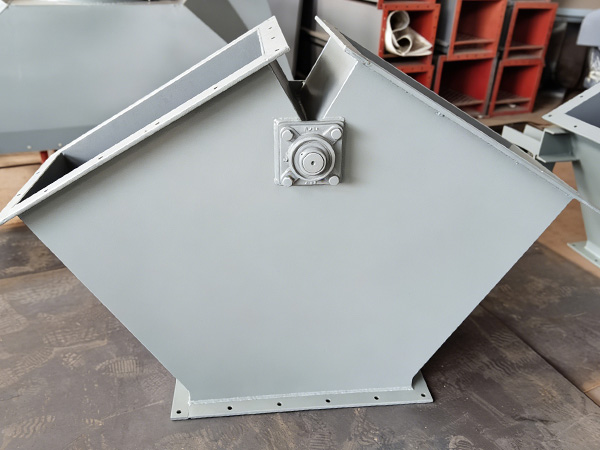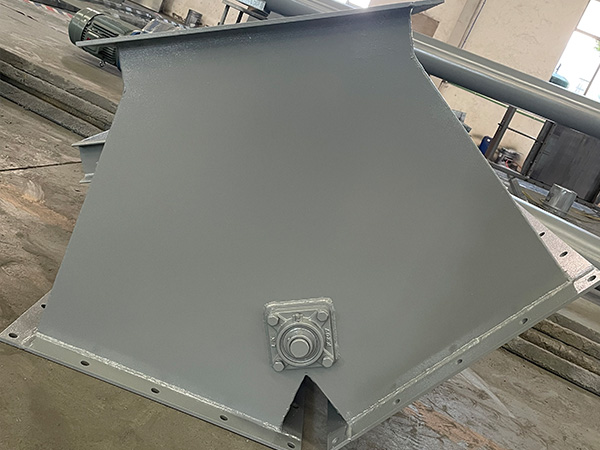
Two-Way Gravity Diverter Valve
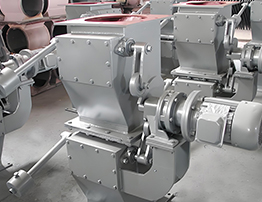
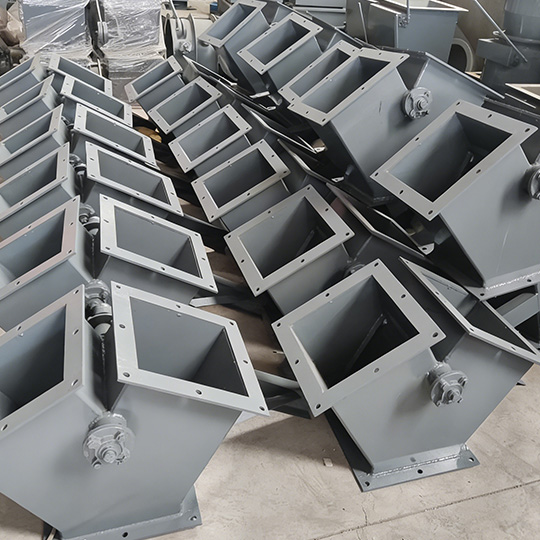
As a professional manufacturer of dust collectors and conveyors, we specialize in producing high-quality two-way diverter valve and two-way material diverter. Our 2-way diverter valve is designed to perfectly match dust collector and conveyor systems, providing efficient and precise material diversion solutions for various industrial scenarios. We offer a variety of options to meet different customer needs: including Pneumatic two-way diverter valve and Electric two-way diverter valve for different drive modes, Stainless steel two-way diverter valve and Carbon steel two-way diverter for different materials, as well as Electro-hydraulic two-way diverter and Manual two-way material diverter for special working conditions. Our two-way transfer valve can be seamlessly connected with dust collector two-way diverter valve and conveyor two-way material diverter, realizing integrated material conveying and diversion, and is widely used in powder conveying, ash handling, food processing and other fields.
How Does the Two-way Diverter Valve Work?
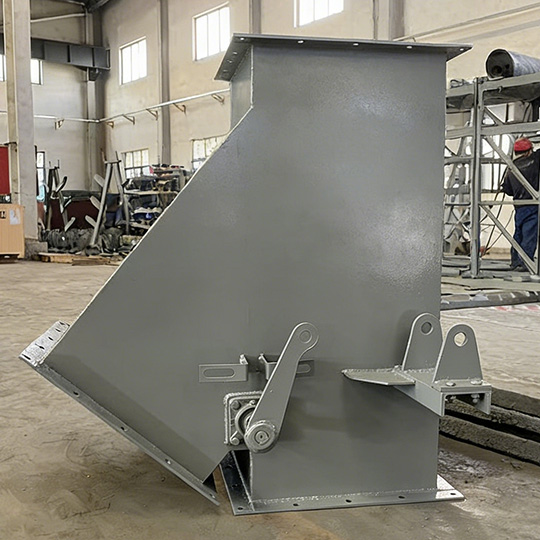
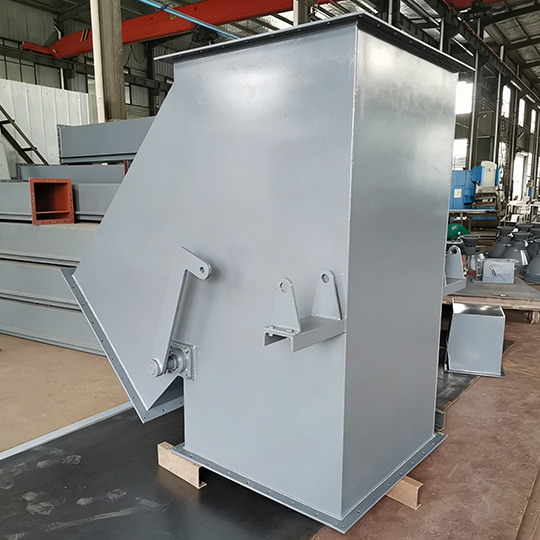
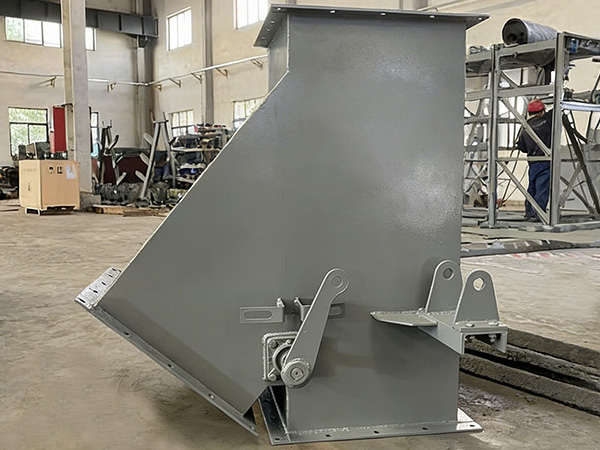
The two-way diverter valve achieves precise material diversion and confluence through the coordinated operation of its components. When started, the electric or pneumatic drive device transmits power to the valve stem via the crank mechanism, driving the valve plate to swing accurately.
It supports two modes: In diversion mode (A→B+C), the valve plate guides materials from a single inlet (A) to two outlets (B and C); in confluence mode (A+B→C), it merges materials from two inlets (A and B) into one outlet (C).
The Y-type/T-type valve body ensures smooth material flow with low resistance, while sealing components prevent leakage. With a response time of less than 0.5 seconds, it operates stably without frequent manual intervention, adapting to high-temperature and high-wear working conditions.
The core working principle of the two-way diverter valve is to realize precise diversion and confluence of materials through the coordinated operation of various components. Its overall working process is clear and efficient, relying entirely on its own structural design and power transmission of the drive device.
Related Valve Products Recommendation
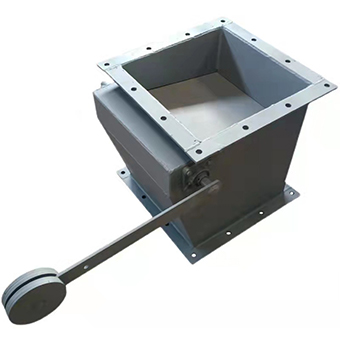
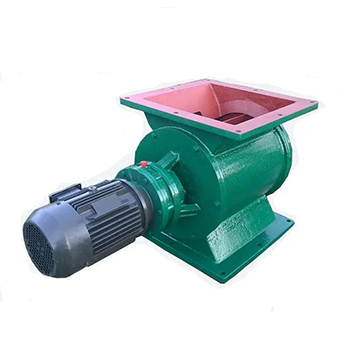
Complementary to the two-way diverter valve in function, realizing quantitative unloading and conveying after diversion, solving the problem of uneven unloading.
- Core Functions of Two-way Diverter Valve
- Technical Specifications
- Structural Composition of Two-way Diverter Valve
- Application Scenarios of Two-way Diverter Valve
- Technical Features of Two Way Diverter Valve
|
Parameter
|
Specification
|
|
Model
|
DSF type two-way diverter valve, Rotary plate two-way diverter, Cylinder type two-way diverter, Full bore two-way diverter valve
|
|
Material
|
304/316L Stainless steel, Carbon steel, Food grade material (Food grade two-way diverter valve)
|
|
Drive Mode
|
Pneumatic (0.4-0.6MPa), Electric (AC220V/380V), Electro-hydraulic, Manual; Pneumatic response time: ≤0.5s, Electric power: 0.37-1.5KW
|
|
Connection Mode
|
Flange connection (Two-way diverter valve with flange connection), Flange standard: GB/T 9119-2010, DIN, ANSI
|
|
Applicable Medium
|
Powder, Granule, Ash, Biomass pellet (Two-way diverter valve for powder conveying, Two-way diverter valve for biomass pellet conveying); Medium temperature: -20℃~120℃ (Low temperature two-way diverter valve optional for -40℃~-20℃)
|
|
Special Function
|
No clog, High precision, Explosion-proof (Explosion-proof two-way diverter valve, Exd II BT4/CT4), Sealed (Sealed two-way diverter valve for outdoor use, sealing grade: IP65)
|
|
Nominal Diameter
|
DN50~DN300 (Customizable for special specifications)
|
|
Working Pressure
|
0.1~1.6MPa (High pressure two-way diverter valve optional for 1.6~4.0MPa)
|
-
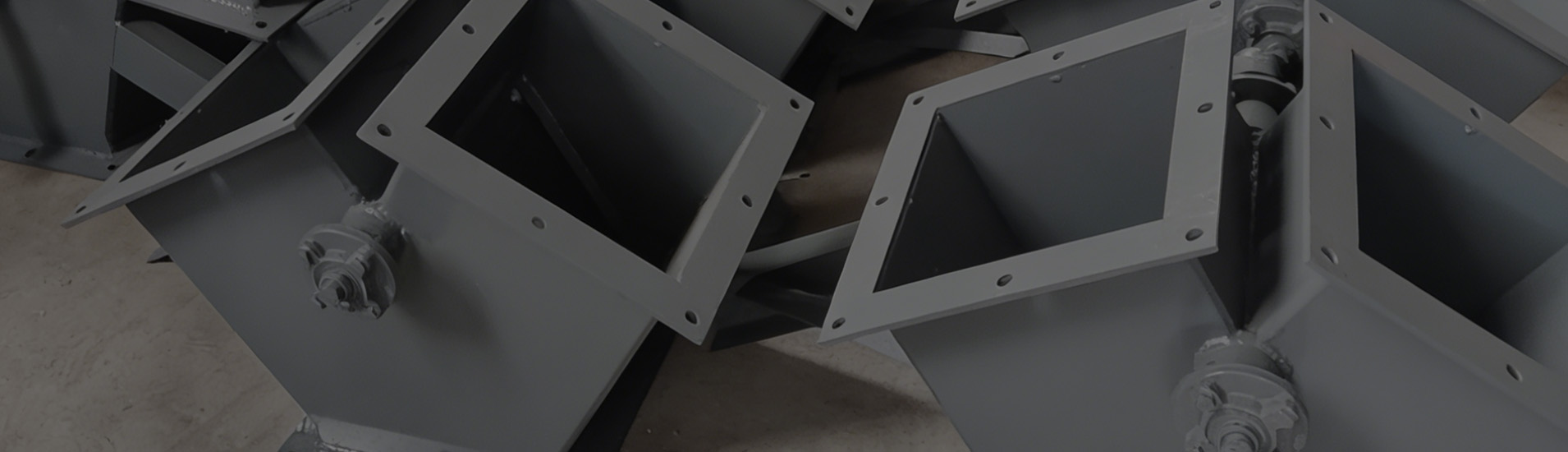
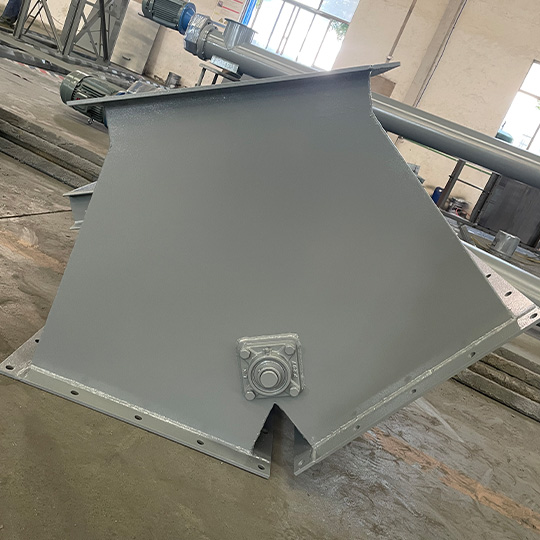
Valve Body: Adopts a symmetrical Y-type or T-type bidirectional structure, made of high-strength wear-resistant materials (carbon steel, stainless steel, etc. can be selected according to working conditions) through integral casting. The inner part of the valve body is precision polished to reduce material adhesion and wear, and at the same time has good sealing performance to prevent material leakage; the inlet and outlet of the valve body adopt standardized flange connection, which can be seamlessly connected with various conveying pipelines, conveyors and dust collectors, adapting to different specifications of conveying systems.
-
Valve Stem: As the core transmission component connecting the valve plate and the crank mechanism, it is processed from high-strength alloy material, with excellent bending resistance and wear resistance, ensuring the accuracy and stability of the valve plate swing; the connection between the valve stem and the valve body is equipped with high-performance sealing components, which effectively prevent materials from entering the transmission mechanism and extend the service life of the equipment.
-
Crank Mechanism: Responsible for converting the power of the drive device into the swing action of the valve plate. It is manufactured by precision processing technology, with high transmission efficiency and stable operation, which can realize precise positioning of the valve plate, ensure the accuracy of diversion/confluence switching, and avoid material mixing, leakage and other problems; the mechanism is compact in design, small in space occupation, and convenient for equipment installation and maintenance.
-
Electric/Pneumatic Drive Device: As the power source of the equipment, it can be flexibly selected according to the user’s working conditions. Pneumatic drive is suitable for flammable, explosive and no power supply scenarios, with fast response speed and convenient maintenance; electric drive is suitable for production lines with high automation and remote control needs, with stable operation and precise control, which can realize automatic regulation of valve plate switching and adapt to intelligent production processes.
-
Building Materials Industry: Widely used in cement plants, sand and gravel plants, building materials processing plants, etc., for the diversion and confluence of materials such as cement, sand and gravel, fly ash, gypsum powder, etc. For example, diverting cement from the main conveying pipeline to different storage silos, or merging different specifications of sand and gravel into the same conveying line, improving material conveying efficiency and adapting to the continuous process of building materials production.
-
Metallurgical Industry: Suitable for iron and steel plants, non-ferrous metal smelters, etc., for the conveying and switching of materials such as ore powder, metallurgical slag, coke powder, etc. It can operate stably under high temperature working conditions, solve the needs of material shunt processing and centralized conveying in metallurgical production, and ensure the smooth progress of the metallurgical process.
-
Mining Industry: Used for material conveying in mines such as coal mines, iron mines, non-ferrous metal mines, handling materials such as coal, ore particles, mineral powder, etc., realizing flexible switching of underground or ground conveying lines, adapting to the complex working conditions of mine mining, and improving the automation level and efficiency of mine material conveying.
-
Other Industries: In addition to the above industries, it can also be applied to industries such as chemical industry, electric power, grain processing, etc., for the diversion and confluence of materials such as chemical raw materials, fly ash, grain particles, etc., adapting to the material conveying needs of different industries and providing efficient and stable material switching solutions for various production processes.
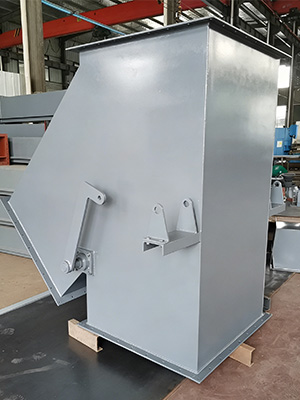
What is a Two-way Diverter Valve?
A two-way diverter valve is a key switching and control device widely used in bulk material handling systems. Designed with a symmetrical Y-type or T-type structure, it is mainly used to realize the diversion or confluence of granular and powdery materials, enabling stable switching between conveying paths such as A→B+C or A+B→C. Equipped with electric, pneumatic, or electro-hydraulic drive systems, it features fast response, reliable sealing, low flow resistance, and strong adaptability to harsh working conditions including high temperature and high abrasion. It is an essential component for optimizing material conveying efficiency and ensuring stable operation in industries such as building materials, metallurgy, mining, and chemical engineering.