If you work in the construction industry, you have probably heard the term pozzolana cement—but do you know what it is, how it works, and why it has become the preferred material for durable, sustainable projects? Pozzolana cement, also known as portland pozzolana cement (PPC), is a blended hydraulic cement made by mixing portland cement clinker with pozzolanic materials. Its unique composition and properties make it suitable for a wide range of construction applications, from residential foundations to large-scale infrastructure. This article will break down its chemical composition, properties, uses, and key differences from other types of cement—all in concise and professional language.
What is Pozzolana Cement? Definition and Core Basics
Pozzolana cement is a type of blended cement made by mixing 65%-85% portland cement clinker, 15%-35% finely ground pozzolanic materials, and a small amount of gypsum to regulate setting time. The term “pozzolana” derives from the town of Pozzuoli near Naples, Italy, where the ancient Romans first discovered and used volcanic ash as a key ingredient in their concrete—which is why structures like the Pantheon have stood firm for over 2,000 years.
Unlike ordinary portland cement (OPC), pozzolana cement gains strength and durability through a secondary chemical reaction (known as the pozzolanic reaction). This reaction is its distinguishing feature, making it a popular choice for projects requiring high long-term performance and resistance to harsh environments.
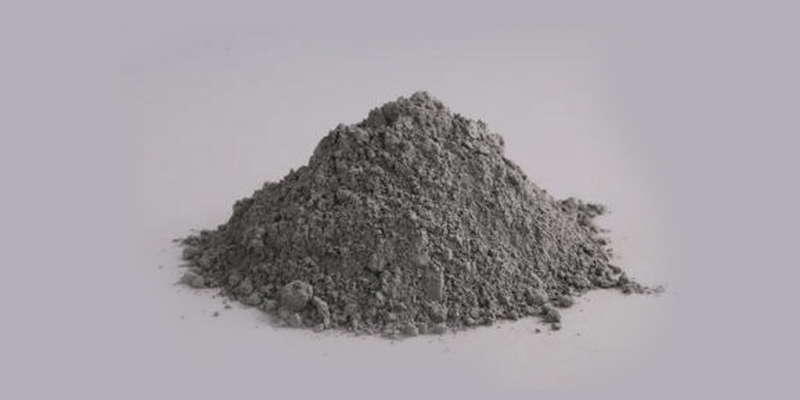
What Does Pozzolana Do in Concrete? A Detailed Explanation of the Pozzolanic Reaction
To understand pozzolana cement, you first need to know the role of pozzolana in concrete. Pozzolana is a siliceous or aluminosiliceous material that has little to no cementitious value on its own—but when mixed with water and calcium hydroxide (a byproduct of portland cement hydration), it undergoes a chemical reaction to form a strong cementitious compound called calcium silicate hydrate (C-S-H) gel. This gel is the main “adhesive” that binds concrete together, endowing it with strength and durability.
Here is a step-by-step breakdown of how pozzolana works in concrete:
-
When portland cement clinker hydrates (mixes with water), it produces calcium hydroxide (Ca(OH)₂) and initial C-S-H gel.
-
The pozzolanic materials used to make pozzolana cement react with free calcium hydroxide in the presence of water.
-
This secondary reaction consumes soluble calcium hydroxide (which does not contribute to strength on its own) and generates additional C-S-H gel.
-
The extra C-S-H gel fills the gaps in the concrete matrix, making it denser, more durable, and more resistant to water and chemical penetration.
In short, pozzolana enhances the long-term strength and durability of concrete by “recycling” a byproduct of portland cement hydration into something useful.
Pozzolanic Materials: Chemical Composition and Types
Pozzolanic materials (the “admixtures” in pozzolana cement) are defined by their high content of reactive silica (SiO₂) and reactive alumina (Al₂O₃)—the two components that drive the pozzolanic reaction. True natural pozzolans are usually formed from volcanic ash, with a structure of small crystalline minerals embedded in a large amount of glassy material. This glassy structure is usually weathered, forming a porous, gel-like texture with a large internal specific surface area, thereby enhancing its reactivity with calcium hydroxide.
Chemical Composition of Pozzolans
The chemical composition of pozzolans may vary slightly, but the typical range is as follows:
-
45%-60% Silicon Dioxide (SiO₂) — the main reactive component
-
15%-30% Aluminum Oxide (Al₂O₃) + Iron Oxide (Fe₂O₃) — secondary reactive components
-
Approximately 15% Calcium Oxide (CaO) + Magnesium Oxide (MgO) + Alkali Oxides (R₂O) — impurities
-
Approximately 10% Loss on Ignition (LOI) — organic matter or moisture lost when heated
Types of Pozzolanic Materials (Classified by Reactivity)
Pozzolanic materials are classified by their reactivity (ability to react with calcium hydroxide). Based on their reactive components and origin, they are mainly divided into three categories:
1. Hydrous Siliceous Pozzolans
These materials take amorphous (non-crystalline) silica as the main reactive component, combined with bound water to form SiO₂·nH₂O (an amorphous mineral). They react very quickly with lime and have good reactivity. However, they require a large amount of water when mixed into a paste, which can affect the performance of the hardened body and cause high dry shrinkage. Examples include diatomaceous earth and some natural siliceous earths.
2. Aluminosilicate Glassy Pozzolans
These materials are formed by the rapid cooling of high-temperature melts (such as volcanic lava). Their main component is silica, and they also contain a certain amount of alumina and a small amount of alkali oxides (Na₂O + K₂O). Their reactivity depends on their chemical composition, cooling rate, and the content of glassy material. Examples include natural volcanic ash, pumice, and trass—materials used by the ancient Romans to build their iconic structures.
3. Calcined Clay Pozzolans
These materials are made by heating clay minerals to high temperatures (calcination), a process that dehydrates the clay and activates its reactive components. The main reactive component is dehydrated clay minerals, such as dehydrated kaolinite (Al₂O₃·2SiO₂). Their reactivity is closely related to their alumina content—the higher the alumina content, the stronger the reactivity. Examples include metakaolin (calcined kaolinite) and fly ash (a byproduct of coal combustion).
Pozzolana Cement Production: Key Equipment for Quality and Efficiency
The quality and performance of pozzolana cement are closely related to its production process, especially the grinding and purification of raw materials. To ensure the fineness of pozzolanic materials and portland cement clinker (which directly affects the pozzolanic reaction efficiency), advanced grinding equipment is essential. The vertical roller mill has become the core equipment in modern pozzolana cement production due to its high efficiency, energy saving and excellent grinding performance.
Compared with traditional ball mills, the vertical roller mill can simultaneously complete the drying, grinding and grading of pozzolanic materials (such as volcanic ash, fly ash and calcined clay), which not only improves the production efficiency, but also ensures that the particle size of the materials reaches the required standard (usually above 325 mesh) to fully stimulate the reactivity of pozzolanic materials. Its unique structure design also reduces energy consumption and production costs, which is in line with the sustainable development concept of pozzolana cement.
In addition to grinding equipment, environmental protection and dust control are also important links in pozzolana cement production. The production process will generate a certain amount of dust, which not only pollutes the environment but also affects the health of operators. The dust collector plays a key role in this link—it can effectively capture and filter the dust generated during the operation of the vertical roller mill and other equipment, reduce dust emissions, and ensure that the production process meets environmental protection standards. Meanwhile, the collected dust can be recycled as raw materials, further improving resource utilization and reducing waste, which is consistent with the environmental protection characteristics of pozzolana cement production.
The combination of vertical roller mill and dust collector not only guarantees the stable quality of pozzolana cement but also realizes efficient, energy-saving and environmentally friendly production, providing strong support for the large-scale application of pozzolana cement in various construction projects.
Compared with traditional ball mills, the vertical roller mill can simultaneously complete the drying, grinding and grading of pozzolanic materials (such as volcanic ash, fly ash and calcined clay), which not only improves the production efficiency, but also ensures that the particle size of the materials reaches the required standard (usually above 325 mesh) to fully stimulate the reactivity of pozzolanic materials. Its unique structure design also reduces energy consumption and production costs, which is in line with the sustainable development concept of pozzolana cement.
In addition to grinding equipment, environmental protection and dust control are also important links in pozzolana cement production. The production process will generate a certain amount of dust, which not only pollutes the environment but also affects the health of operators. The dust collector plays a key role in this link—it can effectively capture and filter the dust generated during the operation of the vertical roller mill and other equipment, reduce dust emissions, and ensure that the production process meets environmental protection standards. Meanwhile, the collected dust can be recycled as raw materials, further improving resource utilization and reducing waste, which is consistent with the environmental protection characteristics of pozzolana cement production.
The combination of vertical roller mill and dust collector not only guarantees the stable quality of pozzolana cement but also realizes efficient, energy-saving and environmentally friendly production, providing strong support for the large-scale application of pozzolana cement in various construction projects.
Is Pozzolana the Same as Cement? No—Here’s the Difference
Many people confuse pozzolana with cement, and the core question is: Is pozzolana the same as cement? Simply put, the answer is no. Pozzolana is a material, while cement is a finished product that may contain pozzolana as an ingredient.
The specific explanation is as follows:
-
Pozzolana (or pozzolanic material): A siliceous/aluminosiliceous substance (natural or artificial) that has no cementitious properties on its own. It only exhibits “cement-like” characteristics when mixed with water and calcium hydroxide (from portland cement).
-
Pozzolana cement: A blended cement made by mixing portland cement clinker, pozzolanic materials, and gypsum. It is a finished product that can be directly used in concrete mixing.
In simple terms: pozzolana is an “additive” that improves cement performance, but it is not cement itself.
What is the Difference Between Pozzolana Cement and Portland Cement?
Another common question is the difference between pozzolana cement and ordinary portland cement (OPC). Although both are used in construction, they have obvious differences in composition, properties, and uses. The following is a clear comparison to help you choose the right type of cement for your project:
1. Composition Differences
-
Pozzolana cement: 65%-85% portland clinker, 15%-35% pozzolanic materials (volcanic ash, fly ash, calcined clay), and 2%-5% gypsum.
-
Portland cement: 95%-97% portland clinker, 2%-5% gypsum, and no (or only a very small amount of) pozzolanic materials.
2. Setting and Strength Development
-
Pozzolana cement: Slow setting time and slow early strength growth (7-day strength is lower than that of ordinary portland cement). However, it continues to gain strength over time, and its 28-day strength is usually equivalent to or even higher than that of ordinary portland cement. The secondary pozzolanic reaction lasts for months, improving long-term strength.
-
Portland cement: Fast setting time and rapid early strength growth (suitable for projects requiring high speed). Its strength peaks earlier, and the long-term strength growth is not as significant as that of pozzolana cement.
3. Heat of Hydration
-
Pozzolana cement: Low heat of hydration (less heat released during setting). This makes it suitable for mass concrete projects (such as dams, bridges, and large foundations), as it reduces the risk of temperature cracks caused by rapid heat accumulation.
-
Portland cement: High heat of hydration, which may cause cracks in mass concrete if not properly handled.
4. Durability and Corrosion Resistance
-
Pozzolana cement: Excellent resistance to chemical attack (sulfates, chlorides), water permeability, and alkali-silica reaction (ASR). The additional C-S-H gel forms a dense concrete matrix, making it suitable for marine environments, wastewater treatment plants, and areas with corrosive soils.
-
Portland cement: Low resistance to chemical attack and water permeability. It is more suitable for indoor projects or above-ground structures with less exposure to harsh environments.
5. Sustainability
-
Pozzolana cement: More environmentally friendly. Using pozzolanic materials (many of which are industrial byproducts such as fly ash) can reduce the amount of portland clinker needed—thereby reducing carbon emissions (portland clinker production is one of the main sources of carbon dioxide).
-
Portland cement: High carbon footprint due to the large amount of clinker required. It is less sustainable than pozzolana cement.
Properties of Pozzolana Cement: What Makes It Unique?
The properties of pozzolana cement are directly related to its composition and the pozzolanic reaction. The following are its key properties that are valuable in construction:
-
Low heat of hydration: As mentioned earlier, it releases less heat during setting, which can prevent temperature cracks in mass concrete.
-
Excellent long-term strength: Although early strength is low, strength increases over time due to the ongoing pozzolanic reaction. In harsh environments, its 28-day and 90-day strength is usually higher than that of ordinary portland cement.
-
High durability: The dense matrix formed by additional C-S-H gel gives it resistance to water, sulfates, chlorides, and alkali-silica reaction (ASR)—extending the service life of structures.
-
Good workability: Pozzolanic materials have fine particles, which can improve the workability of concrete mixtures (easier to mix, place, and finish) without sacrificing strength.
-
Strong sustainability: By replacing portland clinker with pozzolanic materials (many of which are waste products), it reduces carbon emissions and is a better choice for environmentally friendly projects.
-
Low dry shrinkage for some types: While hydrous siliceous pozzolans can increase dry shrinkage, other types (such as fly ash-based pozzolana cement) can reduce dry shrinkage and improve the crack resistance of concrete.
Uses of Pozzolana Cement: Applicable Scenarios (and Inapplicable Scenarios)
The unique properties of pozzolana cement make it suitable for a wide range of construction applications, especially projects requiring high long-term durability and resistance to harsh environments. The following are its most common uses:
1. Mass Concrete Projects
Suitable for dams, bridges, large foundations, and retaining walls—where low heat properties are crucial to prevent temperature cracks. Examples include concrete dams, bridge piers, and industrial plant foundations.
2. Marine and Coastal Structures
Its resistance to seawater (chlorides) and chemical corrosion makes it very suitable for seawalls, jetties, port terminals, and offshore structures. It can resist harsh marine environments and extend the service life of structures.
3. Wastewater Treatment and Chemically Exposed Projects
Used in wastewater treatment plants, sewage pipes, and industrial floors—areas often exposed to sulfates, acids, and other chemicals. Its dense matrix can prevent chemical penetration and structural degradation.
4. Residential and Commercial Construction
Suitable for foundations, slabs, beams, and columns—especially in areas with corrosive soils (high sulfate content) or heavy rainfall. It can also be used in masonry work (bricks, blocks) to improve durability.
5. Road and Infrastructure Projects
Used in highway pavements, sidewalks, and expressways—projects requiring high resistance to wear, water, and freeze-thaw cycles. It can also reduce the risk of cracks caused by temperature changes.
Inapplicable Scenarios for Pozzolana Cement
Pozzolana cement is not suitable for projects requiring high early strength (such as emergency repairs, precast concrete that needs to be moved quickly) or projects in cold weather (because its slow setting time is easily affected by low temperatures). For such scenarios, ordinary portland cement or rapid-setting cement is a better choice.
Conclusion: Is Pozzolana Cement Suitable for Your Project?
Pozzolana cement is a versatile, durable, and sustainable construction material suitable for projects requiring long-term performance, chemical corrosion resistance, and low heat properties. Its unique pozzolanic reaction gives it an advantage over ordinary portland cement in harsh environments, and its use of industrial byproducts makes it a more environmentally friendly choice.
Whether you are building a dam, a coastal residence, or a wastewater treatment plant, pozzolana cement can help extend the service life of your structure while reducing your carbon footprint. By understanding its composition, properties, and uses, you can make an informed decision for your next project.
Key point: Pozzolana cement is more than just “a type of cement”—it is a high-performance, sustainable solution that leverages the properties of pozzolanic materials to create stronger, more durable concrete.