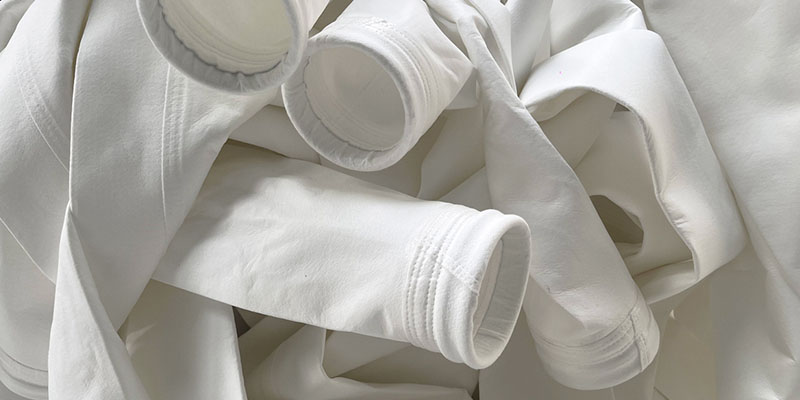
In the fields of industrial dust control and air pollution management, the efficient operation of a baghouse dust collector relies fundamentally on the performance of its dust filter bags (also known as dust collection bags, filter bags, or filter sleeves). As a high-efficiency dust filtration material, a premium filter bag must possess excellent permeability, exceptional dust collection efficiency (up to 99.999%), and outstanding acid and alkali resistance as well as heat resistance. Manufacturing processes like multi-angle napping significantly increase fabric thickness and elasticity, thereby enhancing dust removal effectiveness and dust capture capability.
Material selection for filter bags is a critical technical decision, primarily involving synthetic fibers, natural fibers, and glass fibers made into filter cloth or felt. Precise selection based on flue gas characteristics (temperature, corrosiveness, humidity) is essential:
-
Normal Temperature Conditions (<120°C): Polyester filter bags are widely used, including polyester needle felt, valued for their acid resistance, durability, and cost-effectiveness.
-
Medium Temperature & Complex Conditions (<200°C): Common choices include PPS filter bags (Polyphenylene Sulfide, resistant to acids and alkalis), Aramid filter bags, and membrane-coated filter bags treated for water repellency and oil resistance (e.g., PTFE membrane filter bags).
-
High-Temperature Conditions (<260°C and above): Primary options are P84 filter bags (Polyimide), Fiberglass filter bags (graphitized or FMS treated), along with PTFE filter bags (Polytetrafluoroethylene) or basalt fiber filter bags, known for their excellent high-temperature stability and filtration precision.
In-Depth Industry Application Analysis: The Cement Industry Example
In cement plant dust control, filter bag selection directly impacts the operating costs of the bag filter and compliance with emission standards. Process conditions vary significantly across different stages:
-
Raw Mill, Cement Mill, Silo Top/Bottom Dust Collection: Here, flue gas temperatures are lower (normal temperature), but moisture content can be high with slight alkaline corrosion. Recommended are polyester needle felt filter bags or normal-temperature membrane-coated filter bags treated for oil and water repellency to prevent bag blinding and ensure effective cleaning performance.
-
Cement Kiln Inlet/Outlet, Cooler: This represents typical high-temperature, high-dust concentration conditions, with gas temperatures potentially exceeding 200°C and containing alkaline components and sulfur oxides. High-temperature filter bags are mandatory. P84 filter bags, membrane-coated fiberglass bags, or PPS+P84 composite filter bags are mainstream choices due to their superior high-temperature resistance and chemical corrosion resistance. Filter bag service life is a key performance indicator here.
-
Coal-fired Boiler Flue Gas Treatment (e.g., captive power plants): If acid dew point is a concern, PTFE filter bags or PTFE composite filter bags are required for their unparalleled acid corrosion resistance.
Key Selection Criteria: A comprehensive evaluation is necessary, considering flue gas temperature, dust concentration, chemical composition (SOx, NOx, alkalinity), filtering velocity (typically controlled between 0.8-1.2 m/min), and cleaning method (pulse-jet cleaning, reverse-air cleaning).
Filter Bag Structure & Cleaning: Engineering Design Impacts Efficiency
Beyond materials, structural design is equally crucial. Filter bags are categorized by shape into round filter bags (cylindrical bags) and flat filter bags; by filtration method into outside-in filter bags and inside-out filter bags. Pulse-jet filter bags are typically used with cages (filter bag cages), which support the filter bag, prevent collapse, and aid in dust cake release.
The performance of the cleaning system (e.g., solenoid valves) determines the bag’s regeneration capability and system pressure drop. A well-matched system maintains filtration efficiency while extending filter bag lifespan.
Beyond Cement: Broad Industrial Applications
The use of dust filter bags extends far beyond the cement industry, serving as a standard in virtually all dust-generating industries:
-
Steel Plants: Blast furnace gas cleaning in ironworks, secondary dedusting for converters in steel mills, and smelting fumes in ferroalloy plants often require high-temperature resistant, anti-static filter bags.
-
Power Industry: Baghouses for coal-fired power plant boilers, facing high-temperature, high-sulfur flue gases, commonly use PTFE filter bags or PPS filter bags.
-
Chemical & Carbon Black Industries: Process tail gas treatment in chemical plants and collection in carbon black plants demand filter bags with excellent chemical corrosion resistance and high filtration precision.
-
Non-ferrous Metals: Gas purification in aluminum smelter potrooms often employs PTFE membrane filter bags to handle the strong corrosiveness of fluorides.
-
Grain & Food Processing: Dust recovery in grain mills requires filter bags meeting food-grade standards, emphasizing anti-static properties and easy cleaning.
Conclusion: Precise Selection Maximizes Value – Let Us Provide Your Professional Solution
Selecting the right dust filter bag is a technical decision that combines process condition analysis, materials science, and cost control. From normal-temperature polyester bags to high-temperature P84 needle felts, and top-tier PTFE membrane filter bags, there is no single best option—only the most suitable one for your specific needs. Clearly defining your flue gas conditions, dust characteristics, and emission requirements is key to ensuring your dust collection system achieves ultra-low emissions, energy savings, and long-term, stable operation.
If your operations in the cement, steel, power, or chemical industries face dust control challenges, or if you are seeking solutions for issues like filter bag selection for baghouses, short filter bag life, or non-compliant emissions, we are here to provide expert support. We specialize in the customization and application of various high-temperature, medium-temperature, and normal-temperature filter bags, with extensive experience in products like PPS filter bags, PTFE filter bags, P84 filter bags, fiberglass filter bags, and anti-static filter bags. We can offer precise filter bag selection advice, technical consultation, and product customization services tailored to your specific process conditions (e.g., kiln inlet/outlet gases, boiler flue gas, corrosive chemical gases).
We are a professional provider of industrial filtration solutions. To have efficient, durable filter bags customized for your needs, or to obtain more technical information, please feel free to contact us. Let our expertise and products assist you in achieving cleaner production and a greener future, together.