In industrial dust handling and material conveying systems, the Double-Layer Gravity Flap Valve is a critical device. It is commonly installed at the discharge points of equipment like Bag Filter Dust Collectors, Cyclone Separators, storage bins, and Dryers. Its main function is to ensure continuous discharge while maintaining system sealing. This article provides a detailed analysis of its working principle, structural features, application scenarios, and key selection factors.
1. Function: Air Lock and Continuous Discharge
The core function of the Double-Layer Gravity Flap Valve is air-lock discharge. It works by using two vertically stacked flaps that open and close alternately. This design ensures at least one flap is always closed during operation, effectively isolating air flow.
When the upper flap opens for discharge, the lower flap remains closed. This prevents outside air from entering the system. After material falls into the intermediate chamber, the upper flap closes. Then, the lower flap opens to discharge the material. This cycle repeats continuously. Consequently, it allows for uninterrupted material flow while preventing external air ingress or internal gas leakage. Therefore, this device is also known as a Double-Layer Air Lock Valve or Double-Layer Sealing Valve. It is a vital component for maintaining stable system pressure.
2. Structural Features and Working Principle
Structural Features:
-
Valve Body: Constructed from welded steel plates for durability.
-
Flaps: Two layers of wear-resistant flaps, typically made from abrasion-resistant steel plate or with hard-faced surfaces.
-
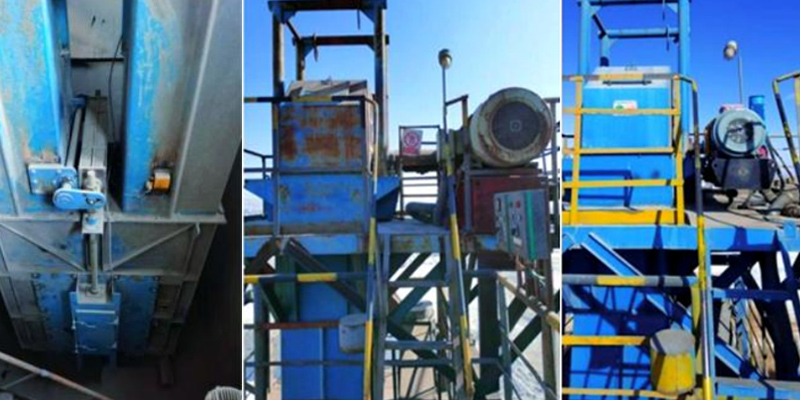
Drive Mechanism: Uses a counterweight lever self-resetting mechanism. This system employs leverage and adjustable counterweights to automatically close the flaps. The structure is compact and reliable.
-
Sealing Design: Elastic sealing material is placed between the flaps and the valve seat to ensure tight closure.
Working Principle:
-
Opening: Material accumulates in the upper hopper. Once its weight exceeds the counterbalance force, it pushes the upper flap open. Material then falls into the intermediate chamber.
-
Switching: After material enters the chamber, the upper flap automatically closes due to the counterweight, isolating the upper system.
-
Discharge: The material in the chamber pushes the lower flap open and discharges into downstream equipment.
-
Reset: After the material is emptied, the lower flap automatically closes via the counterweight, completing one cycle.
This entire process achieves automatic, continuous operation following the logic of “open when full, close when empty.”
3. Drive Methods: Mechanical and Automated Control
Based on control requirements, Double-Layer Flap Valves can use different drive methods:
-
Mechanical Gravity Type: Operates solely by material weight and counterweights. It has a simple structure and is easy to maintain, suitable for most standard applications.
-
Pneumatic Drive Type: Adds a cylinder drive to the mechanical base. An solenoid valve controls compressed air to force the flaps open or closed. This method allows for remote operation and precise control, making it suitable for automated systems.
-
Electric Drive Type: Uses an electric motor for actuation. It offers high control precision and is ideal for applications requiring frequent adjustment or precise timing.
-
Integrated Smart Control: Modern valves can integrate sensors and control systems. This enables remote monitoring, fault alarms, and automated management.

4. Application Areas
The Double-Layer Gravity Flap Valve is widely used in the following industries:
| Industry | Typical Applications | Primary Role |
|---|---|---|
| Environmental Dust Control | Hoppers of Bag Filter Dust Collectors, Electrostatic Precipitators | Continuous ash discharge, maintaining system negative pressure |
| Building Materials / Cement | Cement silos, raw meal silos, kiln tail dust collection systems | Air-lock discharge, preventing dust emission |
| Metallurgy / Chemicals | Blast furnace gas dust removal, chemical storage bins | Sealed discharge of dust or materials |
| Power / Grain | Fly ash silos in power plants, grain processing systems | Safe and environmentally friendly handling of powdered materials |
| Mining / Light Industry | Dust removal in mineral processing plants, discharge from Dryers | Acts as a feed/discharge device, maintaining system seal |
5. Key Selection Factors
Correct selection is crucial for stable operation. Consider these factors:
-
Material Characteristics: Includes particle size, moisture, stickiness, abrasiveness, and temperature. These affect the choice of flap material and seal type.
-
System Pressure: The valve body must withstand the positive or negative pressure within the system.
-
Capacity: Select the appropriate valve size based on the required material throughput.
-
Drive Method: Choose mechanical, pneumatic, or electric drive based on the level of automation needed.
-
Connection Standards: Flange specifications must match both upstream and downstream equipment.
6. Advantages Summary
-
Reliable Sealing: Alternating operation of the two flaps effectively prevents air cross-flow.
-
Stable Operation: Simple mechanical structure leads to low failure rates and minimal maintenance.
-
Strong Adaptability: Suitable for various conditions, including high temperature and high abrasion.
-
Cost-Effective: Mechanical types require no external power, resulting in low operating costs.
-
Easy Automation: Can be upgraded to pneumatic or electric control, fitting modern smart production lines.
7. Frequently Asked Questions (FAQ)
Q1: What is the difference between a Double-Layer Flap Valve and a single-layer discharge valve?
A1: The double-layer valve maintains a continuous seal during discharge through alternating flap action. In contrast, a single-layer valve directly connects the system to the outside when open, causing air leakage and reducing system efficiency.
Q2: Can it be used to regulate flow rate?
A2: No. This valve is designed for on/off control, not for precise flow regulation. For flow control, use a dedicated regulating valve.
Q3: When should I choose a pneumatic or electric drive?
A3: Choose pneumatic or electric drive when materials are sticky, when precise interlocking with other equipment is needed, or when remote/forced control is required.
Q4: What are the main maintenance tasks?
A4: Regularly inspect the flaps and seals for wear. Clean rotating parts and lubricate them appropriately. For pneumatic types, also check the condition of the cylinder and solenoid valve.
Conclusion
The Double-Layer Gravity Flap Valve is an essential component in industrial dust handling and material conveying systems. Its reliable structure and working principle make it indispensable for maintaining system integrity and continuity. Correctly understanding its features and selecting the right model helps improve the overall efficiency and stability of the system.