This article explains double flap valves for the cement industry. It details how a double flap valve works in cement plants, including its air-lock discharge principle at key points like raw meal silos, clinker silos, and dust collector hoppers. The article also compares different types, such as motorized and pneumatic valves, and highlights their advantages over rotary valves in wear resistance and clog prevention, helping you make precise selections.
1. What is a Double Flap Valve? The Core Air-Lock Discharge Device for Cement Plants
In cement production, the double flap valve is a key device. It ensures airtight system operation and prevents air leakage. This protection saves energy and maintains dust collection efficiency. The valve handles air-lock and continuous discharge of powdered materials. These materials include raw meal, pulverized coal, and finished cement. Common application points are:
-
Below hoppers of various dust collectors (e.g., bag filters, electrostatic precipitators).
-
Discharge points of raw meal blending and storage silos.
-
The bottom of cement silos and packing systems.
-
Inlet and outlet ends of pneumatic conveying systems.
Its core value is effective isolation of upstream and downstream air pressure during material flow. Consequently, it prevents dust escape and cold air ingress. This ensures stable system operation and product quality.
2. How Does a Double Flap Valve Work in Cement Plants?
Cement plant conditions are special. They involve high abrasion, slight material clumping, and continuous operation. Therefore, flap valves here need reliable sealing and wear resistance. Here is how they work:
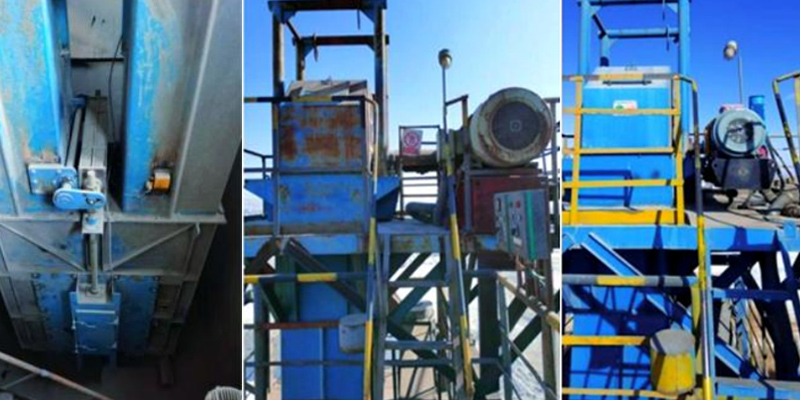
A. Alternating Seal for Continuous Air-Lock: The valve has two flap plates. They open and close alternately. First, the upper flap opens for feeding while the lower one stays closed and sealed. After material enters the intermediate chamber, the upper flap closes. Then, the lower flap opens for discharge. This design always keeps one flap sealed shut, achieving true “air-lock.”
B. Wear Resistance Strategy: Cement materials are highly abrasive. Therefore, quality valves for cement plants use special reinforcements. These include thickened wear plates (e.g., NM360/400), hard-faced weld overlays, or ceramic lining on the flaps and contact surfaces. This greatly extends service life.
C. Power Drive Types:
-
Pneumatic Double Flap Valve: This is the most common type in cement plants. It uses compressed air to drive a cylinder. Its action is fast, and it is explosion-proof. Thus, it suits high-frequency, high-dust environments.
-
Motorized Double Flap Valve: An electric actuator controls this valve. You can precisely adjust its opening/closing timing and angle. It easily integrates into central DCS systems for automated control.
-
Gravity (Weighted) Type: This type relies on material weight and a counterweight. It operates automatically without external power. It is economical and durable, suitable for standard discharge points without precise metering.
3. Selection for Cement Plants: Double Flap Valve vs. Rotary Valve
In cement plant material handling, a common choice is between a double flap valve and a rotary discharge valve (star feeder).
| Feature | Double Flap Valve (Cement Plant Spec.) | Rotary Discharge Valve |
|---|---|---|
| Sealing | Excellent. Uses alternating mechanical hard sealing. Air leakage rate is very low and stable. | Medium. Relies on rotor-housing clearance. Leakage increases with wear. |
| Wear Resistance | Excellent. Flaps allow multiple wear treatments. After wear, often only the wear plate needs replacement, keeping maintenance cost low. | Medium. Rotor blades and housing wear together. Replacement cost is high, and performance drops quickly after wear. |
| Clog Prevention | Excellent. Has a wide flow path. It can pass certain sized clumps (e.g., slight buildup from kiln-end dust collection) and resists jamming. | Medium-Poor. Sensitive to clumps and large particles. The rotor can jam easily, potentially burning out the motor. |
| Maintenance & Cost | Simple maintenance, low overall cost. Simple structure, few failure points, easy spare part replacement. | Complex maintenance, high overall cost. Involves multiple wear parts like bearings, seals, and rotor, requiring frequent maintenance. |
| Best For | Most discharge & air-lock points in cement plants, especially dust collector hoppers and silo bottoms requiring high air-lock with variable material. | Metering applications needing continuous, even feeding, and only when material is dry, free-flowing, and clump-free. |
Conclusion: For typical cement plant conditions, the double flap valve generally outperforms the rotary valve. It is better in sealing reliability, wear life, clog resistance, and overall cost-effectiveness. Therefore, it is the more universal and reliable choice.

4. How to Choose a Quality Double Flap Valve Manufacturer for Cement Plants?
Choosing a reliable partner is crucial. Please focus on these points:
-
Industry Expertise & Case Studies: Prioritize a double flap valve manufacturer with long-term service to the cement industry. Request successful case studies from large cement production lines.
-
Wear Technology Capability: Examine the manufacturer’s wear solutions. They should be professional and varied (e.g., wear plate materials, hardfacing processes, ceramic composites). The manufacturer must recommend appropriately based on material abrasiveness.
-
Design & Customization Ability: Can they provide designs for high-dust cement plant environments? These include dust-proof bearing housings and reinforced structures. Can they offer non-standard customization based on your flange standards and installation space?
-
Service & Spare Parts Response: Ensure the manufacturer provides quick technical support and spare parts supply. This minimizes downtime.
5. Cement Plant Double Flap Valve FAQs
Q1: Below a cement plant dust collector hopper, is a single or double flap valve better?
A: We strongly recommend a double flap valve. The dust collector interior is under negative pressure. A single-layer valve opens directly to the atmosphere during discharge. This allows massive cold air ingress. It severely affects bag cleaning, increases fan load, and can cause condensation. The alternating seal of a double valve effectively isolates air, protecting the dust collection system.
Q2: For a flap valve under a cement silo, how do we prevent jamming from hardened material lumps?
A: First, select a valve type with an enlarged chamber and streamlined design to reduce material buildup corners. Second, consider a pneumatic hammer-assisted or vibrator-assisted double flap valve. Vibration or impact during closing knocks off adhered material. Most crucially, the flap edge needs a special blade design. This shears smaller lumps during closure.
Q3: How to choose between pneumatic and motorized double flap valves in a cement plant?
A: The pneumatic double flap valve is the mainstream choice for cement plants. It acts fast, has a simple structure, is explosion-proof, and is moderately priced. Thus, it fits high-frequency discharge in harsh environments (e.g., kiln inlet/outlet dust collection). The motorized double flap valve suits automated batching processes better. It is ideal where precise discharge control or remote programming is needed. However, proper motor dust protection is essential.
Q4: What if the seal surface wears and leaks air? Must we replace the entire valve?
A: No. Professional manufacturer designs typically allow separate replacement of the wear plate or seal strip. This is a major maintenance advantage of double flap valves over rotary valves. You only replace the worn part, not the entire rotor or housing. This saves significant maintenance cost and downtime.